VIN First Aston Martin Part Numbers for Owners, Restorers & Mechanics
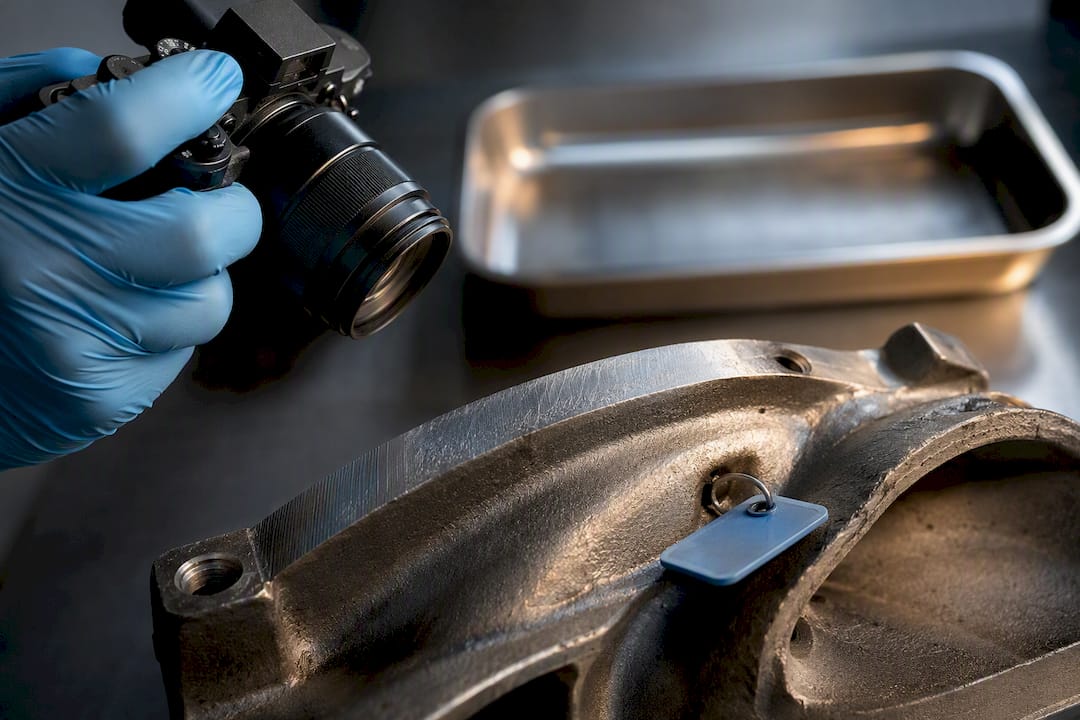
Aston Martin part numbers are the full, VIN-tied alphanumeric codes stamped or printed on a component and listed in the factory catalog. Each one breaks into a prefix, a core, and a suffix. The single rule that prevents wasted money: always confirm the entire code, not just the visible core digits, against your car’s VIN or the Electronic Parts Catalog before you buy. A suffix change alone can turn two visually identical parts into incompatible ones.
TL;DR:
- Confirm the entire part number, including prefix and suffix, against your car’s VIN or the electronic parts catalog before purchasing to avoid incompatibility.
- Be aware that suffix changes indicate revisions related to material, supplier, or dimensions, which can affect fitment and performance even if the part looks identical.
- Use your VIN to verify the correct part variant, as mid-year production changes often alter revision suffixes and part numbers.
- Always request photos of the engineering stamp or casting number on the actual part to confirm it matches the catalog and hasn’t been superseded.
- When sourcing, prioritize OEM parts from official dealers or heritage specialists, and verify provenance with documentation and VIN confirmation for critical components.
Table of Contents
- Aston Martin Part Numbers Decoding: Prefix, Core, and Suffix Explained
- How Do You Find the Exact Part Number for Your Car?
- Why Do Supersessions and Suffixes Matter Before You Buy?
- Where Can You Source Genuine Aston Martin Parts?
- How Supercars.parts Speeds Up Aston Martin Parts Identification
- What I’d Check First, and Where Most Buyers Slip Up
- Search by VIN or Part Number on Supercars.parts
- Sources
- FAQ
Aston Martin Part Numbers Decoding: Prefix, Core, and Suffix Explained
A typical Aston Martin part number looks like this: 6G33-2C405-AA. It reads like a short sentence once you know the grammar, and AutoPartEx’s breakdown of Aston Martin engineering codes confirms the structure holds across the model range: prefix, then core, then suffix.
The prefix identifies the platform or model generation. Codes like 6G33 or HY53 map to a specific chassis architecture and, often, a production era. If you’re cross-shopping parts between a DB9 and a Vantage, the prefix is the first thing that tells you they’re not interchangeable, even when the underlying casting looks similar.
The core number is the actual component identifier. It groups the part by category (brakes, suspension, trim, electrical) and then narrows to the specific item within that group. Think of it as the part’s name. Two components sharing a core number are the same physical item, at least in the base version.
The suffix is where things get interesting, and where most buying mistakes happen. A suffix like AA, AB, or AC usually signals a revision: a supplier change, a material upgrade, or a dimensional tweak made mid-production. AA to AB doesn’t always mean “new is better,” but it does mean “different,” and different can mean incompatible with surrounding components.
Here’s the annotated breakdown of that example code:
- 6G33 — platform/model prefix, tying the part to a specific chassis generation
- 2C405 — core number, identifying the exact component within its group
- AA — suffix, marking the revision level, supplier batch, or material spec
A part with a visual match but a different suffix is not the same part in the eyes of the engineering department. Installing an older revision can cause fitment failure or accelerated wear even though nothing looks wrong at a glance. That’s not a rare edge case. Running changes happen constantly across a production run, and a part that shipped for three years under one suffix can quietly shift to a new one without any change to the part’s outward appearance.
Pro Tip: Photograph the full stamped code before you order anything, including the suffix. Sellers and even some parts counters will quote you the core number alone, and that’s exactly where mismatches start.
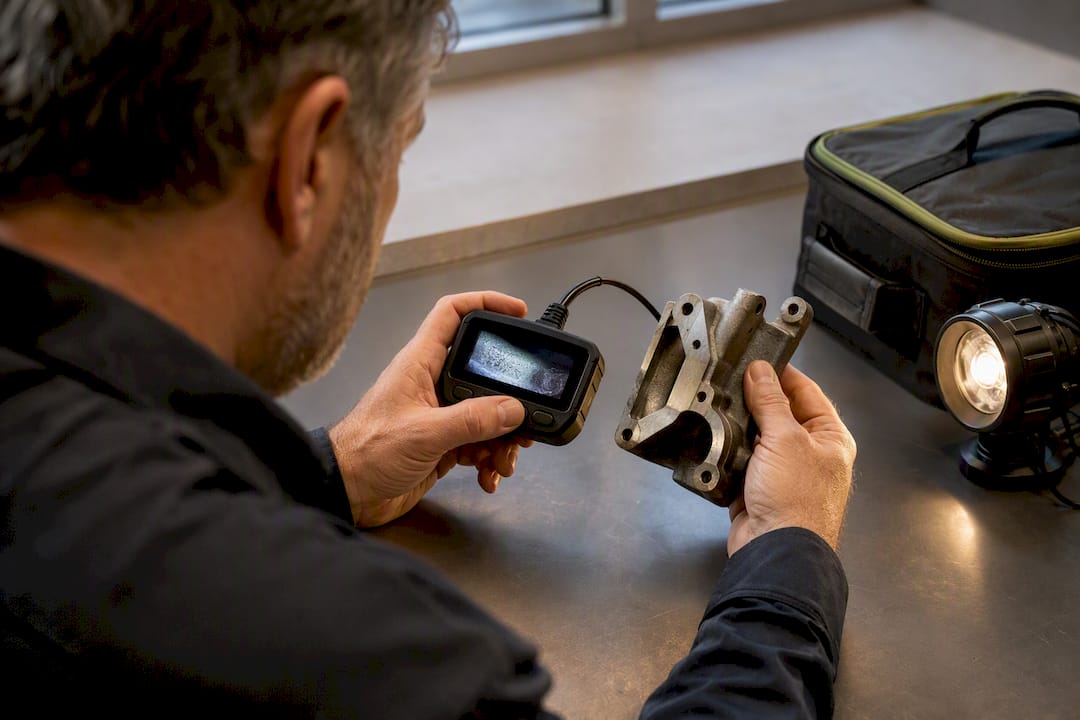
The practical takeaway: never trust a part number you can’t see in full. If a listing shows only “2C405” without prefix or suffix, treat it as incomplete, not close enough.
How Do You Find the Exact Part Number for Your Car?
Your VIN is the anchor for every lookup you’ll do. Specific fields within it, particularly the model year indicator and the engine or build code, determine which variant of a given component your car actually uses. Two cars built eighteen months apart on the same model line can carry different part numbers for the same physical location on the chassis.
Here’s the workflow that avoids the guesswork:
- Inspect the physical part first. Look for a stamped or printed code directly on the component, or on its original packaging if you’re checking a spare already in hand.
- Record the full code. Prefix, core, and suffix. Don’t stop at the numbers that look most “important.”
- Run the VIN through an Electronic Parts Catalog. A proper EPC lookup ties the part list directly to your car’s build variant and any recorded supersessions, which is exactly why VIN-based EPC searches minimize incorrect orders, especially for safety-critical systems like brakes and suspension.
- Cross-check against the exploded diagram. Every EPC entry sits inside a diagram showing how the part relates to its neighbors. Confirm the callout number matches what you recorded in step two.
- Fall back on service literature when the EPC comes up short. Older cars, especially pre-digital-catalog models, sometimes need a printed service manual or parts label to confirm a number the EPC doesn’t clearly show.
Manual model selection inside an EPC (picking your model, year, and trim from a dropdown) works, but it’s a weaker path than a direct VIN entry. Manual selection assumes you know every build detail correctly, and mid-year running changes make that assumption risky more often than owners expect.
Engineering stamps and casting numbers on the physical component are your last line of defense when catalog data gets ambiguous, particularly on classic models where digital records are thinner. Exploded diagrams remain the clearest way to match a stamped code to its exact position on the car, which is why serious restorers keep a diagram open next to the part itself rather than relying on memory or a parts-counter guess.
Why Do Supersessions and Suffixes Matter Before You Buy?
A supersession is the catalog’s way of saying “this number replaced that one.” EPCs typically show superseded numbers with a note pointing to the current equivalent, sometimes with a reason (material change, supplier switch, safety revision) and sometimes without one. Ignore that note and you risk ordering a part the catalog itself has flagged as outdated for your build.
Revision suffixes carry the same weight in miniature. An AA to AB jump might reflect a new bracket geometry that changes how a part seats against its mounting point, or a material swap that alters how it wears under load over time. The part can look identical sitting on a shelf and still fail to seat correctly once it’s bolted in.
Before you commit to a purchase, run through this checklist:
- Confirm the listing is VIN-verified, not just model-matched
- Request photos of the actual engineering stamp or casting number on the part
- Ask the seller directly whether the number matches any known supersession for your build
- Check for open technical bulletins or fitment advisories tied to that part number
- Get documentation in writing, not just a verbal assurance
The stakes aren’t cosmetic. A wrong revision on a suspension component can throw off alignment geometry. On a fastener or bracket, it can mean premature wear that shows up as a rattle six months later, or worse, a component that lets go under load. None of that shows up in a photo of the part sitting in a box.
Where Can You Source Genuine Aston Martin Parts?
Four main channels cover most of what owners and restorers need, and each trades off differently on authenticity, price, and paperwork.
Official dealers and Aston Martin Works sit at the top for provenance. Aston Martin Works runs a dedicated heritage parts program that documents availability across model ranges and supports restorations where era-correct sourcing matters more than price. Expect the highest cost and the strongest paper trail.
Heritage specialists fill gaps for older or discontinued components that Works has stopped stocking. Quality varies by shop, so provenance documentation is worth asking for every time.
Specialist marketplaces built around exploded diagrams and OEM manufacturer part numbers, the practice Eurospares applies to its Aston Martin listings, let buyers cross-check a listing against the diagram before purchase. This is generally the fastest route for common wear items.
Salvage and reconditioned suppliers offer the lowest prices but the least consistent documentation. Fine for non-critical trim, riskier for anything load-bearing or safety-related.
Whichever channel you use, run the same buying checklist:
- Full OEM number including suffix, not just the core digits
- VIN confirmation that the part fits your specific build
- Photos of engineering stamps or original packaging
- Clear supplier provenance, especially for restoration work
- Written return or warranty terms before you pay
Pro Tip: For restorations, matching casting and date codes isn’t just about correctness, it directly affects resale value later, since documented, era-correct parts hold up better under scrutiny at sale time than undocumented “will fit” substitutes.
Buyers researching cross-border sourcing options might also find it useful to review how broader aftermarket parts marketplaces compare for EU buyers, particularly around shipping and customs handling for imported components.
How Supercars.parts Speeds Up Aston Martin Parts Identification
Manually cross-referencing a stamped code against a catalog diagram takes time, and time is exactly what you don’t have when a car’s off the road. A platform runs an AI-driven search that matches listings by part number, VIN, or engineering stamp details, reducing false positives that come from searching by description alone.
The catalog carries a large number of listings across marque-specific inventory, including Aston Martin, with OEM and aftermarket items flagged where documentation supports it. The practical move: enter your part number and VIN into the search, then ask the seller for photos of the stamp and confirmation against EPC data before you finalize anything.
What I’d Check First, and Where Most Buyers Slip Up
If I had to boil this down to one habit worth building: check the VIN before you check the price. Every mistake I’d flag as common starts the same way, someone trusts a photo that “looks right” and skips the suffix entirely.
My priority order is simple. VIN first, full part number second, EPC diagram third, seller provenance fourth, photos of the actual stamp last but never skipped. Buyers who reorder that sequence, especially those who lead with price, are the ones who end up returning parts.
The two shortcuts that actually save time: photograph the stamp square-on with good light before you even list the part or ask about it, and build a habit of running the VIN through an EPC the moment you’re unsure, not after you’ve already paid.
— Artem
Search by VIN or Part Number on Supercars.parts
The platform lists both OEM and verified aftermarket Aston Martin parts, and its search accepts a VIN or a full part number directly, so users are not limited to describing a component in plain English and hoping the results align. This approach offers an advantage over searching static PDF catalogs by allowing a single search with the exact code or VIN to yield matched listings rather than many unrelated results.
Before you commit to any listing, request photos of the engineering stamp or casting number and ask the seller to confirm the code against EPC data for your build. Because the catalog spans a global inventory with cross-border shipping, check each listing’s documentation for customs and provenance details relevant to your location. Start by searching your VIN or part number on Supercars.parts and requesting provenance before you pay.
Sources
- Understanding Aston Martin engineering codes — AutoPartEx
- Aston Martin Works — Parts and accessories
FAQ
What Does the VIN Have to Do With a Part Number?
The VIN ties a part number to your car’s exact build variant, including engine and model year details that determine which revision of a component actually fits. Skipping this step is the most common cause of ordering the wrong part.
What Does a Suffix Like AA or AB Actually Mean?
It marks a revision level, which can reflect a material change, a supplier switch, or a dimensional update made during production. A different suffix on an otherwise identical-looking part can mean it won’t fit or won’t perform correctly.
How Do I Know if a Part Has Been Superseded?
Electronic Parts Catalogs flag superseded numbers and point to the current equivalent, so checking your part number against the EPC before buying is the most reliable way to catch this.
Can Two Identical-Looking Parts Have Different Part Numbers?
Yes. Mid-production running changes routinely introduce subtle geometric or material differences that don’t show up visually but do show up in fitment or wear over time.
Does Supercars.parts Show OEM vs Aftermarket Status?
The platform flags OEM versus aftermarket status where documentation supports it, and its AI-driven search lets users look up parts by VIN, part number, or engineering stamp details across a large catalog of listings.