Carbon Fiber vs Fiberglass: Which Should You Choose?
Carbon fiber wins on stiffness and weight, fiberglass wins on cost and toughness, and the right pick depends entirely on what the part has to survive.
Carbon fiber delivers the best stiffness-to-weight ratio of the two, which is why it dominates race chassis components and visible aero panels where every ounce matters. Fiberglass costs less, flexes more before it cracks, and repairs faster in a shop bay after a curb strike or parking-lot mishap.
- Stiffness/weight priority: carbon fiber
- Budget or impact-prone zones: fiberglass
- Sensor or antenna proximity: fiberglass, due to carbon’s conductivity
Key Takeaways
Carbon fiber wins on stiffness and weight, fiberglass wins on cost and impact tolerance, and hybrids often deliver the most practical balance for real-world builds.
| Point | Details |
|---|---|
| Stiffness gap is significant | Carbon fiber’s tensile modulus runs roughly 3 to 4 times higher than fiberglass, reducing deflection under load. |
| Weight savings are real but modest | Carbon fiber density (~1.5–1.7 g/cm³) runs about 30–40% lighter than fiberglass (~2.3–2.7 g/cm³). |
| Cost gap is substantial | Finished fiberglass hoods run roughly $200–$500 versus $600–$1,200+ for carbon fiber. |
| Conductivity is a real caution | Carbon fiber can interfere with sensors and antennas; fiberglass stays electrically neutral. |
| Sourcing matters as much as material | Supercars.parts lets buyers compare verified carbon fiber and fiberglass listings and fitment notes before purchase. |
Table of Contents
- Carbon Fiber vs Fiberglass: The Basic Materials Explained
- Which Is Stronger, Carbon Fiber or Fiberglass?
- Why Do Carbon Fiber Parts Cost So Much More?
- Where Each Material Actually Belongs on a Car
- What Installers Wish Buyers Knew Before Ordering
- Sources
Carbon Fiber vs Fiberglass: The Basic Materials Explained
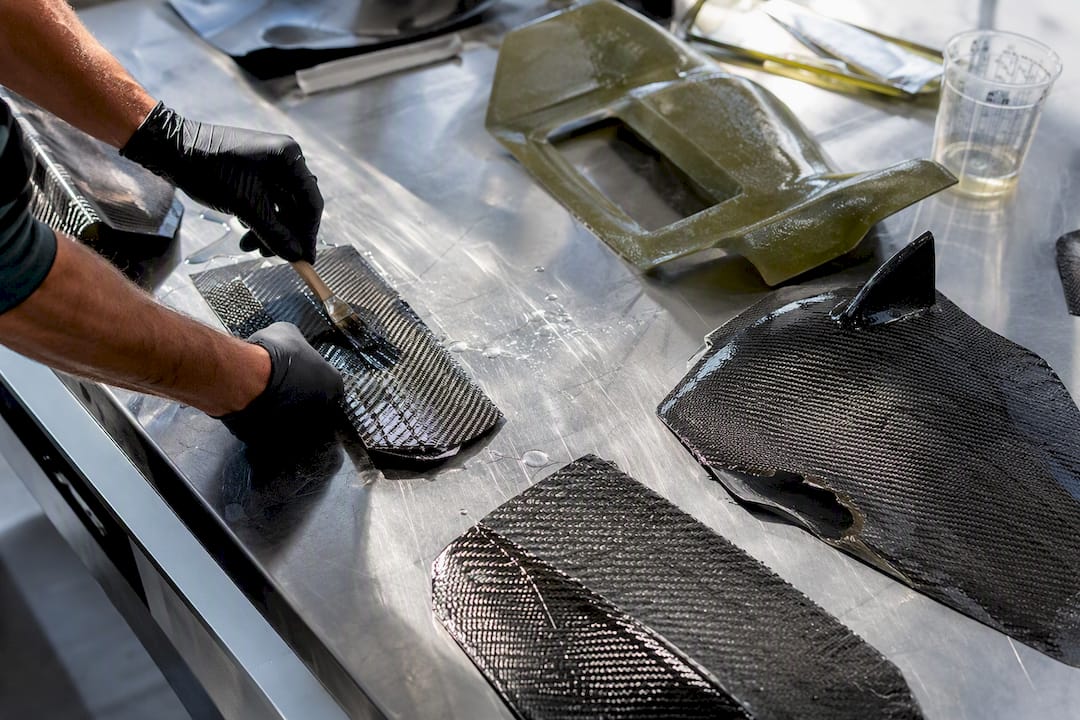
Carbon fiber is woven or unidirectional strands of carbon atoms bonded into a resin matrix, usually epoxy, cured either as wet layup or as prepreg sheets baked in an autoclave under heat and pressure. Prepreg gives tighter tolerances and better surface finish. Wet layup is cheaper and more forgiving for one-off restoration parts.
Fiberglass uses woven glass strands, most commonly E-glass for general parts and S-glass where extra strength is needed, set in polyester or vinylester resin. It is the older, more forgiving technology, and it is why most factory-style replacement hoods and fenders still start life as fiberglass.
- Carbon fiber: carbon strands, epoxy resin, prepreg or wet layup, unidirectional or woven weave
- Fiberglass: E-glass or S-glass strands, polyester or vinylester resin, open-mold or closed-mold production
- Hybrids: carbon skins over glass or Kevlar layers, or foam/honeycomb cores, blend stiffness with impact tolerance
Which Is Stronger, Carbon Fiber or Fiberglass?
Strength and stiffness are not the same thing, and this is where a lot of buyers get confused. Fiberglass can actually hold its own on raw tensile strength in some formulations, but carbon fiber pulls dramatically ahead on stiffness, which is the property that determines how much a hood flexes at speed or how much a splitter deflects under load.
The stiffness gap is the number that matters most for handling. Carbon fiber’s tensile modulus runs roughly three to four times higher than fiberglass’s, and that difference is why a carbon hood stays flat at 150 mph while a fiberglass one can flutter.
On weight, carbon fiber’s density of about 1.5 to 1.7 g/cm³ against fiberglass’s 2.3 to 2.7 g/cm³ makes carbon roughly 30 to 40% lighter for a comparable panel. That weight saving is real on a hood or trunk lid, but it shrinks fast once you factor in resin content and core material, so treat manufacturer weight claims with a healthy dose of skepticism.
- Higher modulus means less deflection under aerodynamic load, which matters for splitters, diffusers, and hoods at speed.
- Lower density means less unsprung or reciprocating mass, which matters more on doors and hoods than on structural sills.
- Lower impact resistance means a curb strike or hard hail event is more likely to crack carbon than dent fiberglass.
- Carbon fiber’s electrical conductivity can interfere with sensors and RF systems and can trigger galvanic corrosion near dissimilar metals, a real concern near mounting brackets and fasteners.
- Fiberglass’s thermal expansion behaves more predictably across temperature swings, which simplifies panel gaps on cars that see hot summers and cold winters.
Why Do Carbon Fiber Parts Cost So Much More?
The material itself explains most of the price gap, but manufacturing method widens or narrows it depending on how the part gets made.
Fiber cost, resin system, and cure process all stack on top of each other. A finished fiberglass hood typically runs $200 to $500, while a comparable carbon fiber hood runs $600 to $1,200 or more, and that gap tracks fiber cost, resin grade, and how the part was cured.
- Hand layup is the cheapest route, common on both materials, but it produces the most variability in wall thickness and finish.
- Vacuum infusion pulls resin through dry fiber under vacuum, giving better consistency and less wasted resin than hand layup.
- Resin transfer molding (RTM) uses matched tooling for tighter tolerances, favored for higher-volume aftermarket runs.
- Prepreg and autoclave curing gives the best surface finish and dimensional accuracy, which is why premium carbon aero parts almost always use it, and why they cost the most.
Fiberglass repairs faster and cheaper in the field, since a cracked panel can often be patched with additional glass and resin rather than replaced outright. Carbon fiber, once cracked, usually needs a full panel swap because patching disrupts the fiber orientation that gave it stiffness in the first place.
Pro Tip: Fitment tolerance and manufacturer reputation matter more than the sticker price. A $250 fiberglass hood that needs three hours of trimming and filler work can end up costing more installed than a $600 carbon panel that bolts on clean.
Where Each Material Actually Belongs on a Car
Carbon fiber earns its price on parts where stiffness and weight directly affect performance: race-derived chassis components, splitters, diffusers, and hoods on track-focused builds. It is also the default choice for visible aero panels where owners want the woven look as much as the function.
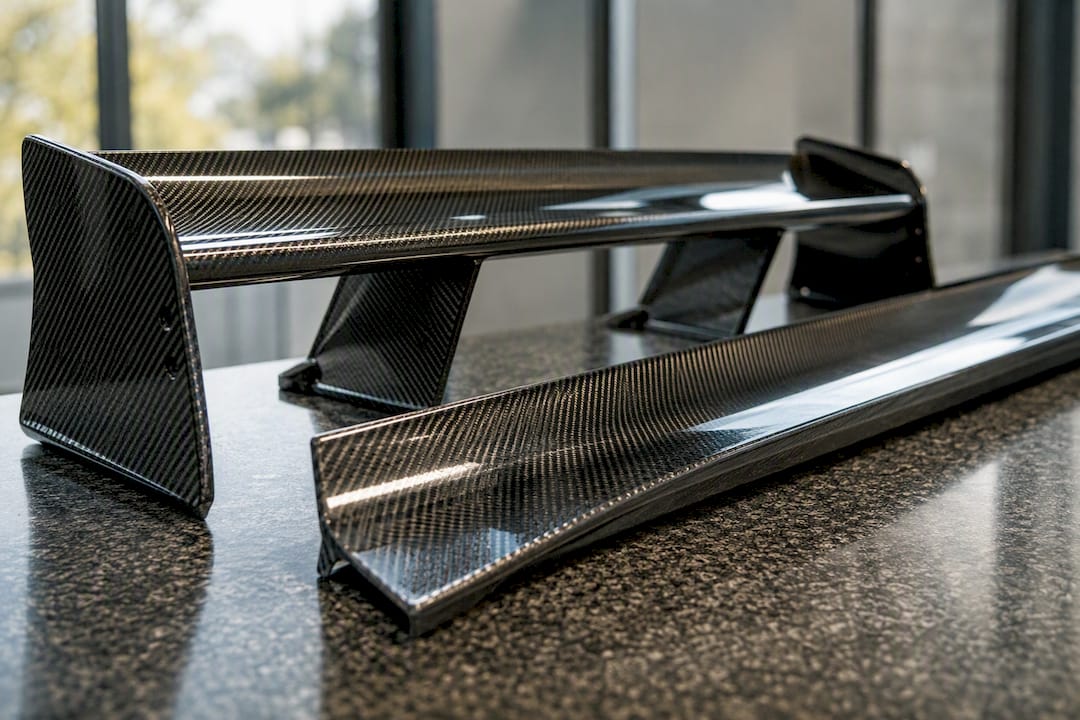
Fiberglass remains the better call for boat hulls, impact-prone lower body panels, budget-focused body kits, and any zone near antennas or sensors where conductivity is a liability. Many owners split the difference within a single build, choosing carbon fiber for hoods and aero parts while keeping trunks and larger cosmetic panels in fiberglass, where cost and easy repair matter more than shaving grams.
Hybrid layups, carbon skins over a glass or foam core, are often the smartest engineering compromise for restoration work, concentrating stiffness where it counts while keeping cost and impact tolerance in check.
- Carbon fiber fits: splitters, diffusers, hoods on track cars, structural aero components
- Fiberglass fits: boat hulls, rocker panels, budget body kits, RF-sensitive zones near antennas
- Hybrids fit: cosmetic panels needing some stiffness without full carbon cost
- Set your budget ceiling first, since it eliminates half the argument before you start.
- Identify whether the part is stiffness-critical or impact-prone.
- Check for nearby sensors, antennas, or dissimilar metals that rule out conductive carbon.
- Decide if a hybrid layup covers your stiffness need at a lower price point.
What Installers Wish Buyers Knew Before Ordering
Installation and fitment labor frequently exceed the price of the part itself, especially on non-premium fiberglass pieces that need trimming, filler, and paint work before they sit flush. Budget for that labor before you fall in love with a low sticker price.
Carbon fiber’s conductivity is not just a spec sheet curiosity. Placing it near parking sensors, cameras, or antennas without proper grounding and isolation can cause real interference, so fiberglass remains the safer material in those zones. Moisture intrusion and UV exposure also age the two materials differently: fiberglass tends to yellow and chalk over time, while carbon fiber’s clear coat is the weak point that fails first under UV, exposing the weave beneath.
Pro Tip: Before buying any composite panel, ask the seller for exact fitment measurements or a paper template, and check reviews for mentions of gaps, warping, or panel fit issues.
- Confirm grounding provisions if the part sits near electronics.
- Ask about resin type, since vinylester holds up to UV and moisture better than basic polyester.
- Budget separately for paint, trim, and install labor, not just the part price.
A Practical Note for Restorers and Owners
Match the material to the job, not the reputation. A carbon hood on a garage queen that never sees a curb is a fine indulgence, but a track car with tight budgets often does better on a hybrid or fiberglass panel where repairs stay cheap. When you’re sourcing either option, Supercars makes it easier to search verified listings and compare fitment notes across sellers before you commit.
— Artem
Find the Right Composite Panel Without the Guesswork
Sourcing a hood, trunk, or aero panel that actually fits your chassis is harder than picking the right material. Supercars lists OEM and aftermarket carbon fiber and fiberglass parts across exotic and performance brands, so you can compare listings side by side instead of chasing sellers across five different forums.

Before you buy, check the seller’s fitment notes, read the reviews on panel gap and finish quality, and request exact measurements or a template if the listing doesn’t include one. That extra ten minutes catches the mismatches that otherwise turn into a weekend of filler work. Search current carbon fiber and fiberglass body panel listings on Supercars.parts and filter by your exact make and model to start narrowing down options today.
For anything involving sensors or wiring near a new panel, it’s worth cross-checking your vehicle’s electrical documentation, similar to how diagnostic guides for ABS module and sensor faults walk through fault codes, before you assume a fitment issue is actually a material problem.