
Use Supercars.parts to Find Discontinued Aston Martin Parts, Restorers
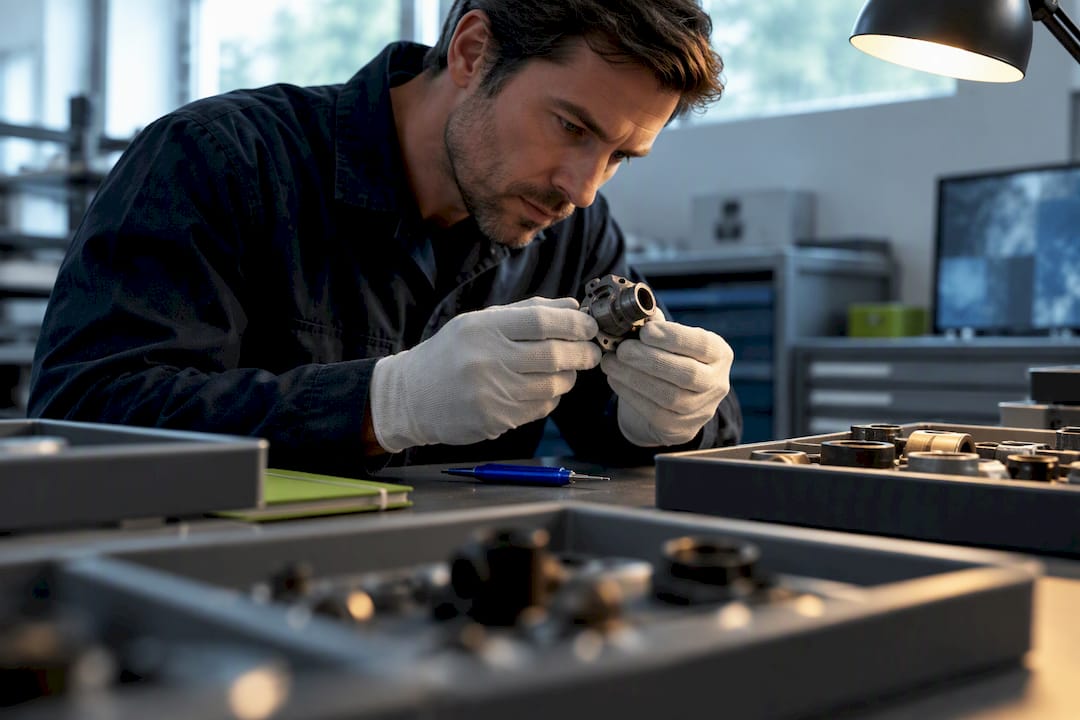
The fastest way to find discontinued Aston Martin parts is to work five channels in order: Aston Martin Works for provenance and heritage-authentic components, specialist heritage suppliers and their parts catalogues, marketplaces like Supercars.parts for breadth across many sellers, salvage yards for donor components. Marque clubs carry the obscure stuff nobody else stocks. Before contacting anyone, have your VIN, sharp photos, exact measurements, and any visible casting or service numbers ready to send.
TL;DR:
- Using Aston Martin Works first ensures provenance and authenticity, but it may take weeks to months to receive a part.
- For quick access, salvage yards and marketplaces like Supercars.parts can deliver parts within days, though provenance verification is limited.
- Precise identification requires VIN, detailed photos, measurements, and checking whether a number is a casting or service mark, often using cross-reference tools.
- Verified fit and authenticity depend on measuring mounting points, checking handedness, and reviewing factory diagrams or provenance documents for high-value parts.
- Cost considerations suggest original or certified parts for structural components and reproduction or remanufactured parts for non-visible mechanical pieces, with thorough documentation being vital for resale.
Table of Contents
- How to Find Discontinued Aston Martin Parts: A Sourcing Shortlist
- How Do You Identify the Exact Part You Need?
- How Do You Verify Fit and Authenticity Before You Buy?
- What Should You Expect on Lead Times, Shipping, and Cost?
- Should You Buy Used, Reproduction, or Remanufactured Parts?
- Why the Search Itself Has Changed More Than the Parts Have
- Use Supercars.parts to Start Your Search Today
- Where Else Should You Look for Verification and Records?
- Sources
- FAQ
How to Find Discontinued Aston Martin Parts: A Sourcing Shortlist
Start with the manufacturer, then branch out. Each channel below solves a different problem, and the order matters if you want to avoid wasted weeks.
- Aston Martin Works. This is the manufacturer’s heritage division, and it’s the first call for anything provenance-critical. The Assured Provenance Parts Programme supplies certified, provenance-backed replacement components for heritage models, and trade advisors can source rare items across Aston Martin’s model history when a part isn’t sitting on a shelf.
- Specialist heritage suppliers and model-specific catalogues. These outfits often hold original factory diagrams and parts lists for specific eras, DB4 through DBS included, and they’re worth checking when Works doesn’t stock an item but knows who does.
- Marketplaces like Supercars.parts. A marketplace aggregates listings from dozens of sellers at once, which means one search covers more ground than five separate phone calls. It also lets you submit a single detailed enquiry with photos and a VIN and let multiple sellers respond.
- Salvage yards and donor vehicles. For non-structural, non-safety components, a used part pulled from a donor car can be the quickest fix, though condition varies wildly.
- Marque clubs and registries. Club technical advisors and registries often hold cross-reference lists and production notes that public catalogues never publish, which makes them a genuine last resort for late-production or low-volume variants.
Work these roughly in that order unless cost is the deciding factor, in which case salvage and marketplaces often beat heritage pricing for parts where provenance doesn’t matter.
How Do You Identify the Exact Part You Need?
Before you search anything, pin down the vehicle. Pull the VIN, confirm the model year, and note any mid-production changes that affect fitment, since Aston Martin, like most manufacturers, revised components mid-run without changing the visible badge.
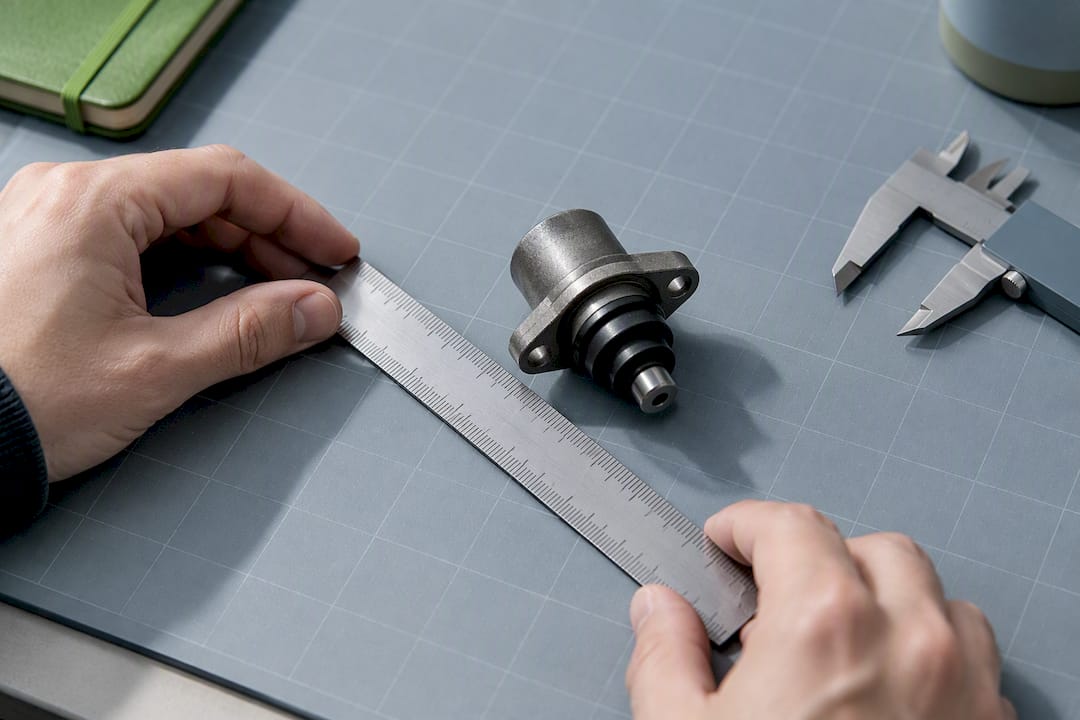
- Photograph the part from multiple angles, including close-ups of any stamped numbers or markings, with a ruler in frame for scale.
- Write down every number you find, even partial ones. A digit that looks irrelevant can be the difference between two similar brackets.
- Check whether the number is a casting mark or a service number. Restorers frequently find a number on a component that identifies the casting, not the current orderable part, so searching that exact string can return nothing until you cross-reference supersessions.
- Run the number, a photo, or a description through a tool like CarSpanner, which cross-references part numbers across suppliers and flags modern equivalents.
- If the number search draws a blank, switch to descriptive keywords, since suppliers often catalog parts under their own reference systems rather than the original factory number.
For pre-1981 cars, standard VIN decoders won’t help much. Those vehicles use manufacturer-specific formats, so marque registries and manufacturer records are what actually tie a chassis to its original build sheet and correct parts.
Pro Tip: Take the ruler photo even when you’re confident about the part number. Sellers use it to confirm scale on remote enquiries, and it often shaves a full day off getting a real quote.
How Do You Verify Fit and Authenticity Before You Buy?
A part that looks right in a photo can still be wrong in your hands. Run through this before money changes hands:
- Measure mounting points, bolt spacing, thread pitch, and connector counts against your own part or the factory diagram, not against memory.
- Check handedness. Left and right versions of brackets, mirrors, and trim pieces get mixed up in listings constantly.
- Compare the seller’s part against factory diagram callouts and any supersession notes, since a later revision may fit but differ in finish or material.
- For heritage-critical or high-value parts, ask for provenance documentation, casting stamps, or a certificate rather than taking a seller’s word.
- Watch for red flags: hidden mounting areas that don’t match wear patterns elsewhere on the part, finishes that don’t match the rest of the assembly, or missing hardware that should ship with it.
One insight worth remembering here: heritage programmes and general marketplaces trade speed for provenance in opposite directions. A manufacturer-certified part maximizes authenticity but can take months. A marketplace listing can arrive in days, but the provenance check is on you.
What Should You Expect on Lead Times, Shipping, and Cost?
Lead times vary enormously by channel, and that’s the single biggest planning variable most restorers underestimate. Manufacturer heritage parts through Aston Martin Works can take weeks to months, since sourcing often means locating original stock or arranging a small production run. Remanufactured parts sit in between, depending on whether a batch is already in progress. Salvage parts, when someone actually has one, can ship the same week.
Shipping rare or heritage parts also comes with its own checklist:
- Crating and insurance appropriate to the part’s value, not generic packaging.
- Documentation for customs, especially for cross-border shipments, plus any provenance paperwork traveling with the part.
- A clear enquiry upfront, including VIN, photos, dimensions, and destination, so sellers can quote shipping accurately instead of guessing.
- Clarity on deposit requirements and return policy, since many sellers of rare items require a non-refundable deposit before they’ll pull a part from inventory.
Skipping any of those four steps is the most common reason quotes come back vague or wrong.
Should You Buy Used, Reproduction, or Remanufactured Parts?
The right choice depends on what you’re restoring toward. If you’re chasing concours judging or a numbers-matching build, originality carries real value, and a certified provenance part is worth the wait and the premium. If you’re building a reliable driver, the calculation flips.
- For structural or visible components, original or certified parts protect resale value and judging scores.
- For non-visible mechanical parts, reproduction or remanufactured components can be perfectly serviceable and considerably cheaper.
- Check whether a remanufactured part carries an identifying mark or warranty. That single detail tells you whether a future buyer will treat it as original or as a rebuild.
- Weigh cost against long-term value. A trim piece might be fine as reproduction. A chassis plate almost never is.
Pro Tip: Keep every invoice and provenance document from parts you install, even reproduction ones. A well-documented parts history matters almost as much as the parts themselves at resale.
Why the Search Itself Has Changed More Than the Parts Have
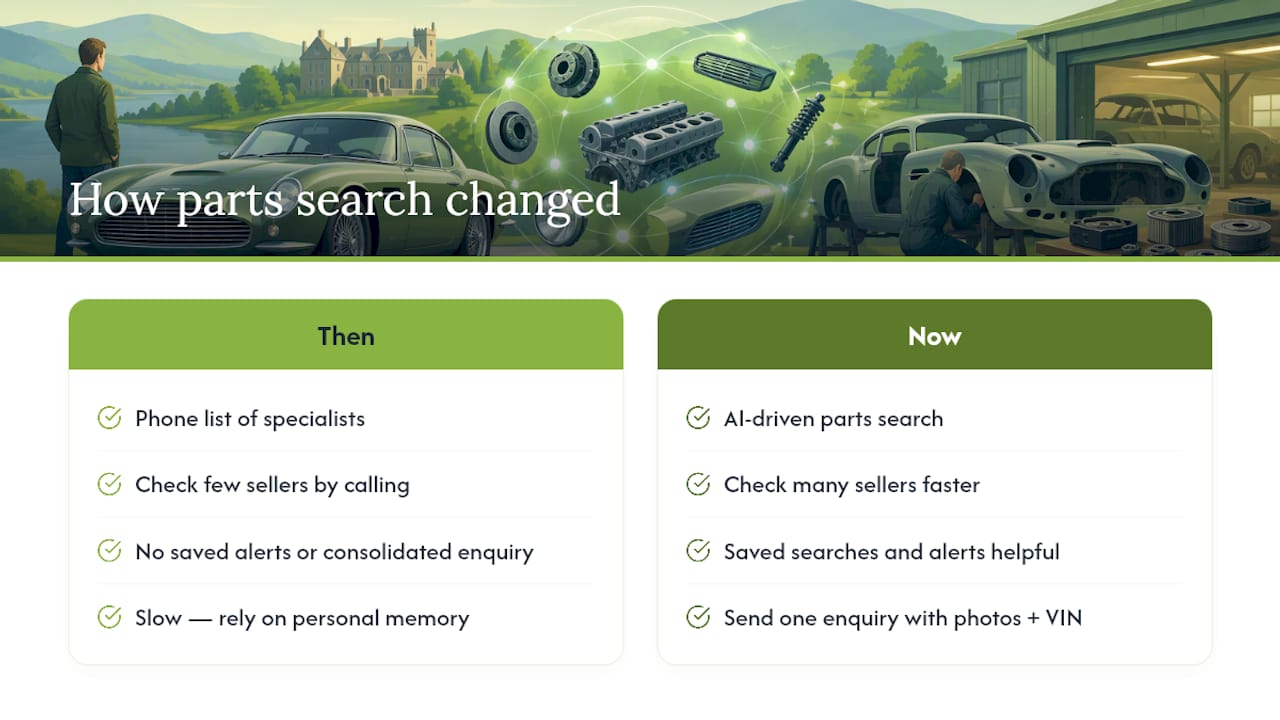
The parts that go into a vintage Aston Martin haven’t changed. How you find them has. A decade ago, sourcing a discontinued part meant working a phone list of specialists and hoping one of them had seen the piece before. Today, a marketplace like Supercars.parts claims an AI-driven parts search built on a large specialist-focused inventory, which changes the math on how many sellers you can realistically check in an afternoon.
The tools don’t replace judgment, though. Saved searches and alerts are useful for parts that surface rarely, and consolidating your enquiry with photos and a VIN into one submission beats emailing five separate suppliers with five different descriptions. What you should still expect from any seller, marketplace or otherwise, is a straight answer on condition, honest provenance notes, and clear shipping terms before you commit. A big inventory helps you find candidates faster. It doesn’t verify them for you.
— Artem
Use Supercars.parts to Start Your Search Today
Supercars.parts gives you one search across a large specialist-focused inventory instead of ten separate calls to suppliers who may or may not answer the phone. That’s the practical edge over chasing heritage waitlists or cold-calling salvage yards one at a time: you search once, describe the part with photos and your VIN, and let the parts search surface matches from sellers who already have Aston Martin components listed.
To get a usable quote fast, prepare your enquiry the same way you would for any specialist: clear photos from multiple angles, your VIN, measurements, and the condition you’re willing to accept, original, remanufactured, or reproduction. Vague enquiries get vague answers, while a detailed one gets a real price. Head to the Aston Martin parts category to search current listings, or browse the wider exotic car parts inventory if you’re restoring more than one marque at once. If detailing and finishing rare wheels or trim is part of your project, a resource like Diamondbrite’s guide on non-acid wheel cleaners is worth a read before you touch anything you just spent months finding.
Where Else Should You Look for Verification and Records?
A few outside resources are worth bookmarking alongside any marketplace search:
- CarSpanner for cross-referencing part numbers, photos, or descriptions against supplier catalogues when a number search comes up empty.
- Aston Martin Works for heritage supply, trade advisors, and the Assured Provenance Parts Programme when authenticity matters more than speed.
- Classic-car VIN decoders and marque registries for pre-1981 vehicles, where build sheets and production notes live outside standard databases.
Sources
- How to Identify Classic Car Parts — The Complete Guide | CarSpanner
- Assured Provenance Parts Programme | Aston Martin Works
- Classic Car VIN Decoder - Pre-1981 Vehicles Explained | VinDecoderPlus
FAQ
How Do I Find a Part That’s Been Discontinued?
Start by identifying the exact part with a VIN, photos, and any visible numbers, then check whether it’s a casting mark or a service number before searching. From there, work manufacturer heritage programs, specialist suppliers, and marketplaces like Supercars in that order, and use a tool like CarSpanner if the original number returns no matches.
Where Can I Get Aston Martin Parts?
Aston Martin Works is the manufacturer’s own source for heritage components and offers an Assured Provenance Parts Programme for certified replacements. Beyond that, specialist heritage suppliers, marque clubs, and marketplaces such as Supercars round out the search, each better suited to different price points and provenance needs.
Where Can I Find Used Aston Martin Parts for Sale?
Used and salvage parts turn up through specialist dismantlers, marque club classifieds, and marketplaces that aggregate multiple private and trade sellers in one search. Always verify mounting points, connector counts, and finish against a factory diagram before buying, since used parts rarely come with formal provenance documentation.
What Is the Rarest Aston Martin Model?
Rarity varies by model year and production run rather than one single answer, since Aston Martin built many variants in very small numbers across its history. Low-volume heritage models tend to have the thinnest parts supply, which is exactly why manufacturer heritage programs and marque registries matter most for those cars.
How Long Does It Take to Get a Discontinued Part?
Timelines depend entirely on the channel. Manufacturer heritage sourcing can take weeks to months, remanufactured parts fall somewhere in between depending on production batches, and salvage or marketplace finds can ship within days if a seller already has the part in stock.


