Restorers: VIN First Workflow to Find Discontinued McLaren Parts Fast
The fastest way to find discontinued McLaren parts is to pull the exact OEM part number from your VIN or workshop diagram, then run that number simultaneously through dealer parts desks, NOS warehouses, salvage networks, and specialist marketplaces. Expect rare pieces to take anywhere from a few days to several months to surface, and expect NOS or low-mileage takeoffs to cost noticeably more than a comparable used part with unknown history.
TL;DR:
- Finding discontinued McLaren parts can take from a few days to several months, especially for rare electronics or structural components, and NOS parts tend to cost more.
- Confirm the exact OEM part number from your VIN or diagrams before searching, and verify compatibility through dealer or workshop manuals to avoid mismatched or incorrect parts.
- Use cross-checks like OEM stamped codes, casting marks, and original documentation to authenticate parts before purchase, especially for high-value metal components.
- Reproduction parts are quickest for cosmetic items but are less reliable or suitable for structural or electronic components, which often require remanufacturing or salvage sourcing.
- Supercars.parts simplifies searches by allowing one-query lookups via OEM number, VIN, or model filters, helping to find rare parts faster while emphasizing verification and documentation.
Table of Contents
- Where Should You Search First for McLaren Parts?
- How Do You Verify a Part Before You Buy It?
- What Are Your Options When the Original Part Is Gone?
- How Supercars.parts Narrows the Search
- A Restorer’s Real Hunt for One Rare Bracket
- Search McLaren Parts Faster on Supercars.parts
- Bookmark These for Your Next Search
- Sources
- FAQ
Where Should You Search First for McLaren Parts?
Chase the part number before you chase the part. Every serious restorer starts here, because a casting number or electronic parts catalog (EPC) reference eliminates the guesswork that leads to buying the wrong bracket, sensor, or trim clip. Part-number confirmation from OEM diagrams is the foundational step that everything else in your search depends on.
Once you have that number, work through channels in this order:
- VIN decode and EPC cross-check. Pull your build sheet if you have one, then match it against the electronic parts catalog or workshop manual diagram to confirm the exact revision of the part you need. McLaren ran changes across model years, so a part that looks identical in a diagram may carry a different number for your specific chassis.
- Authorized dealer or heritage parts desk. Ask specifically whether the part is still in the active supply chain, on a last-call production run, or fully discontinued. Request written confirmation of the part number and, if available, a superseded-part cross-reference.
- NOS and specialist warehouses. New Old Stock is often the best fit for a museum-quality restoration, but it’s frequently buried in old distributor inventories or private collections rather than listed anywhere searchable. This takes patience, not just a good search query.
- Salvage yards and breakers. Search beyond your own country. Regional and native-language classifieds surface listings that never make it into English-language search results, which matters enormously for a low-volume brand like McLaren.
- Online marketplaces and auctions. Set saved searches with the exact part number and model, not just generic terms like “McLaren trim panel.” Auctions can deliver scarce OEM pieces fast, but only if you’ve done pre-bid homework.
- Owner communities and specialist restorers. Forums and owner clubs often hold private stock and industry contacts that never reach public listings. Post with your VIN, part number, and clear photos of what you need. Vague requests get ignored.
- Keep a running spreadsheet of every part number, source contacted, and quoted price.
- Follow up on cold leads every few weeks. Inventory changes fast in this niche.
How Do You Verify a Part Before You Buy It?
Authenticity checks separate a good purchase from an expensive mistake. Photos and listing details tell you most of what you need before money changes hands.
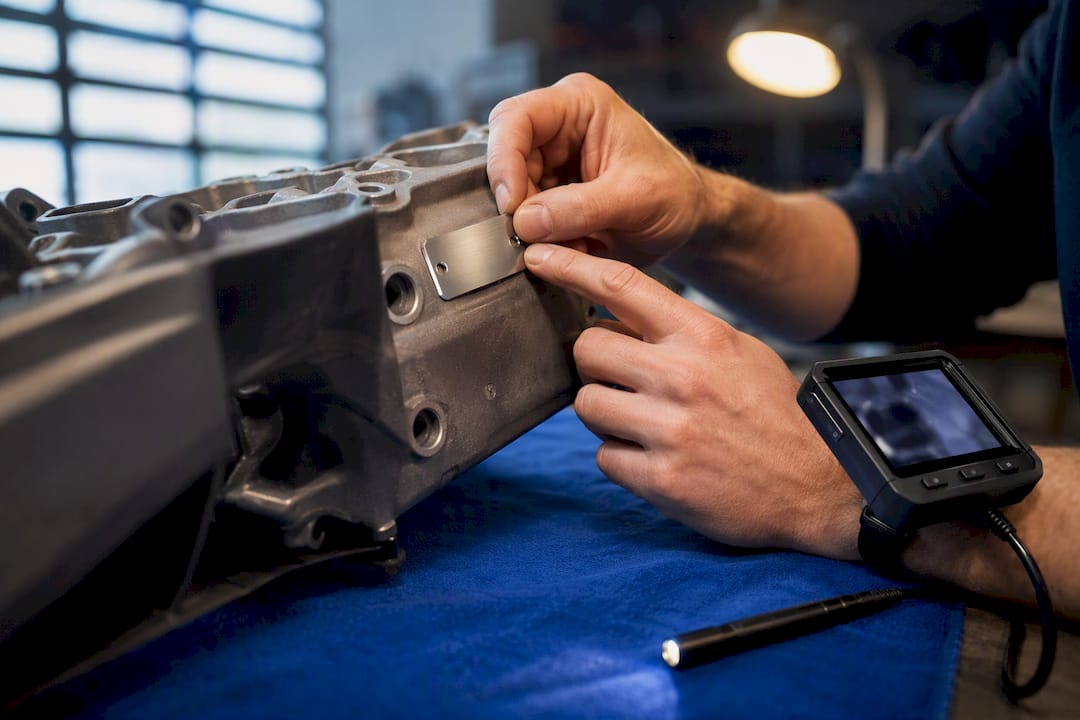
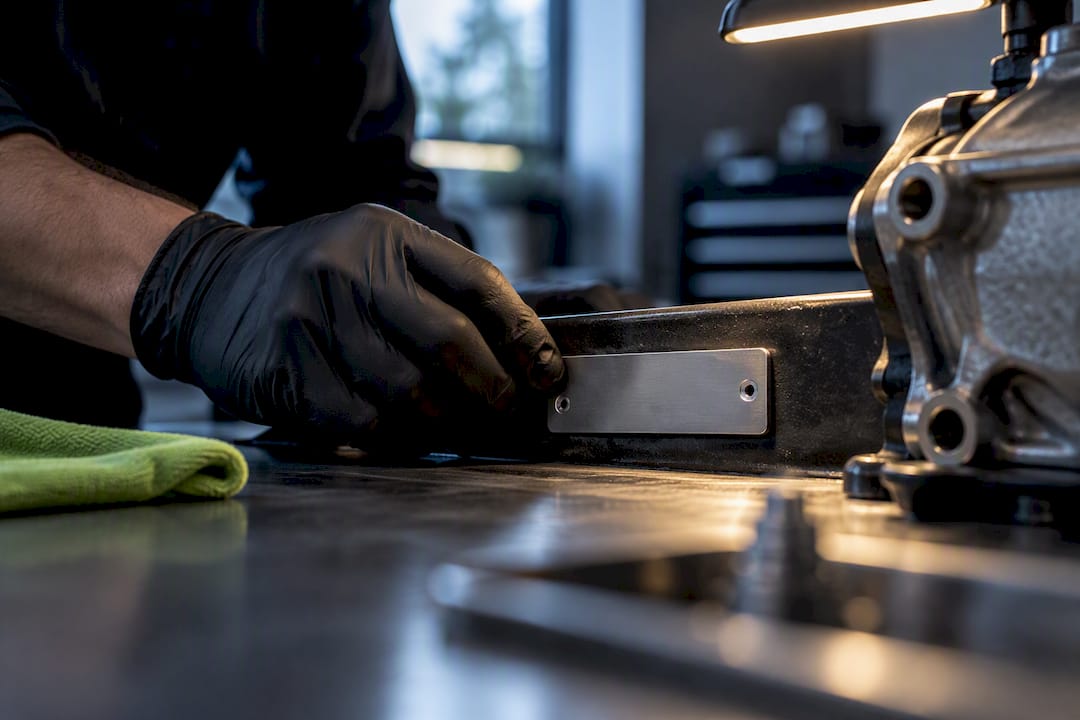
Ask sellers for close-up shots of OEM stamped codes, casting marks, and label fonts. Reproductions and mislabeled parts frequently get the font, spacing, or logo placement subtly wrong. A genuine part usually smells and looks appropriate for its age; unusual residue, fresh paint over old casting, or a part that looks “too clean” for its claimed mileage deserves a second look.
Request documentation whenever it exists: original invoices, service history tied to the part, or prior fitment records. Cross-reference whatever number the seller gives you against the OEM diagram you already pulled. If the numbers don’t match, don’t assume it’s “close enough.”
For high-value metal components, especially structural or suspension pieces, professional verification is worth the cost. Restorers use XRF alloy testing to confirm material composition against OEM specification, alongside visual inspection of casting marks and residue that can indicate a forgery.
- Confirm return policy before bidding or buying.
- Use escrow or buyer protection on any international purchase over a few hundred dollars.
- Request a local inspection or third-party pickup when the seller is far from home.
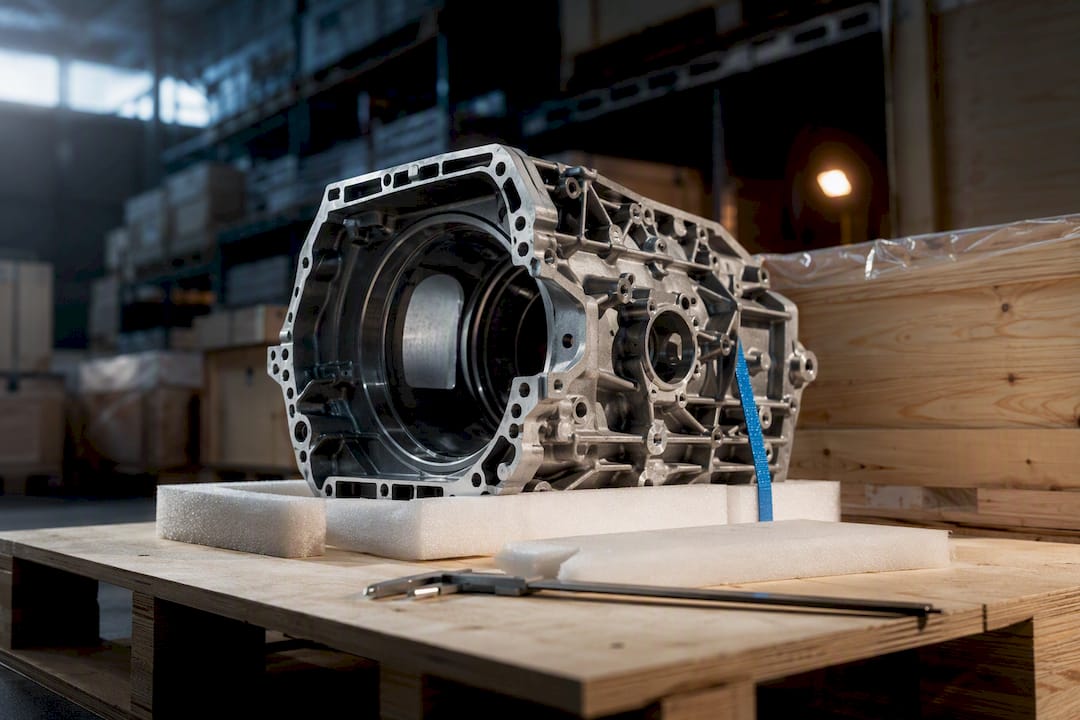
Pro Tip: Photograph the part next to a tape measure or known reference object before you pay for shipping. A part that’s a few millimeters off in a photo can save you a costly return.
What Are Your Options When the Original Part Is Gone?
Reproduction isn’t always the right answer, and it’s rarely the cheap one. For cosmetic trim, small housings, and clips, 3D scanning and printing can produce a usable replacement, though finish and tolerance quality can vary enough that you should reserve it for parts where exact fit isn’t critical.
Electronic and electromechanical assemblies are a different story. Recreating discontinued electronics is often economically unviable because the original tooling, legacy software, and supplier relationships that built them are usually long gone. Instead, look at specialist rebuilders who remanufacture starters, alternators, and similar assemblies with a warranty attached, which is a far more reliable route than hoping someone reverse engineers a control module.
Cross-fit parts from related McLaren models or market variants can also work, provided you verify mounting points, connector types, and software calibration before installing.
- NOS: highest authenticity, longest search time, highest price.
- Salvage: faster and cheaper, but condition varies part to part.
- Reproduction: fastest for trim and cosmetic pieces, weakest option for structural or electronic parts.
Manufacturers typically plan parts availability around a finite window, often close to a decade, after which the aftermarket and salvage markets effectively take over as the real supply chain.
How Supercars.parts Narrows the Search
A marketplace listing hundreds of thousands of exotic and supercar parts uses AI-driven search designed to help match part numbers, fitment, and model details instead of relying on keyword guessing. For a McLaren owner chasing a specific casting number, that’s the difference between scrolling hundreds of loosely tagged listings and getting a short, relevant shortlist.
Run your search using the exact OEM number you pulled from the EPC or workshop diagram, then narrow by chassis or model year if the listing allows it. Set a saved alert so new inventory matching your part gets flagged automatically, since rare McLaren components often surface and sell within days.
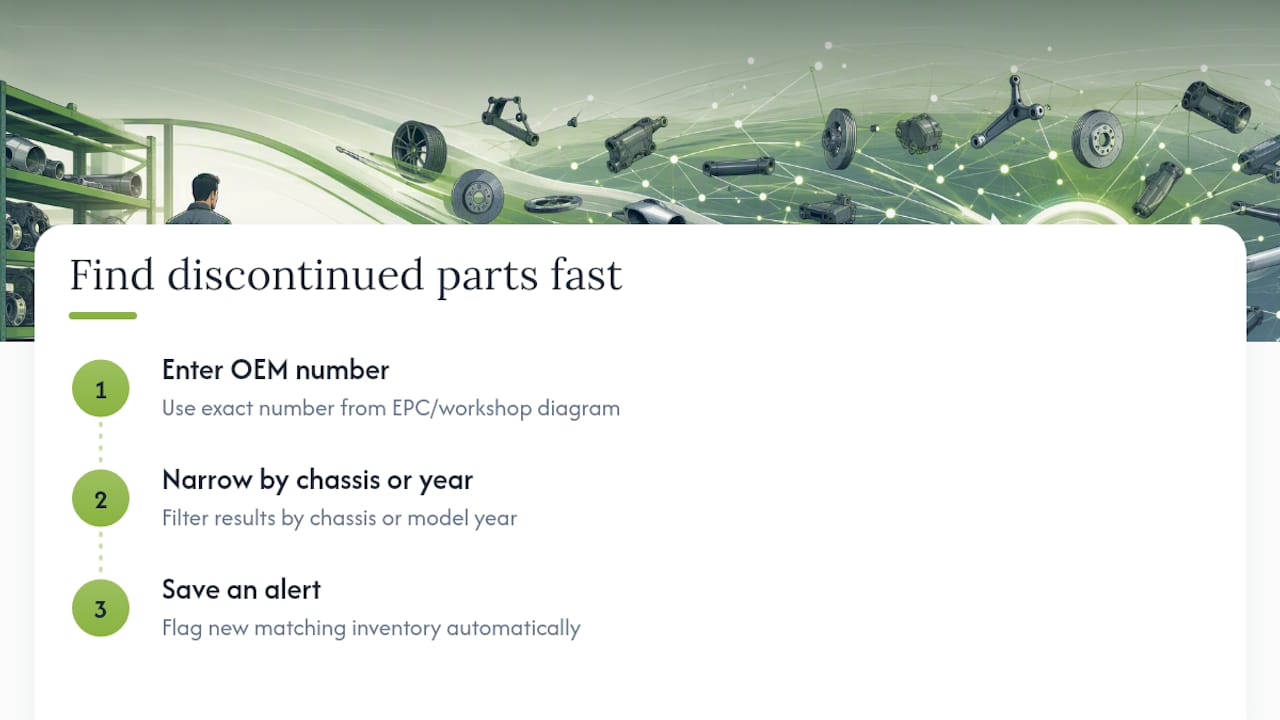
None of that replaces the verification work covered above. Even on a marketplace with strong listings, ask the seller for condition photos, service history if it exists, and clear shipping terms before you commit. A trusted platform speeds up discovery. It doesn’t replace your own eyes on the part.
A Restorer’s Real Hunt for One Rare Bracket
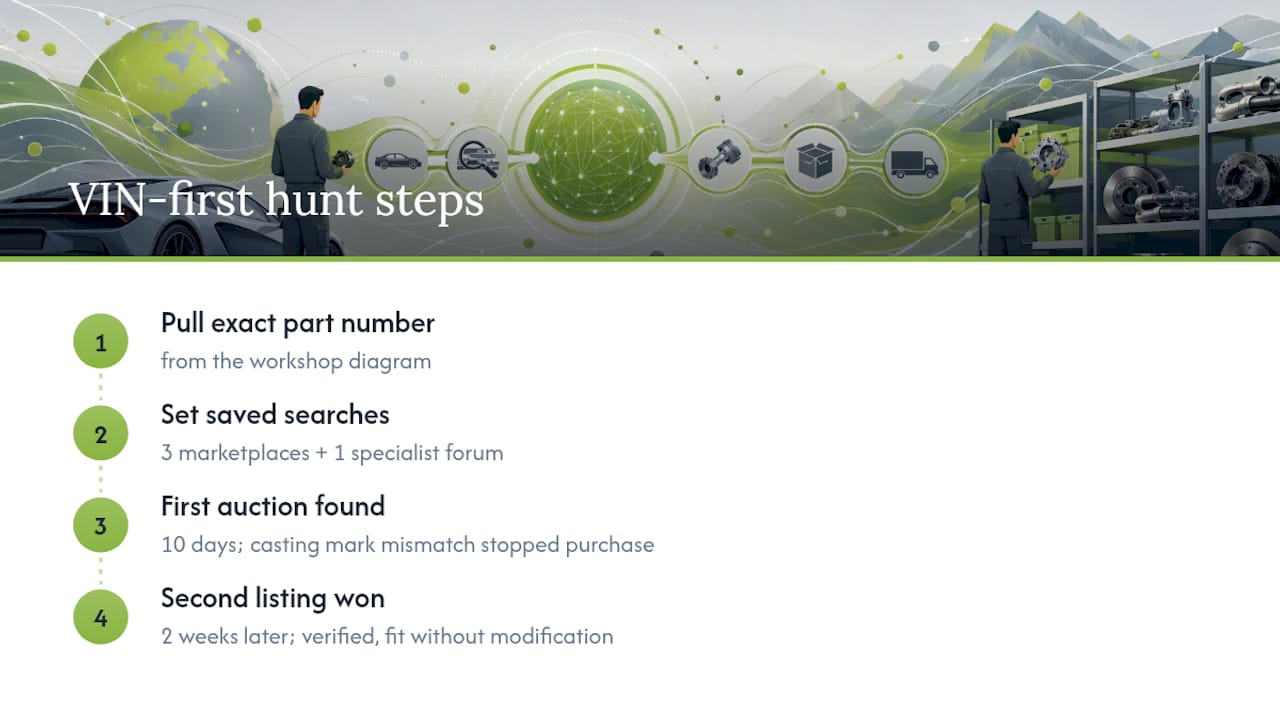
One McLaren owner spent weeks chasing a discontinued suspension bracket. The first step was pulling the exact part number from the workshop diagram, then setting saved searches across three marketplaces and one specialist forum. An auction listing turned up within ten days, but pre-bid photos showed a casting mark that didn’t match the OEM diagram exactly. That single check stopped a bad purchase before it happened.
A second listing, verified against the correct casting reference, won at auction two weeks later. The part arrived, matched the documentation, and fit without modification. The lesson: the saved search saved time, but the casting-mark check saved money.
— Artem
Search McLaren Parts Faster on Supercars.parts
Chasing a discontinued McLaren part across a dozen tabs, forums, and auction sites eats hours you don’t have. Supercars is built as one search entry point for that exact problem, letting you run a single query by OEM part number, VIN reference, or model filter across a listing base built specifically for exotic and supercar parts. Start on the McLaren Parts and Cars category page, or run a broader hunt from the general exotic car parts search if you’re not sure exactly which listing category fits.
Whatever you find, keep doing the legwork: request condition photos, ask for service documentation, and use escrow or buyer protection on any international purchase. If nothing matches today, set a saved search or post a wanted listing so sellers come to you as new inventory lands, rather than checking back manually every week.
Bookmark These for Your Next Search
- OEM diagrams and part-number confirmation
- Auction pre-bid due diligence checklist
- Remanufactured starters and alternators
- Trim restoration for faded plastic
Sources
- Hard-to-Find Auto Replacement Parts: Niche Cars & Sourcing Guide
- Tadge Juechter: The Real Reason It’s So Hard to Buy Parts for Older Corvettes
- Auction sourcing for NOS parts: win without overpaying
FAQ
How Long Does It Take to Find a Discontinued McLaren Part?
It varies widely by part type. Common trim or cosmetic items may surface within days through marketplace searches, while rare structural or electronic assemblies can take weeks or months of monitoring NOS warehouses and salvage networks.
Is It Legal to Import a Used McLaren Part From Another Country?
Most used mechanical and cosmetic parts can cross borders without special restriction, but electronics, airbags, and emissions-related components sometimes face import rules that vary by country. Check your local customs authority before committing to an international purchase, especially for safety-related parts.
Can I Get a 3D-Printed Replacement for a Discontinued McLaren Part?
Yes, for cosmetic trim, clips, and small housings where exact tolerance isn’t critical. 3D printing quality and finish can vary between providers, so it’s a poor fit for structural or safety-critical components.
Does Supercars.parts List McLaren-Specific Parts?
Yes. The McLaren Parts and Cars category lets you search by part number and model filters across the marketplace’s full inventory, and you can set saved alerts for parts not currently listed.
What Documentation Should I Keep After Buying a Rare Part?
Save the seller’s invoice, any provided service history, and photos of the part’s OEM markings before and after installation. This record protects your investment and supports the vehicle’s provenance if you sell or appraise it later.