
Match Your Lamborghini Intake by VIN on Supercars.parts
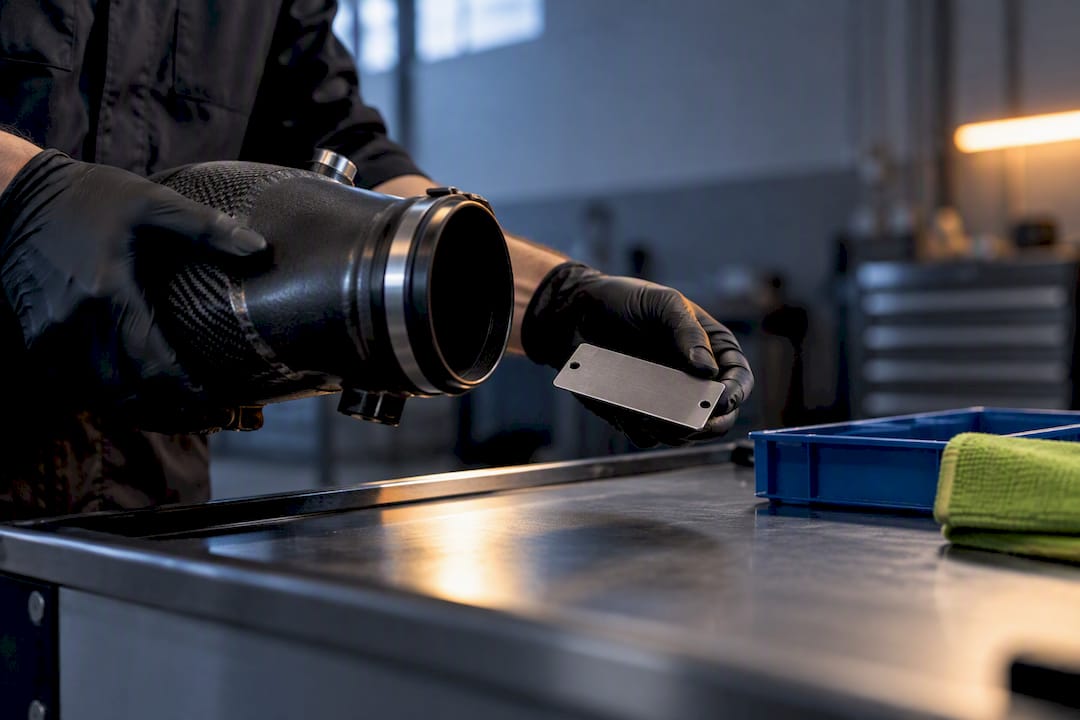
For most Lamborghini owners, a sealed carbon fiber airbox or a complete intake kit paired with a vehicle-specific tune delivers the best mix of airflow, throttle response, and induction sound. Cone filters alone can sound dramatic but often result in limited power gains. It’s recommended to plan for a tune from the start, as most kits require MAF recalibration to avoid a check-engine light. See the sections below for fitment checks and buying advice.
TL;DR:
- A sealed carbon fiber airbox is the most effective upgrade for airflow and cold-air separation, but it usually requires a custom tune to avoid check-engine lights.
- Compatibility with your exact Lamborghini model year and MAF sensor is critical; mismatched parts often cause calibration issues and faults.
- Most dyno-proven horsepower gains range from 12 to 20 on Huracán models and up to 28 on Urus with a Stage 1 tune, but these results depend heavily on supporting tuning.
- Installing a full intake system without subsequent tuning and proper calibration can lead to faults, heat soak, or overlooked restrictions that diminish power gains.
- Sourcing precise parts through specialized marketplaces reduces fitment errors and ensures your upgrade is both effective and supported.
Table of Contents
- Lamborghini Intake Upgrade Options: Airboxes, Cones, and Turbo Inlets
- How to Choose the Right Lamborghini Intake Upgrade for Your Car
- Fitment and Tuning Pitfalls That Cause Check-Engine Lights
- What Kind of Horsepower Gain Should You Actually Expect?
- What Does a Lamborghini Intake Upgrade Cost to Buy and Install?
- Why Sourcing the Right Intake Part Matters as Much as Picking One
- The Honest Take on Intake Upgrades Nobody Tells You
- Where to Buy Lamborghini Intake Parts and What to Ask Sellers
- Vendor and Reference Pages for Fitment and Dyno Details
- Sources
- FAQ
Lamborghini Intake Upgrade Options: Airboxes, Cones, and Turbo Inlets
Every Lamborghini intake upgrade falls into one of four categories, and the differences between them matter more than most buyers realize before they open their wallet.
- Sealed carbon fiber airboxes (Venturi housings): These replace the factory box with a closed, ducted enclosure, often built from prepreg carbon fiber, that channels outside air through a controlled path. They preserve cold-air separation from the engine bay while opening up flow.
- OEM-style high-flow filters: A drop-in replacement that fits the stock housing. Minimal gains, minimal risk, and the cheapest way to test the waters.
- Exposed cone or pod filters: These maximize raw airflow and produce the loudest induction snarl, but they sit closer to engine heat and pull in warmer air, which can offset some of the power gain.
- Turbo inlet and silicone coupler upgrades: Relevant mainly on turbocharged platforms like the Urus, these widen the path between the intake and turbo, reducing restriction points that stock rubber couplers create.
Quality tells itself apart fast. Look for prepreg carbon (not wet-layup), silicone couplers instead of rubber, neoprene gaskets for heat resistance, and laser-cut mounting brackets rather than stamped metal. Cheap kits skip these details first.
How to Choose the Right Lamborghini Intake Upgrade for Your Car
Start with your goal, not the product page. A daily-driven Huracán chasing sound and street response needs a different setup than a track-focused build chasing every available horsepower.
- Define your priority. Sound, street-legal power, or measurable track gains each point toward a different intake type.
- Confirm model and year compatibility. Intake geometry changes across model years even within the same platform, so a kit built for one Huracán generation may not clear the engine bay on another.
- Check MAF and emissions interfaces. Verify the kit accommodates your factory mass airflow sensor’s range, and check how it interfaces with breather lines and any OPF or DPF-equipped exhaust.
- Decide if you’re ready to tune. If a tune isn’t in the plan yet, a lower-flow filter upgrade avoids a check-engine light better than a full kit.
When you’re vetting a vendor, ask directly: what were the dyno testing conditions, is there a fitment guarantee, does the warranty survive installation, and can they supply support if your specific chassis number has quirks.
Pro Tip: Ask the seller for the exact ECU software version their dyno numbers were tested on. Lamborghini updates factory maps between production runs, and a gain measured on an older map may not repeat on your car.
Fitment and Tuning Pitfalls That Cause Check-Engine Lights
Most intake-related problems trace back to one thing: airflow increases beyond what the factory MAF sensor was calibrated to read. When the sensor reports values outside its expected range, the ECU flags a fault and the check-engine light comes on, even if the engine is running fine.
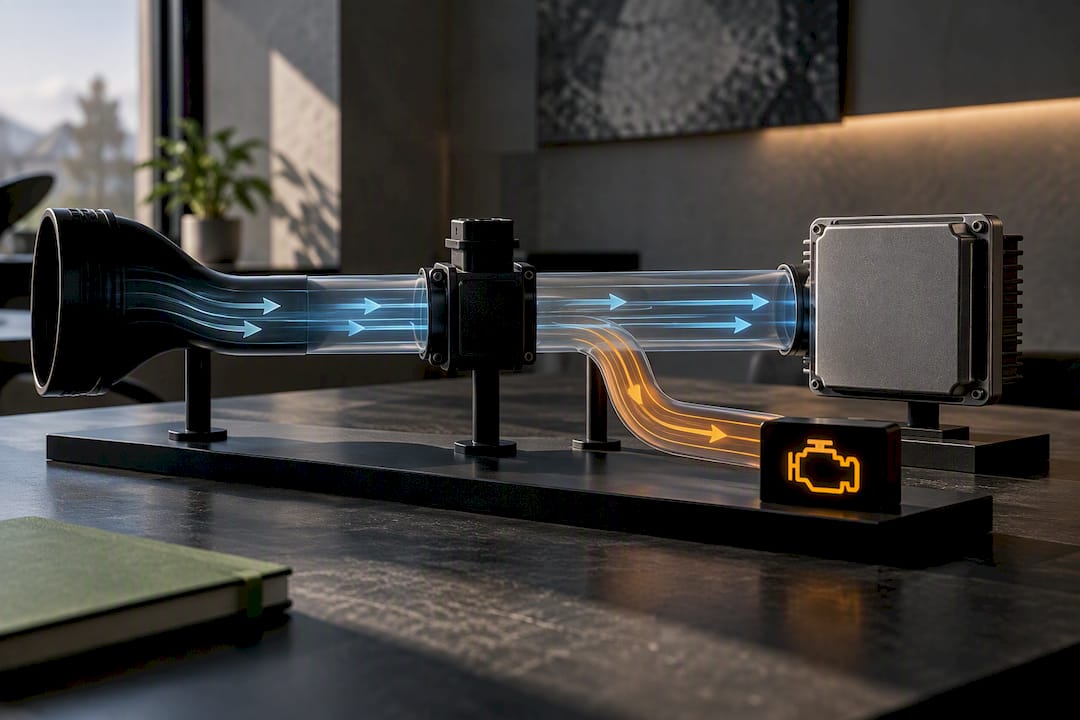
Vendors like Eventuri say plainly that a tune is required for their Huracán intake to operate correctly, precisely because of this MAF sensitivity.
Other common installation mistakes include:
- Exposed filters mounted too close to the exhaust manifold, causing heat soak that quietly erodes the gains you paid for.
- Breather or crankcase adapters that don’t match the housing, leading to oil vapor pulling into the intake tract.
- Silicone couplers installed loose or without proper clamps, creating vacuum leaks that mimic a bad sensor.
A staged approach avoids most of this: install the intake, scan for codes before driving, then book a dyno tune rather than guessing at a home remap. Roughly every kit built for a factory turbocharged or naturally aspirated Lamborghini platform carries some version of this same MAF warning, which is why skipping the tuning step is the single most common regret among owners who install these kits themselves.
What Kind of Horsepower Gain Should You Actually Expect?
Vendor dyno claims for Lamborghini intakes commonly land in the 12 to 20 horsepower range on Huracán platforms, with results depending heavily on the model and whether a supporting tune was applied. On the Urus, Eventuri’s intake is advertised at 14 to 20 horsepower on a stock map, climbing to 25 to 28 horsepower when paired with a Stage 1 tune. Other aftermarket makers, including aFe’s Track Series system, publish similar dyno-backed claims for V10 platforms.
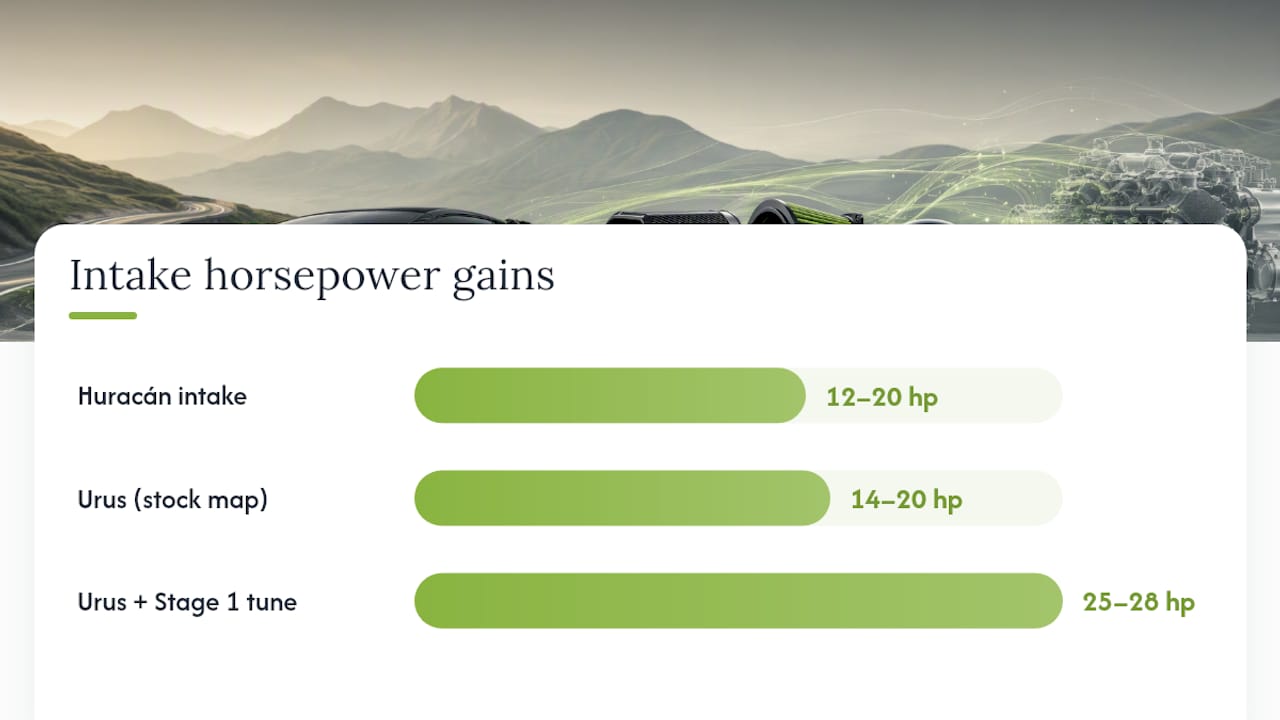
Those top-end numbers rarely happen from the intake alone. Vendors themselves note that maximum advertised gains show up when the intake is combined with a matching ECU map, not as a standalone part.
When a vendor sends you a dyno graph, ask three questions before trusting the number:
- Was the baseline run done on the same car, same day, same conditions as the post-install run?
- Was a tune applied for the “after” number, or is that the stock-map figure?
- What other modifications, if any, were on the car during the test?
A dyno chart with no baseline run, no ambient conditions listed, and no mention of supporting mods isn’t evidence. It’s marketing art. Ask for the raw run sheet, not just the overlay graph.
What Does a Lamborghini Intake Upgrade Cost to Buy and Install?
Pricing splits sharply by category. Simple filter-only upgrades sit at the low end, while full carbon airbox systems from established makers commonly list above $2,000 once you account for the housing, couplers, and hardware.
- Parts cost: Budget filter swaps cost far less than sealed carbon systems, which justify their price through materials and design work rather than the box itself.
- Labor and shop selection: A cone filter swap is a driveway job. A sealed airbox with coupler and MAF relocation is not. Use a shop that specializes in exotic platforms and ask specifically whether they’ve tuned your model before, not just serviced it.
- Maintenance and warranty: Exposed filters need more frequent cleaning than sealed setups. Confirm return and shipping policies before buying, since intake housings for low-production platforms are often nonreturnable once installed.
Why Sourcing the Right Intake Part Matters as Much as Picking One
Half the risk in a Lamborghini intake upgrade isn’t the part, it’s finding the correct one for your exact chassis. General marketplaces list used intake manifolds and OEM components, but fitment confirmation is often left entirely to the buyer.
Supercars built its marketplace around that exact problem, with an inventory spanning over 365,000 listings and an AI-driven parts search designed to match rare, model-specific components faster than manual browsing allows. For a low-production platform where one production year’s intake geometry doesn’t match the next, that kind of fitment-focused search shortens the sourcing process considerably.
The Honest Take on Intake Upgrades Nobody Tells You
Most of the marketing around Lamborghini intake upgrades sells the sound and the horsepower number, and buries the tuning requirement in the fine print. That order is backwards. The tune isn’t an optional add-on to a good intake purchase, it’s the difference between a car that runs cleanly and one that throws codes on the highway.
The conventional advice treats intake choice as the hard decision. It isn’t. Fitment verification and MAF compatibility are the hard parts, and they’re the parts most buyers skip because they’re less exciting than a dyno graph. A $2,000 carbon airbox that doesn’t match your chassis year is worthless, while a modest filter upgrade installed correctly with proper tuning will outperform it every time.
If there’s one thing to prioritize first, it’s this: confirm the part matches your exact model year and MAF setup before you compare a single horsepower claim. The sound and the numbers come after that box is checked, not before.
— Artem
Where to Buy Lamborghini Intake Parts and What to Ask Sellers
Supercars is a specialist alternative to sifting through general auction listings and hoping the part fits. Instead of scrolling through thousands of unfiltered results, the AI-driven parts search on Supercars narrows results to the exact intake systems, housings, and couplers that match your platform.

Browse the Lamborghini parts and cars landing page to see current intake listings by model, or search the full exotic car parts category if you’re comparing options across brands. Before buying, message the seller directly and ask for fitment photos and, if available, dyno data from their specific unit rather than a generic product shot. Confirming those details before checkout saves the return headache that comes with low-production intake parts.
Vendor and Reference Pages for Fitment and Dyno Details
- Eventuri Huracán intake: specs, dyno claims, tuning notes.
- Eventuri Urus intake: stage-specific gains, design details.
- Lamborghini titanium exhaust range: OEM accessory standards.
Sources
- Eventuri Lamborghini Huracan intake
- Eventuri Intake – Lamborghini Urus – CLP Automotive
- Lamborghini Titanium Exhaust Range
FAQ
How Much Horsepower Does an Upgraded Intake Add?
Vendor dyno claims for Lamborghini platforms commonly range from 12 to 20 horsepower on Huracán models, and up to 25 to 28 horsepower on the Urus when paired with a Stage 1 tune. The top end of that range almost always requires a supporting ECU map, not the intake alone.
What Car Is Considered the “Poor Man’s Lamborghini”?
That nickname is typically applied to more affordable sports cars with dramatic styling or exotic-adjacent design, not to any specific intake or performance part. It has no bearing on parts compatibility or tuning requirements for an actual Lamborghini platform.
Does Lamborghini Allow Owners to Modify Their Car?
Lamborghini sells factory-backed accessories through partnerships like its titanium exhaust range, showing the brand supports certain approved modifications. Aftermarket intake upgrades from independent manufacturers are common among owners, though they typically fall outside factory warranty coverage for the modified components.
Does a Bigger Air Intake Actually Increase Horsepower?
A larger, less restrictive intake can increase horsepower by reducing airflow resistance into the engine, but the gain depends heavily on supporting modifications like an ECU tune. Installing a bigger intake without recalibrating the mass airflow sensor risks a check-engine light rather than a clean power gain.
Do I Need a Tune After Installing a New Intake?
Most performance intake kits for Lamborghini platforms need a tune because increased airflow can push readings outside the factory mass airflow sensor’s calibrated range. Skipping the tune is the most common reason owners see a check-engine light shortly after installation.


