McLaren Maintenance Cost: What Owners Actually Pay

A basic McLaren service typically runs $2,400 to $3,243, and ConsumerAffairs puts the average yearly spend on essential scheduled maintenance at around $2,820. That figure covers routine work only. Variable repairs, from sensor faults to brake system overhauls, sit outside that number entirely, and an Extended Service Contract to hedge against them runs $4,000 to $6,000 a year on top of it.
The baseline service typically includes:
- Oil and filter change
- Fluid top-offs (brake, coolant, washer)
- A 360-degree inspection
- Cabin filter replacement
- Key fob battery check
McLaren calls for this work annually or every 10,000 miles, whichever comes first.
Key Takeaways
Scheduled McLaren maintenance averages roughly $2,820 a year, but variable repairs and optional coverage like an ESC can double or triple that figure depending on the car’s age, use, and warranty status.
| Point | Details |
|---|---|
| Budget for two numbers | Set aside roughly $2,400 to $3,243 for scheduled service, plus a separate repair buffer for variable costs. |
| Bigger bills arrive on schedule | The 2-year and 4-year service intervals cost meaningfully more than the annual visit, so plan ahead. |
| Split every quote | Ask shops to separate scheduled, safety-critical, and advisory items to avoid scope creep inflating your bill. |
| Independents save money post-warranty | Independent specialists often beat dealer labor rates once the factory warranty expires. |
| Compare parts before buying | Check part numbers and pricing on Supercars.parts before ordering through a dealer to reduce markup and wait times. |
Table of Contents
- How Much Does McLaren Maintenance Cost by Service Interval?
- What Are the Main Cost Drivers in McLaren Ownership?
- What Do Real McLaren Service Invoices Look Like?
- Should You Use a McLaren Dealer or an Independent Specialist?
- Where Should You Source McLaren Parts?
- Is an Extended Service Contract Worth the Cost?
- What Do Owners Wish They Knew Before Their First Service?
- Cut Your McLaren Repair Bills Without Cutting Corners
- McLaren Maintenance FAQs
- Sources
How Much Does McLaren Maintenance Cost by Service Interval?
McLaren runs a tiered service schedule, and the size of your bill depends heavily on where you land in the cycle.
1. Annual service (1 year / 10,000 miles). This is the entry point. It covers oil and filter, a full inspection, brake fluid checks, engine and cabin air filters, and a diagnostic scan through McLaren’s MDAS system. McLaren Dallas lists starting prices near $2,600 for this tier, depending on model and trim.
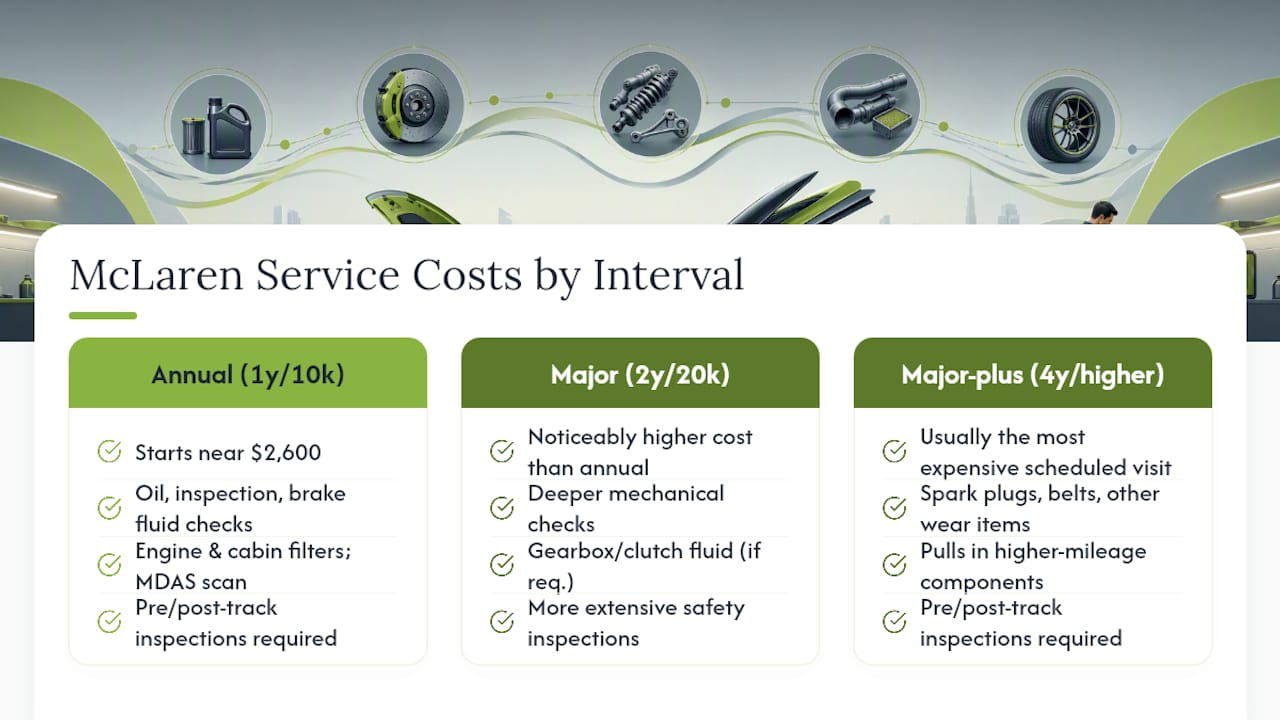
2. Major service (2 years / 20,000 miles). This adds deeper mechanical checks, often including gearbox or clutch fluid service where applicable, along with more extensive safety inspections. Expect a noticeably higher bill than the annual visit.
3. Major-plus service (4 years / higher mileage). This tier pulls in components that don’t need attention every year, spark plugs, belts, and other higher-mileage wear items, and it’s usually the most expensive scheduled visit in the cycle.
One detail that catches new owners off guard: McLaren requires separate pre- and post-track inspections for any car that sees track time. Those are safety-critical checks distinct from routine servicing, and they’re not optional if you plan to lap your car.
What Are the Main Cost Drivers in McLaren Ownership?
The annual service number is just the floor. What actually moves your total spend year over year is a mix of predictable consumables and a few expensive parts that don’t wear out on a tidy schedule.
- Oil and filter: included in most annual services, minimal standalone cost.
- Brake fluid and system bleed: typically every 2 years, moderate cost.
- Coolant: checked annually, replaced on a longer interval.
- Tires: high-performance rubber wears fast under hard driving and can be one of the largest single line items some years.
- Batteries: low-use cars are prone to dead batteries; a trickle charger is cheap insurance.
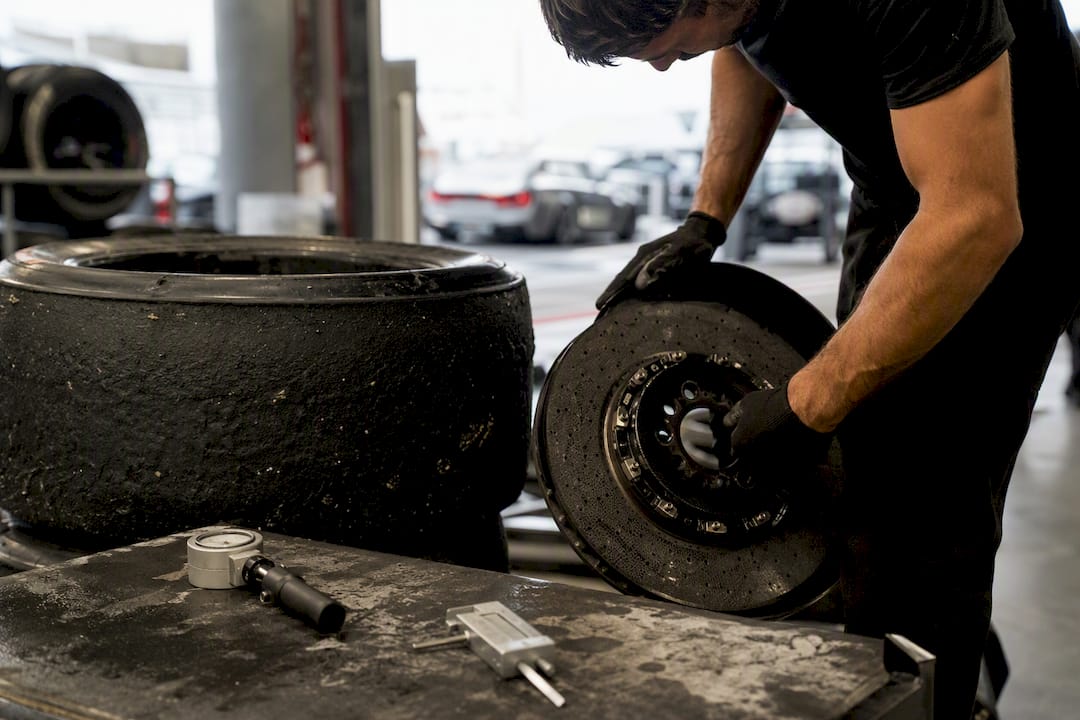
- Carbon-ceramic brakes: where fitted, these are durable but expensive to replace as a full set.
- Sensors and diagnostics: MDAS scans catch issues early, but sensor replacement costs add up.
- Alignments: worth doing after tire changes or curb strikes to prevent uneven wear.
Tires, brake sets, and sensor faults are irregular. They don’t hit every year, but when they do, they can double or triple an otherwise routine bill.
This is where “scope creep” turns a $2,600 service into something much larger. A 360-degree inspection often turns up advisory items, a small oil seep, a worn bushing, that weren’t part of the original quote. Independent specialists commonly split quotes into scheduled, safety-critical, and advisory categories, which lets you defer the advisory work instead of paying for all of it at once.
Pro Tip: Before you approve any service, ask the shop for a written breakdown separating scheduled maintenance from safety-critical repairs and advisory items. That single request can save you from paying for work that could wait another six months.
What Do Real McLaren Service Invoices Look Like?
Numbers on a spec sheet are one thing. Actual invoices tell a more honest story, and owner reports show real spread even within a single model year.
- A typical 1-year/basic invoice lands between $2,300 and $2,900.
- A 2-year/major service invoice commonly runs $3,500 to $4,900.
- Corrective repairs, an electronics fault or an engine issue caught late, have pushed some owner bills into five-figure territory.
Owner-reported figures cited by Garage Guild reflect this same pattern: modest first-year invoices, a jump at year two, and occasional outliers that dwarf everything else.
Model and use pattern explain a lot of the spread. A daily-driven 570S racks up mileage-based wear faster than a garage-kept 720S that sees 1,000 miles a year, but the low-mileage car often needs more battery and seal attention. Track use adds its own layer of brake and tire cost regardless of odometer reading.
If you’re comparing quotes from a dealer in another country, convert the local currency to USD before you compare it against your own budget. A quote in GBP or EUR can look deceptively cheap or expensive until it’s on the same footing as your own numbers.
Should You Use a McLaren Dealer or an Independent Specialist?
The honest answer depends on your car’s warranty status and how much you value convenience over cost.
Authorized dealers have direct access to McLaren campaigns, recalls, and MDAS diagnostic tools, and they’re the only option for in-warranty work without risking coverage. Kelley Blue Book notes that dealerships use genuine McLaren parts and sometimes offer prepaid maintenance packages, which can smooth out budgeting.
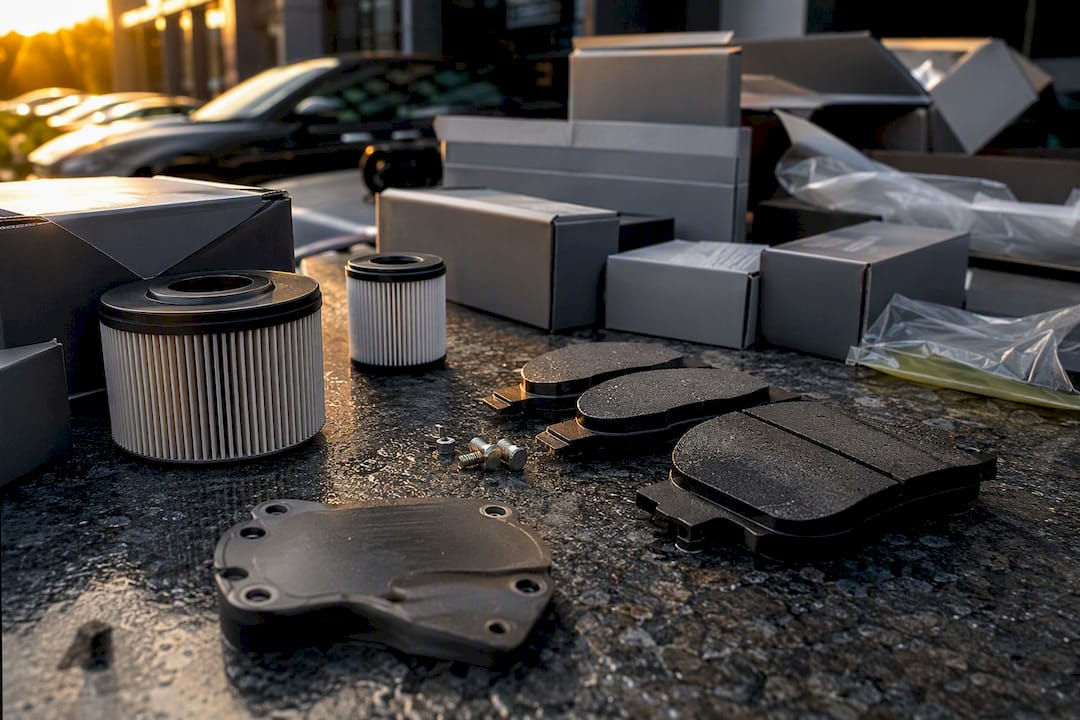
Independent specialists tend to win once the warranty clock runs out. Labor rates are usually lower, technician communication is often more direct, and scheduled work gets separated from advisory items more transparently than at some dealerships.
Red flags to watch for at an independent shop: no MDAS diagnostic capability, no access to OEM parts, or thin documentation on past work.
Pro Tip: Ask any independent shop how they source OEM parts and how they document diagnostic scans. A shop that can’t answer both questions clearly isn’t ready to handle a McLaren.
Where Should You Source McLaren Parts?
OEM parts carry the highest reliability and preserve resale value, but they come at a premium and sometimes a wait. High-quality aftermarket components can close that price gap, especially on consumables like filters and brake pads, without meaningfully compromising longevity.
Specialist marketplaces have become the middle path. A platform like Supercars can help you cross-check OEM part numbers and locate rare components faster than working through a dealer’s parts department, which tends to reduce both markup and downtime.
Before buying any part online, run through a short checklist:
- Confirm the exact OEM part number matches your VIN and model year.
- Request clear photos of the actual part and its packaging.
- Check the seller’s return policy before paying.
- Favor platforms with dispute resolution built in.
Pro Tip: Never buy a part based on a listing title alone. Ask the seller to confirm the OEM number against your specific chassis before you commit.
Is an Extended Service Contract Worth the Cost?
McLaren Extended Service Contracts typically run several thousand dollars per year, and the appeal is straightforward: it caps your exposure to a five-figure engine or electronics repair. Not every car qualifies. Coverage is often limited to McLaren Certified vehicles, so check eligibility before assuming you can buy one.
Run through this before deciding:
- How old is the car, and what’s the mileage?
- How many miles do you actually put on it per year?
- Has it had prior repair issues that suggest higher future risk?
- Are you planning to keep it long enough to use the coverage, or sell within a couple of years?
If your car is high-mileage, driven daily, or has a spotty repair history, an ESC often pays for itself the first time something major breaks. If it’s a low-mileage weekend car with a clean history, self-insuring the difference might make more financial sense.
What Do Owners Wish They Knew Before Their First Service?
Owners who budget well don’t just save for the average annual number. They set aside the baseline scheduled cost, then build a separate buffer for the repair that always seems to show up a year or two early.
- Expect at least one surprise invoice in your first three years of ownership.
- Get photo-backed quotes before authorizing any advisory work.
- Check tire wear and battery health regularly on low-mileage cars.
- Book pre- and post-track inspections before you assume a track day is “just fuel and tires.”
Cut Your McLaren Repair Bills Without Cutting Corners
Dealer parts departments and independent shops both work, but both routes usually mean waiting on quotes and paying dealership markup for anything beyond the basics. Supercars.parts gives you a third option: an AI-driven search across more than 365,000 exotic and supercar listings that lets you cross-check an OEM part number in minutes instead of days.
That matters most on the parts that hit your budget hardest, tires, brake components, sensors, where a dealer’s timeline can turn a two-day job into a two-week wait. Whether you need a consumable for a routine service or a hard-to-find component for a bigger repair, it’s worth comparing offers on Supercars before you commit to a dealer invoice. Check current listings for your model before your next service appointment and see what the price difference actually looks like.
McLaren Maintenance FAQs
How much does McLaren maintenance cost per year? Scheduled maintenance typically runs $2,400 to $3,243 annually, averaging about $2,820, according to ConsumerAffairs. That figure excludes tires, unexpected repairs, and extended coverage.
Is a McLaren Extended Service Contract worth buying? It depends on mileage, repair history, and how long you plan to keep the car. At $4,000 to $6,000 a year, an ESC tends to pay off for high-mileage or daily-driven cars more than for low-mileage weekend vehicles.
Are McLaren repairs cheaper at an independent shop? Usually, yes, especially once the factory warranty has expired. Independent specialists tend to charge lower labor rates and often separate scheduled work from advisory items more transparently than some dealers.
What causes the biggest surprise costs in McLaren ownership? Tires, carbon-ceramic brake sets, and sensor faults discovered during inspection. These irregular, high-cost items are what typically push an owner’s annual spend well above the baseline service figure.
How often does a McLaren need servicing? McLaren recommends service every 1 year or 10,000 miles, whichever comes first, with larger service tiers at the 2-year and 4-year marks.