
Verify NOS Parts: 5 Checks and AI Tools for Collectors and Restorers
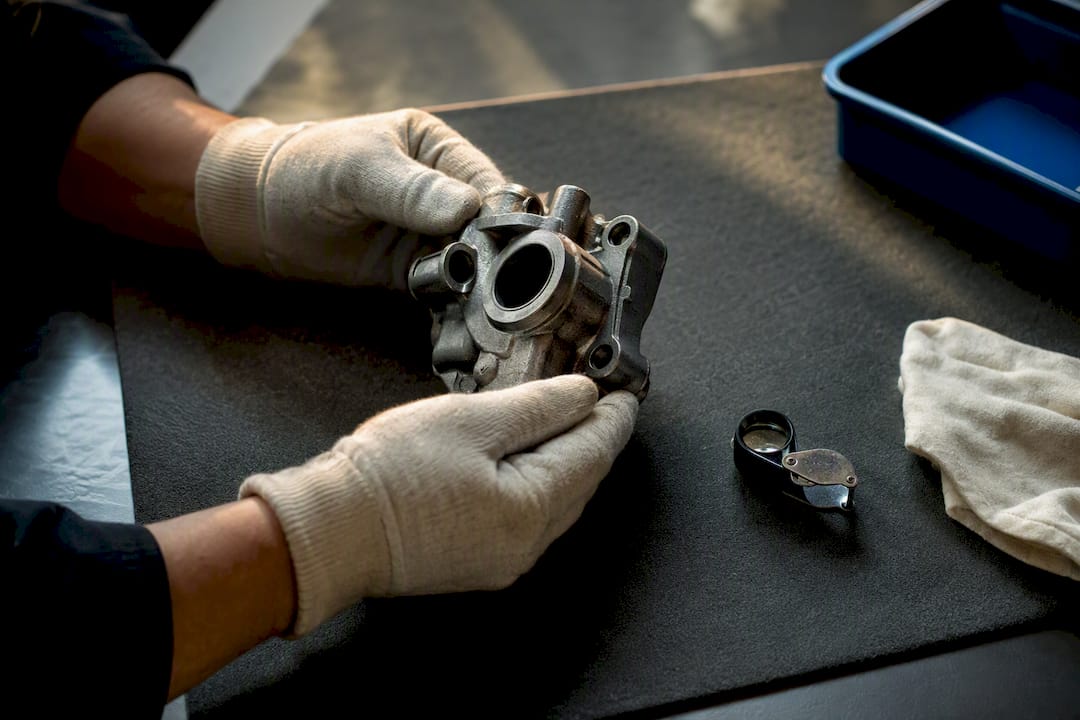
NOS stands for “New Old Stock”: unused, original parts made in the past that were never sold, installed, or removed from their factory packaging. The term matters because it separates true factory-original inventory from reproductions or refurbished pieces. One quirk worth clearing up right away: in performance circles, “NOS” often means nitrous oxide, not new old stock, so context always decides which meaning applies.
TL;DR:
- Genuine NOS parts are factory-original pieces made on the original tooling, with provenance confirmed through matching part numbers and factory markings.
- Authentic NOS parts may show age-related wear, such as surface rust or faded packaging, but still qualify as genuine if properly verified.
- Buyers should request multiple photos of markings, original packaging, and provenance documentation to confirm authenticity before purchase.
- AI-driven marketplaces improve matching accuracy for rare NOS components by cross-referencing part numbers and images, reducing misidentification risks.
- For everyday repairs, NORS or OEM replacements offer a cost-effective alternative, but NOS is essential for concours restorations and high-value classic cars.
Table of Contents
- Nos Parts Meaning: New Old Stock, NORS, OEM, and Reproduction Explained
- Why Collectors and Restorers Pay a Premium for NOS
- How to Verify a Part Is Genuinely NOS
- What “New” Actually Means After 40 Years on a Shelf
- Where to Buy NOS Parts and What to Ask the Seller
- How AI-Driven Marketplaces Cut Down Misidentification Risk
- A Restorer’s Honest Take on NOS vs. the Alternatives
- Find Rare, Documented Parts Without the Guesswork
- Sources
- FAQ
Nos Parts Meaning: New Old Stock, NORS, OEM, and Reproduction Explained
Understanding the nos parts meaning starts with a simple idea: these are parts that sat unsold, sometimes for decades, still in their original wrapping. There’s no formal industry cutoff for how old a part has to be before it earns the NOS label, and Wikipedia notes that interpretations vary between collectors and sellers. Some reserve “NOS” strictly for discontinued factory parts; others apply it more loosely to any older unsold inventory.
A few terms get tangled together in listings and forums:
- New Old Stock (NOS): Genuine factory-original parts, made on the original tooling, never installed.
- NORS (New Old Replacement Stock): Aftermarket parts made to fit older vehicles, often decades old themselves, but not from the original manufacturer.
- OEM replacement: Current-production parts made to original specifications, sold as replacements, but manufactured recently rather than sitting in storage.
- Reproduction/replica: Newly manufactured parts designed to look or function like the original, with no claim to factory provenance.
Sellers often blur these categories. Look for factory part numbers, casting marks, and original box art. A reproduction usually lacks the stamped date codes or supplier logos you’d find on a true NOS piece.
Why Collectors and Restorers Pay a Premium for NOS
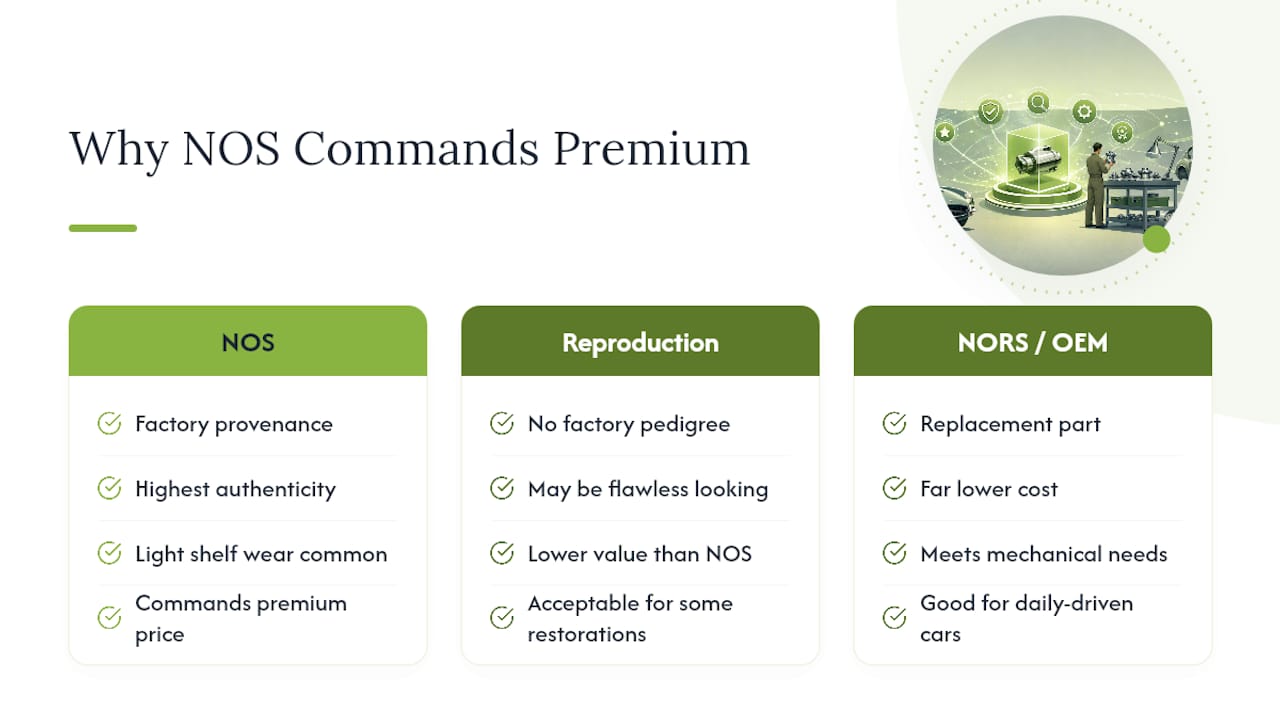
Provenance drives the price. NOS parts came off the same assembly lines and tooling used for the original vehicle, which restoration specialists point to as the reason they offer the highest level of authenticity available for a concours build.
The trade-off collectors accept: a genuine NOS part with light shelf wear is usually worth more, to a judge and to a serious buyer, than a flawless reproduction with no factory pedigree. Hagerty’s parts-code guidance makes the same point: NOS is often the top choice for concours restorations even though age-related imperfections are common and expected.
Where you land on this depends on the job. A museum piece or a car headed to a judged show needs that factory provenance. A daily-driven classic getting a mechanical repair rarely does, and a NORS or OEM replacement part will do the job for a fraction of the cost.
How to Verify a Part Is Genuinely NOS
Confirming authenticity takes more than trusting a seller’s description. Work through these checks before you commit:
- Match the part number. Cross-reference the stamped or printed number against factory parts manuals, microfiche, or a VIN-based fitment tool for your specific model year.
- Inspect the casting and date codes. Factory-original parts typically carry supplier codes, casting marks, or date stamps consistent with the vehicle’s production window.
- Examine the original packaging. Faded box art, period logos, and original barcodes (or the total absence of a barcode on pre-barcode-era stock) all support a NOS claim.
- Ask for provenance documents. Original dealer invoices, warehouse inventory records, or estate-sale paperwork carry far more weight than a seller’s word alone.
- Request high-resolution photos of markings. Close-ups of stamps and codes let you compare against reference images before money changes hands.
If a seller can’t produce a part number or refuses close-up photos of markings, walk away or insist on third-party inspection first.
Pro Tip: Photograph every marking, stamp, and code the moment a part arrives, before you touch or clean it. If a dispute over authenticity comes up later, that first unboxing photo is your best evidence.
What “New” Actually Means After 40 Years on a Shelf
A part that’s genuinely NOS is not necessarily pristine. Decades in a warehouse leave marks, and specialty retailers are upfront that shelf wear doesn’t disqualify a part from being NOS.
Expect to see:
- Surface rust on unprotected metal, even under packaging
- Brittle or cracked rubber on seals, hoses, and gaskets
- Faded or torn original boxes and paper labels
- Leaking or degraded electrolytic capacitors in electrical components
Treat any NOS electrical part, rubber seal, or fuel-system component as untested vintage stock, not a guaranteed working part. Bench-test relays, sensors, and gauges before installation. Flex rubber gently to check for cracking rather than assuming decades-old material still seals properly. A part that looks perfect in the box can still fail the first time it sees heat, pressure, or voltage.
Where to Buy NOS Parts and What to Ask the Seller
Genuine NOS turns up through a handful of reliable channels: specialist NOS dealers who focus on specific makes, curated parts marketplaces, classic car auctions, and the occasional warehouse or estate liquidation where old dealer stock surfaces decades after the fact.
Before buying, ask the seller directly:
- What is the exact OEM part number, and can you photograph it?
- Do you have any provenance documentation, invoices, or storage history?
- What’s your return policy if the part doesn’t match my vehicle’s fitment?
- Can you provide additional photos of packaging, markings, and any visible wear?
- How long has the part been in your possession, and where was it stored?
Watch for warning signs: a seller who can’t produce a part number, listings that reuse the same stock photo across multiple “different” parts, or prices dramatically below comparable NOS listings. Transparent sellers who include multiple photos, exact part numbers, and honest storage notes are the ones worth doing repeat business with. Before installing anything you’ve sourced, a careful cleaning pass, guides like this door jamb cleaning method apply the same gentle-cleaning logic to painted or coated surfaces, helps you spot hairline cracks or corrosion that grime was hiding.
How AI-Driven Marketplaces Cut Down Misidentification Risk
Sourcing rare parts for exotic and high-performance vehicles multiplies every problem above. Fewer surviving units means fewer chances to compare listings, and a single misread part number can send you chasing the wrong component for weeks.
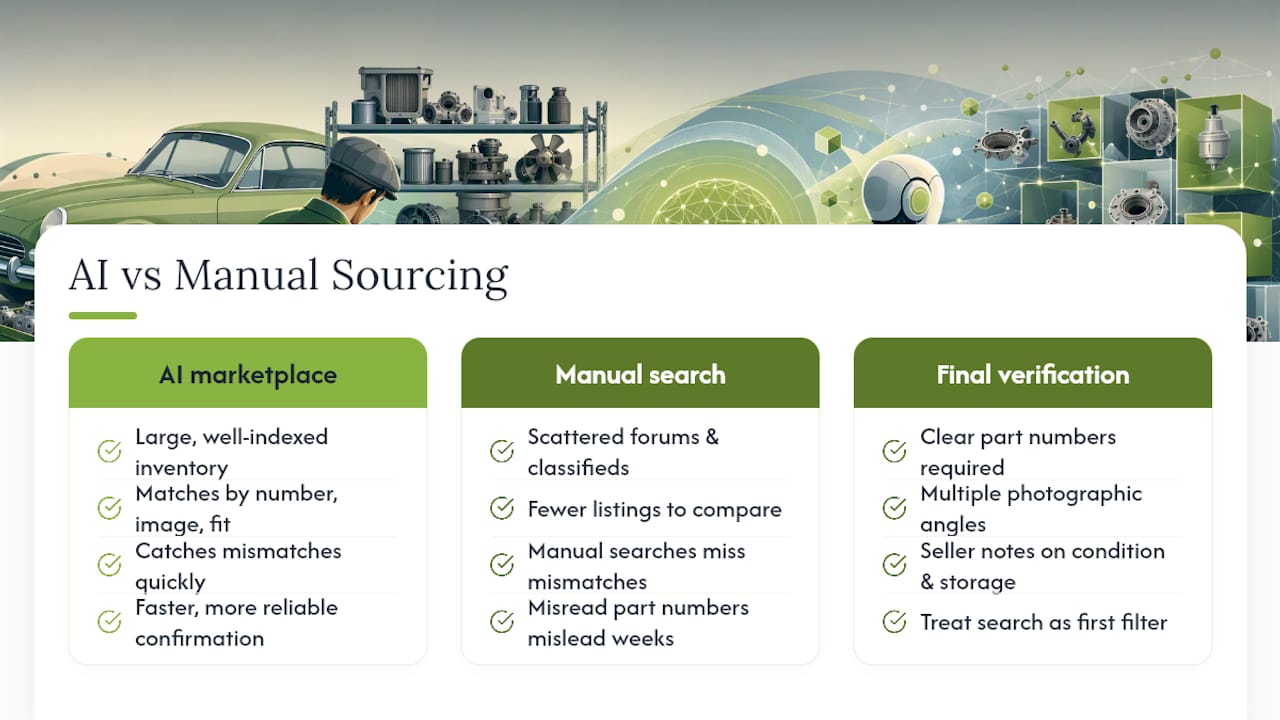
A large, well-indexed inventory paired with AI-driven search helps narrow that gap. Matching a part against thousands of catalogued listings by number, image, or vehicle fit catches mismatches that a manual search across scattered forums and classifieds tends to miss.
A broad, searchable inventory combined with part-number and image matching gives buyers a faster, more reliable way to confirm that a rare component actually fits the vehicle in question, rather than relying on guesswork across scattered listings.
The documentation still matters most. Look for listings with clear part numbers, multiple angles of photography, and seller notes on condition and storage. Treat the search tool as the first filter, and your own verification checklist as the final word.
A Restorer’s Honest Take on NOS vs. the Alternatives
Insisting on NOS makes sense for concours cars, museum pieces, and anything where judges or buyers will scrutinize provenance. For a daily-driven classic, NORS or a well-made OEM replacement usually gets you back on the road faster and cheaper without meaningfully hurting the car’s value.
Budget and function should win more arguments than they currently do. Before contacting a seller, confirm four things: exact part number, provenance documentation, return policy, and photos of markings. If a seller balks at any of those four, that tells you something too.
— Artem
Find Rare, Documented Parts Without the Guesswork
Supercars is the practical route to sourcing NOS and OEM-correct parts for exotic and supercar platforms where a single wrong guess can cost weeks of searching. The marketplace lists over 365,000 parts listings for brands like Ferrari, Lamborghini, McLaren, Aston Martin, and Rolls-Royce, and its AI-driven search matches part numbers and images to help confirm fitment before you buy.
Sellers on such platforms often include part numbers, multiple photos, and condition notes, the same documentation this guide recommends checking for. That gives you a head start on the verification process outlined above, rather than a substitute for it. If you’re restoring a rare exotic and need to confirm whether a listed part is genuinely factory stock or a later replacement, search the current inventory and cross-check the part number against your own records before reaching out to the seller.
Sources
- NOS, OEM, or Replica Parts? Which Are The Best Classic Car Components For Your Project | DrivingLine
- What is a NOS Part? | OnAllCylinders
- Deciphering the parts code | Hagerty Media
- New old stock - Wikipedia
FAQ
What Does NOS Stand For?
NOS stands for “New Old Stock,” meaning unused parts made in the past that were never sold, installed, or removed from original packaging.
What Is the Difference Between OEM and NOS Parts?
OEM replacement parts are made to original specifications but manufactured recently, while NOS parts are genuine factory-original units that have simply sat unsold for years or decades.
Why Is “NOS” Confusing in Automotive Conversations?
Because NOS also commonly refers to nitrous-oxide systems in performance circles, so restoration discussions specify “New Old Stock” to avoid mixing up the two meanings.
Is It Illegal to Have NOS Parts in a Car?
No, New Old Stock parts themselves are not illegal. Confusion arises because nitrous-oxide systems (also abbreviated NOS) carry separate legal restrictions in some regions for street use, which has nothing to do with New Old Stock components.
How Do I Know If a Part Is Truly NOS and Not NORS?
Check the part number against factory manuals and look for original manufacturer markings; NORS parts are aftermarket reproductions of older parts and typically lack factory casting codes or supplier stamps.


