What to Budget for Rolls Royce Maintenance Cost
Most Rolls-Royce owners pay $0 in scheduled maintenance for the first 48 months, then $4,000 to $10,000 a year after that, with high-mileage or older cars pushing past $15,000 in tougher years. The single biggest factor is whether your car still falls under Rolls-Royce’s complimentary maintenance program, which covers factory-scheduled service for 48 months and unlimited miles from the car’s original in-service date. Once that window closes, routine upkeep settles into a predictable rhythm, but one bad year (a transmission issue, a coachbuilt panel repair, an electronics fault) can blow past any average you’ve read online.
Quick math for planning purposes:
- Years 0-4 (under Rolls-Royce coverage): $0 for scheduled service
- Years 5+ (typical, moderate mileage): $4,000-$6,000 annually
- Conservative budget (higher mileage, older car): $8,000-$10,000 annually
- Bad-year scenario (major repair, bodywork, or electronics fault): can exceed ten thousand dollars
The rest of this guide breaks down exactly where that money goes, what triggers the high end of each range, and how owners actually keep their bills closer to the low end.
Key Takeaways
Rolls-Royce maintenance cost swings from $0 during the 48-month factory program to $4,000-$10,000 annually afterward, with major repairs pushing well past $15,000 in bad years.
| Point | Details |
|---|---|
| Factory coverage changes everything | The first 48 months and unlimited miles carry $0 scheduled service cost through Rolls-Royce’s maintenance program. |
| Post-warranty baseline | Expect $4,000 to $6,000 annually for routine service once factory coverage ends. |
| Budget a conservative reserve | Set aside $6,000 to $8,000 a year if your car has higher mileage or is past year eight. |
| Parts scarcity drives bad years | Older models face longer waits and higher costs when trim or electronics parts aren’t in dealer stock. |
| Source parts strategically | Supercars.parts offers 365,000-plus listings and AI-driven search to help owners find exact-fit parts faster once out of warranty. |
Table of Contents
- Rolls Royce Maintenance Cost by Ownership Phase
- Per-Service Price Ranges for Common Repairs
- Rolls-Royce Service Intervals and Warranty Coverage
- What Actually Drives High Repair Bills
- How to Lower Your Rolls-Royce Maintenance Bills
- Real Rolls-Royce Owner Cost Reports
- What Most Rolls-Royce Buyers Get Wrong About Upkeep
- Find Rare Rolls-Royce Parts Faster With Supercars
- Frequently Asked Questions
- Sources
Rolls Royce Maintenance Cost by Ownership Phase
The most useful way to think about Rolls-Royce ownership costs isn’t a single number. It’s a curve. Costs start at zero, stay near zero for four years, then climb steadily as the car ages and the factory coverage disappears.
During the covered period, Rolls-Royce’s maintenance program handles the scheduled visits at no cost to the owner, with exceptions for non-scheduled repairs, excessive service requests, and vehicles used commercially. That means a brand-new Ghost or Cullinan owner is often looking at genuine $0 line items for the exact services that would otherwise run into the thousands. It’s arguably the most underappreciated part of buying new versus buying a five-year-old car privately, since the private buyer inherits none of that runway.
Once the clock runs out, the picture changes fast. Published price guides put typical post-warranty annual maintenance around $4,000 per year when you average routine visits, and consumer reporting backs that up with a $4,000 to $5,000 range for owners past the coverage window. That’s your baseline for a well-kept, moderately driven car with no surprises.
Higher mileage, older cars, or cars that skipped a service interval somewhere along the way tend to land in a heavier bracket. Here’s how the phases typically break down:
- Years 0 to 4 (factory coverage active): $0 for scheduled maintenance, though tires, curb damage, and cosmetic issues aren’t included and still come out of pocket.
- Years 5 to 8 (moderate mileage, good history): $4,000 to $6,000 per year for routine service, fluids, brake wear items, and minor sensor or electronics attention.
- Years 8+ or higher mileage (conservative budget): $8,000 to $10,000 per year, factoring in tire replacement cycles, suspension components, and the kind of electronics work that becomes more common as the car ages.
- Any year with a major event: $15,000 or more, whether that’s a significant repair, a coachbuilt trim replacement, or accident-related bodywork.
Pro Tip: Set aside a maintenance reserve the day you take delivery, even during the free-service years. A moderate reserve of $3,000 to $4,000 annually, banked and untouched during coverage, gives you a two-year cushion the moment the program ends. A conservative reserve of $6,000 to $8,000 a year covers the higher end without forcing a scramble.
If you’re weighing a used Rolls-Royce against a new one, the math tilts harder than most buyers expect. A three-year-old Wraith might look like a bargain next to a new Ghost, but you’re buying into year four or five of the cost curve immediately, skipping the free-service runway entirely. That’s not a reason to avoid used cars; rather, it’s a reason to price the maintenance gap into your offer.
Per-Service Price Ranges for Common Repairs
Averages are useful for budgeting a year. They’re useless when you’re staring at an invoice for a single visit. Here’s what individual services actually run, and what pushes each one to the high end of its range.
- Oil change and basic inspection. Dealer pricing typically runs $600 to $2,500, a wider spread than most drivers are used to seeing. The low end covers a straightforward oil and filter change on a car with easy access and no additional findings. The high end shows up when the visit includes a broader inspection, premium synthetic oil in the volumes a V12 requires, or dealer labor rates in a major metro market.
- Tire replacement. A single tire can run well into four figures depending on size and specification, and a full set climbs fast from there. Bespoke or run-flat tires, which many Rolls-Royce models require for ride quality and safety reasons, cost more than standard performance tires and are harder to source outside a handful of suppliers.
- Brake service. Pad replacement alone sits at the low end of the brake spectrum. A full rotor-and-pad service, especially on a car with worn hardware or a caliper issue, can run from roughly $5,000 to $30,000 in extreme cases involving multiple corners, sensor recalibration, or a caliper that needs replacement rather than resurfacing.
- Diagnostics and software updates. Dealer diagnostic time is billed hourly, and electronics on modern Rolls-Royce models (adaptive suspension, driver assistance, infotainment) mean a “check engine light” visit can turn into several hours of billed labor before a part even gets ordered.
- Major mechanical or body repairs. This is where the real outliers live. A CostInsider breakdown of premium full-service visits with diagnostics and electronics calibration lists totals in the $4,500 to $8,000-plus range for a single comprehensive visit, and that’s before you get into catastrophic items like engine work or structural body repair, which can run into five figures depending on the parts and labor involved.
The pattern across every category is the same: parts availability and labor complexity, not the base service itself, drive the price swing. A rare trim piece or a part that has to be sourced from overseas adds weeks and dollars that a comparable Toyota repair simply never encounters.
Rolls-Royce Service Intervals and Warranty Coverage
Rolls-Royce structures its maintenance around a simple promise: buy new, and the factory-scheduled service is handled for you for 48 months and unlimited miles from the car’s original in-service date, with authorized dealers performing that work at no expense to the owner. That’s the anchor fact behind every Rolls Royce maintenance cost estimate for a new car, and it’s worth understanding exactly what it does and doesn’t include.
What the program typically covers:
- Scheduled service visits tied to mileage and time intervals, generally landing every 7,000 to 10,000 miles depending on driving conditions
- Routine inspections, fluid services, and factory-specified checks at each visit
- Labor associated with those scheduled visits at an authorized dealer
What it typically excludes:
- Non-scheduled repairs (anything outside the factory service plan)
- Excessive or unusual service requests beyond normal use
- Vehicles used commercially, which fall under different terms
Routine visits handle inspections and fluid checks. Major visits, which tend to land at bigger mileage milestones, dig into components like suspension bushings, deeper electronics checks, and wear items that don’t show up every 7,000 miles. Kelley Blue Book’s overview of Rolls-Royce service schedules echoes the same point: sticking to the factory cadence isn’t just about avoiding surprises, it’s about protecting resale value, since a documented, uninterrupted service history is one of the first things a buyer or appraiser checks on a used Rolls-Royce.
What Actually Drives High Repair Bills
Not every Rolls-Royce owner pays the same amount for the same age of car. The gap between a $4,000 year and a $12,000 year usually comes down to a handful of specific factors.
- Dealer versus independent labor rates. Dealer service carries a premium tied to certified technicians, factory tools, and brand overhead. Independent specialists with genuine Rolls-Royce training can charge meaningfully less for labor, though the savings have to be weighed against how a buyer will view a service history with gaps in dealer documentation.
- Bespoke and coachbuilt components. A standard Rolls-Royce already carries unusual materials and finishes. A car with a custom interior, a coachbuilt panel, or a one-off trim piece requires sourcing that goes well beyond a parts counter, and that sourcing time gets billed.
- Electronics and calibration work. Adaptive suspension, driver-assistance systems, and infotainment hardware all require diagnostic time and, often, recalibration after a repair. This is one of the fastest-growing cost categories on newer models.
- Age and parts scarcity. Older Rolls-Royce models, particularly anything more than a decade old, start running into parts that are no longer stocked at a typical dealer level, which stretches both repair time and price.
Pro Tip: Ask any independent shop for their Rolls-Royce-specific training and how recently they’ve worked on your exact model. A shop that mostly services German luxury cars and occasionally sees a Rolls-Royce isn’t the same as one with dedicated experience on the marque, even if both call themselves “specialists.”
How to Lower Your Rolls-Royce Maintenance Bills
You can’t eliminate the cost curve, but you can flatten it. A few habits separate owners who stay near the low end of the range from those who get hit with the $15,000 years more often than they should.
- Use every visit the factory program allows. Skipping a scheduled service to “save time” during the covered years gives up something that’s already paid for and can create a documentation gap that matters later.
- Weigh an extended plan against paying as you go. Manufacturer-backed extended coverage smooths out the cost curve, but it only makes sense if you’re keeping the car long enough to use it. A short-term owner may come out ahead paying per visit.
- Source parts through a specialist marketplace rather than a general parts search. Platforms like Supercars carry over 365,000 listings for exotic and luxury vehicles, with AI-driven search built to track down exact-fit OEM and aftermarket components, which matters most on older cars where the closest dealer stock is thin. Always verify fit and authenticity before buying, especially for electronics or trim pieces where the wrong revision won’t work.
- Vet independent specialists properly before switching from dealer service. Ask for documented Rolls-Royce training, not just general luxury or exotic car experience.
- Time your service around off-peak scheduling and bundle work where possible. Combining a scheduled visit with a known upcoming repair often reduces total labor hours versus two separate appointments.
Pro Tip: A general maintenance checklist built for everyday cars still applies to the basics, oil, tires, brakes, on a Rolls-Royce. The dollar figures are different, but the logic of staying ahead of wear items instead of reacting to failures is identical.
Real Rolls-Royce Owner Cost Reports
Owner forums tend to tell a more honest story than glossy brochures, and the pattern that shows up repeatedly is consistent with the published guides: a routine visit with nothing extra going on often lands around $1,000, while a full year of ownership, tires, brakes, occasional smaller repairs included, commonly clears $4,000.
That tracks closely with the guide averages already covered above, which cluster post-warranty annual costs in the $4,000 to $5,000 band. Two scenarios illustrate how differently this plays out depending on where you are in the ownership curve:
Scenario A: A three-year-old Ghost owner, still inside the 48-month coverage window, pays $0 for the year’s scheduled service. The only out-of-pocket cost is a set of replacement tires after a curb strike, an expense the factory program never covered in the first place.
Scenario B: A nine-year-old Phantom owner, well past coverage, pays roughly $4,500 for the year’s routine service, then faces an unplanned $9,000 suspension and electronics repair after a component failure, pushing total annual spend past $13,000.
Neither owner did anything wrong. The difference is entirely about where their car sits on the cost curve, and it’s exactly why budgeting a reserve matters more than chasing a single average number.
What Most Rolls-Royce Buyers Get Wrong About Upkeep
The conventional wisdom on Rolls-Royce ownership treats maintenance as a fixed, terrifying number, and that framing does owners a disservice. The real cost curve rewards specific behavior: using every free service visit during the first four years, keeping documentation airtight, and sourcing parts deliberately instead of settling for whatever a single dealer happens to have on the shelf.
The owners who get surprised aren’t usually the ones with the oldest cars. They’re the ones who bought used, skipped the math on where their car sits on the coverage timeline, and assumed “luxury car maintenance” meant one predictable number rather than a curve that bends sharply once factory coverage ends. Parts sourcing matters more than most new owners expect, especially past year eight, when a marketplace with deep inventory and precise search tools becomes the difference between a same-week repair and a month-long wait for the right part.
Find Rare Rolls-Royce Parts Faster With Supercars
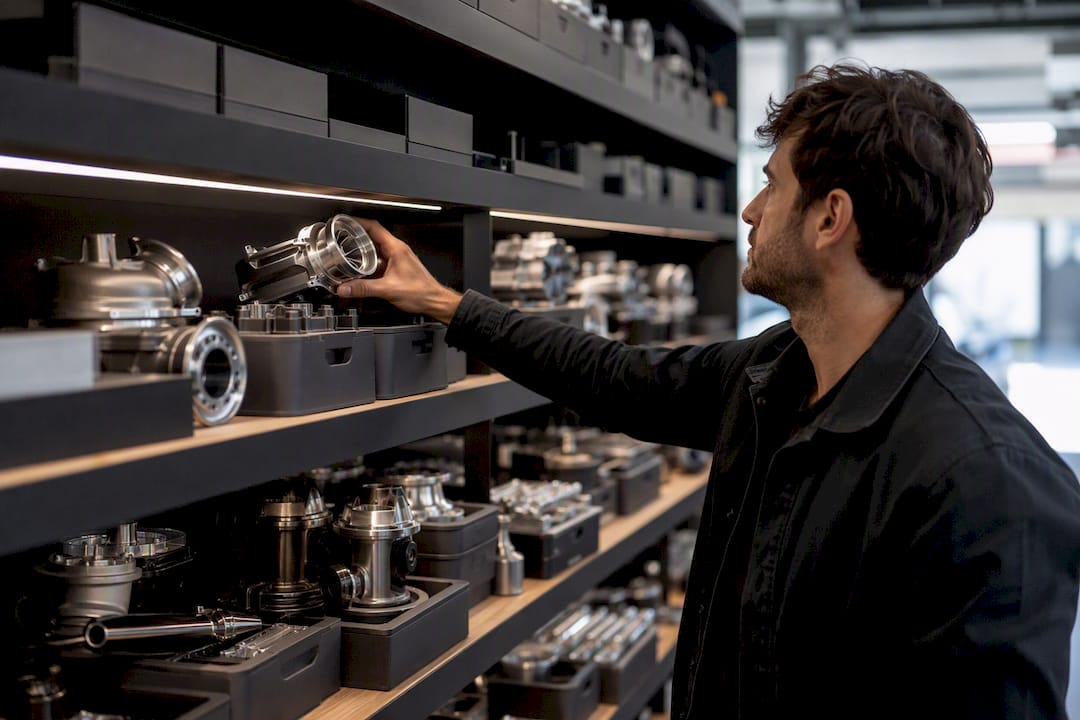
Once your Rolls-Royce is past its factory coverage window, the parts hunt becomes part of the real cost of ownership, and not just the labor bill. Supercars.parts was built for exactly that moment: a marketplace carrying over 365,000 listings for exotic and luxury vehicles, with AI-driven search that narrows down exact-fit OEM and aftermarket components instead of leaving you to sort through generic listings by hand.
For a Rolls-Royce owner trying to track down a discontinued trim piece, a specific sensor, or a hard-to-find suspension component, that search speed translates directly into fewer days off the road and less time paying dealer labor rates just to locate a part before the actual repair even starts. Browse the current inventory at Supercars and search your model and part number to see what’s available before your next service visit.
Frequently Asked Questions
How much does it cost to maintain a Rolls-Royce per year? Expect $0 during the first 48 months under the factory maintenance program, then $4,000 to $10,000 annually afterward depending on mileage, age, and whether any major repairs come up that year.
Does Rolls-Royce offer free maintenance? Yes. The Rolls-Royce Maintenance Program covers factory-scheduled service for 48 months and unlimited miles from the car’s original in-service date, performed by authorized dealers at no cost to the owner, with exceptions for non-scheduled work and commercial use.
What is the average Rolls-Royce oil change cost? Dealer pricing for an oil change and basic inspection typically runs $600 to $2,500, with the higher end reflecting premium synthetic oil volumes, broader inspections, and dealer labor rates in major markets.
Are Rolls-Royce repair costs really that much higher than other luxury cars? Routine items track close to other ultra-luxury marques, but bespoke trim, coachbuilt panels, and electronics calibration push Rolls-Royce repair costs higher when something beyond routine service is involved, sometimes running into five figures for a single major repair.
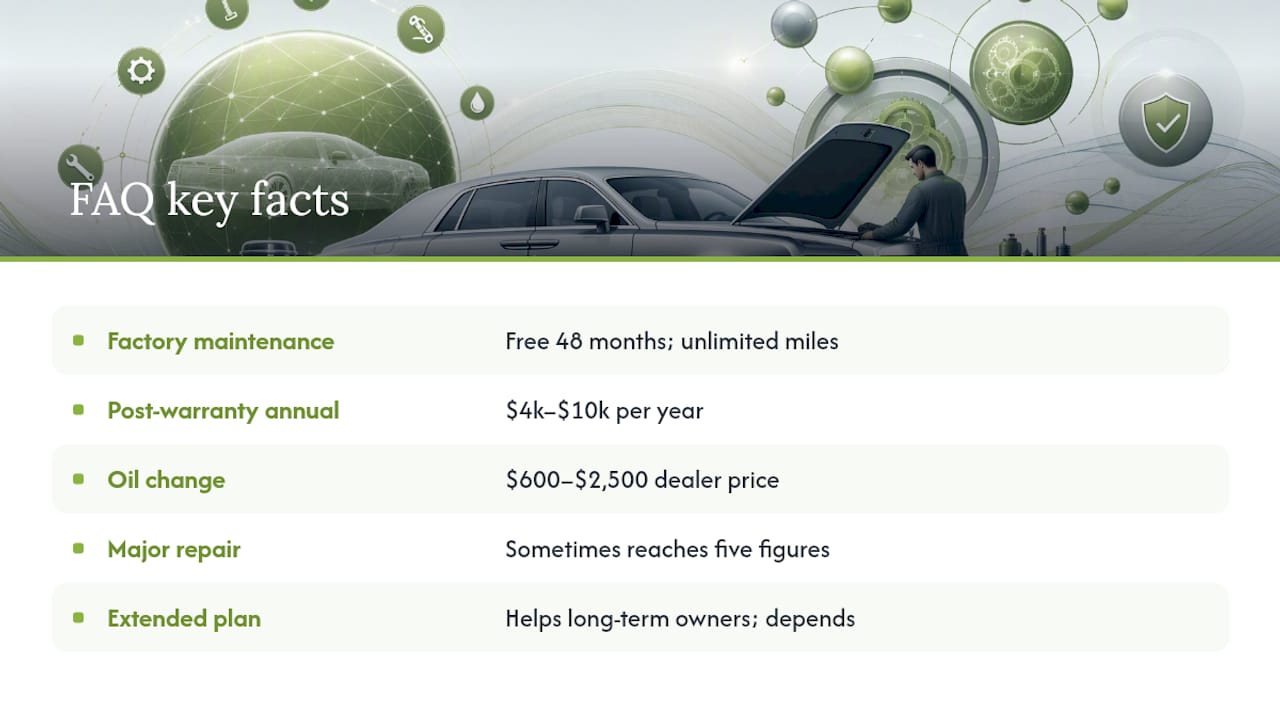
Should I buy an extended maintenance plan after the factory program ends? It depends on how long you plan to keep the car. An extended plan smooths out annual costs for long-term owners, while short-term owners often come out ahead paying per visit and budgeting a moderate reserve instead.