40–50% Lighter: When Titanium Beats Stainless for Enthusiasts
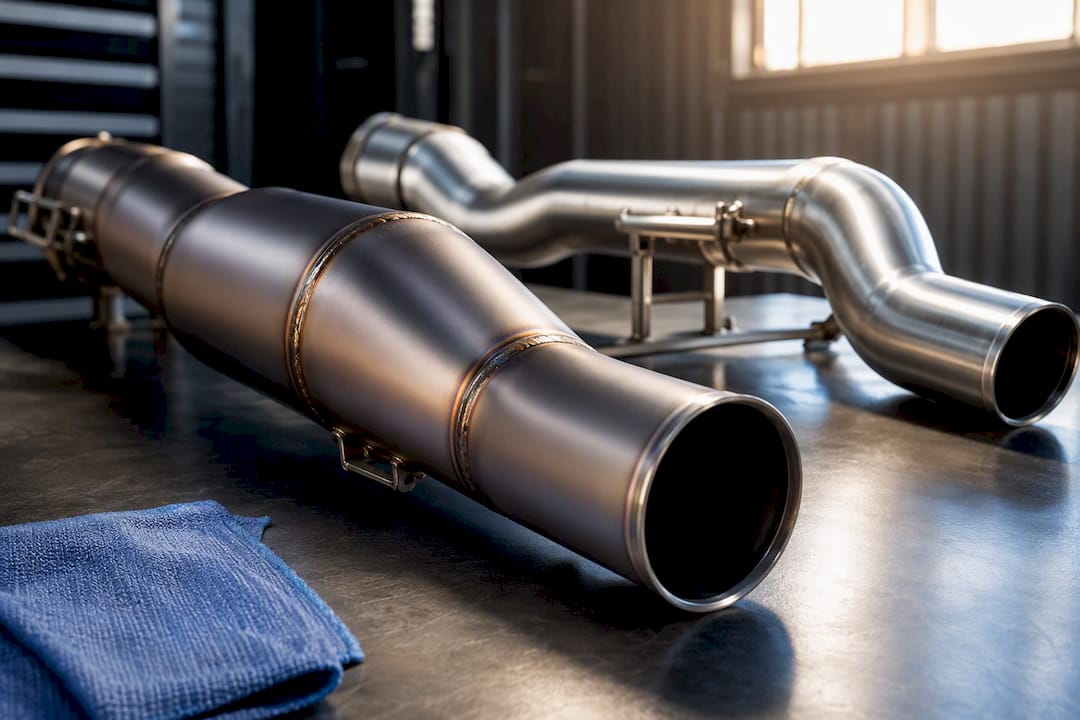
For most street and enthusiast builds, 304 stainless steel is the smarter buy. Titanium earns its premium only when maximum weight savings or the prestige of an exotic system justifies the cost and the extra care it demands. The trade-off comes down to a few concrete factors: weight, heat tolerance, corrosion resistance, sound, and how hard the material is to fabricate and repair. Here’s how each stacks up.
TL;DR:
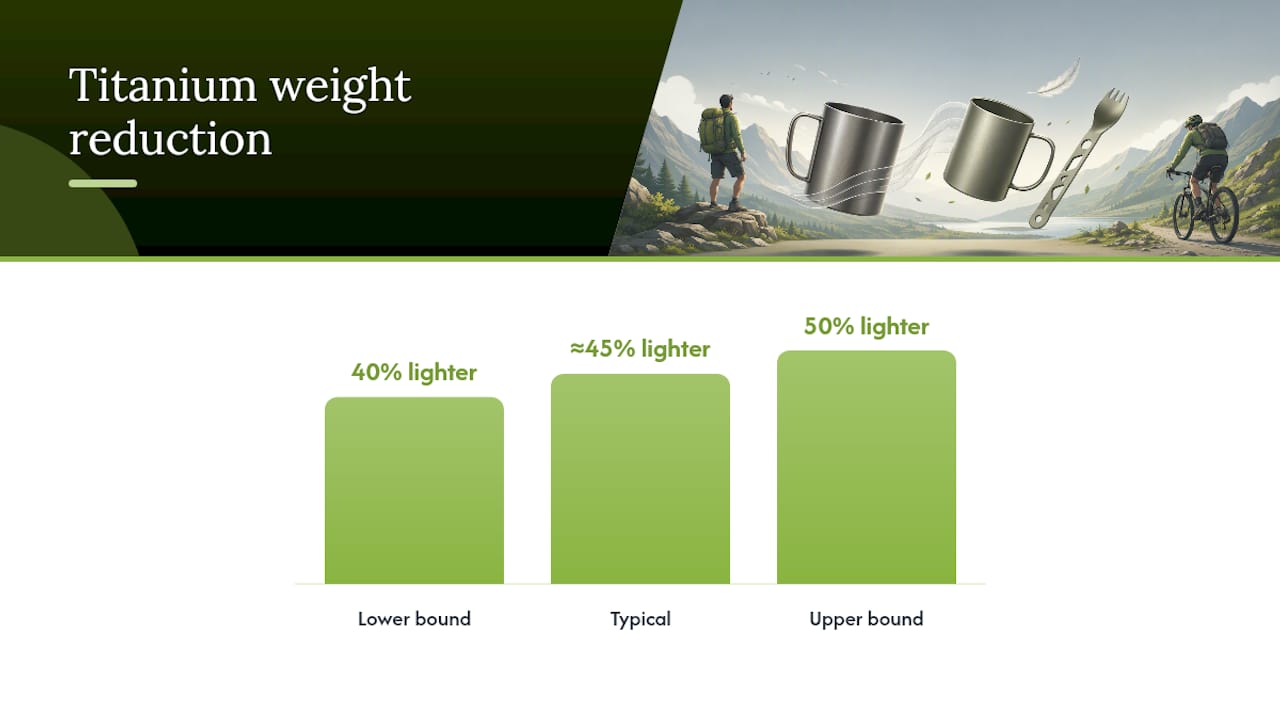
- Titanium exhaust systems can save 40 to 50% weight, which significantly benefits track motorcycles and weight-sensitive race cars but offers limited gains for daily drivers.
- Titanium’s heat resistance diminishes above 600 to 800°C, making it less suitable for turbocharged applications or sustained high-RPM use, where Inconel performs better.
- Stainless steel systems generally last over a decade on street vehicles, are easier and cheaper to repair, and resist corrosion without special fabrication skills.
- The high cost and specialized welding of titanium mean it is most justifiable for racing, exotic restorations, or where weight savings directly impact performance.
- Material choice should be based on the vehicle’s purpose, climate exposure, budget, and available fabrication expertise, with stainless being more practical for most street and daily applications.
Table of Contents
- Titanium Exhaust vs Stainless: A Quick Comparison
- Weight and Performance: How Mass Savings Translate to Real Gains
- Heat Resistance and High-Temperature Durability
- Corrosion, Longevity, and Real-World Maintenance
- Sound and Aesthetics: How Material Changes Tone and Appearance
- Cost, Value, and Total Ownership Economics
- Fabrication, Welding, and Serviceability
- How to Choose: A Simple Decision Flow for Enthusiasts
- Finding the Right Parts: What Supercars Brings to the Search
- Emissions and Environmental Compliance
- When I’d Pick Titanium, and When I Wouldn’t
- Where to Source Parts and Fabrication Help
- Sources
Titanium Exhaust vs Stainless: A Quick Comparison
Before getting into the engineering weeds, here’s the short version of what separates these two materials on a real vehicle.
Titanium:
- Roughly 40 to 50% lighter than a comparable stainless system
- Crisper, higher pitched exhaust note
- Requires specialist welding and inert-gas shielding
- Highest price point, both in raw material and labor
304 Stainless steel:
- Excellent corrosion resistance and long service life on the street
- Easy to weld and repair at almost any competent fabrication shop
- Fuller, deeper exhaust tone
- Lower cost across the board
Statistic to know: titanium systems commonly shave 40 to 50% off total exhaust weight compared to stainless equivalents. That is the number driving nearly every titanium purchase decision.
Titanium suits track motorcycles, weight-obsessed track cars, and collector-grade exotics where every ounce matters. Stainless suits daily-driven sports cars, commuters, and anyone who wants a system that survives winters, potholes, and the occasional curb strike without drama.
Weight and Performance: How Mass Savings Translate to Real Gains
The headline number is real: titanium systems typically run 40 to 50% lighter than stainless equivalents of the same design. On a full system, that can mean shedding anywhere from 10 to 25 pounds depending on the vehicle and header configuration. The question is what that weight actually buys you.
On a motorcycle, the answer is a lot. Exhaust systems sit high and often far from the centerline, so cutting mass there lowers the center of gravity and reduces the effort needed to flick the bike side to side. Racers who chase every tenth of a second on a track day notice it in transitions. Street riders notice it less, but it’s still real.
In a car, the calculus shifts. A full titanium system on a lightweight sports car can sharpen turn-in slightly and trim a few pounds off the rear axle, but unless you’re shaving lap times in a purpose-built track car, the gain is marginal at best. A supercar restoration or a genuine race-prepped build is where the difference actually shows up on paper.
What actually moves the needle:
- Rotational and unsprung mass matters more than static weight, so exhaust position affects how much a given saving is felt.
- Thin-wall stainless tubing (16 or 18 gauge instead of heavier stock) can close much of the weight gap at a fraction of titanium’s cost.
- Full titanium systems justify their price on cars already fighting for grams: race cars, track-day motorcycles, and exotic restorations aiming for factory-spec numbers.
If you’re building a daily-driven car and chasing a lighter exhaust mostly for the badge value, thin-wall 304 stainless will get you most of the benefit without the titanium invoice.
Heat Resistance and High-Temperature Durability
Titanium’s strength-to-weight ratio is outstanding at room temperature, but that advantage erodes fast under sustained heat. Titanium’s structural performance degrades and oxidation accelerates above roughly 600 to 800 degrees Celsius, which puts turbocharged applications and sustained high-RPM runs squarely in the risk zone.
Here’s what that means in practice:
- Near-turbo sections run hottest and see the most thermal cycling, exactly where titanium is weakest long term.
- Naturally aspirated street applications rarely push exhaust gas temperatures into the danger zone, so titanium performs reliably there.
- Sustained track use with temperatures regularly hitting 800°C and beyond is where Inconel starts to make more sense than titanium, particularly for the header sections closest to the turbo.
- Inspection checkpoints: look for discoloration that goes beyond the normal blue-to-gold heat tint, hairline cracking near welds, and any flaking or powdery buildup, which signals oxidation eating into the wall thickness.
This is why serious race teams often mix materials rather than committing to one alloy for the whole system: titanium for the sections that stay cooler and benefit most from weight savings, Inconel for the segments closest to the turbocharger where sustained heat is unavoidable. Stainless, meanwhile, tolerates the temperature swings of ordinary street driving without the embrittlement risk titanium carries at the extreme end.
Corrosion, Longevity, and Real-World Maintenance
Both metals form a protective oxide layer, but they behave differently over years of road exposure. Titanium builds a titanium dioxide film that is extremely resistant to corrosion, even in aggressive environments. Stainless relies on a chromium oxide layer that does nearly the same job for a fraction of the cost.
For most drivers, that distinction barely matters. High-quality 304 stainless provides corrosion resistance and longevity comparable to titanium for the vast majority of street-driven cars and motorcycles, salted winter roads included.
- A well-fabricated 304 stainless system commonly lasts a decade or more on a daily driver, provided the welds were done correctly and the tubing gauge wasn’t cut too thin.
- Titanium can outlast that under ideal conditions, but the difference rarely justifies the premium unless the vehicle sees extreme environments or extended track exposure.
- Repairs favor stainless heavily. Nearly any fabrication shop can weld and patch a stainless system. Titanium repairs need a shop with inert-gas welding capability and genuine experience, which narrows your options and raises the bill.
Sound and Aesthetics: How Material Changes Tone and Appearance
Thinner titanium walls tend to produce a crisper, higher-pitched exhaust note compared to the fuller, slightly deeper tone typical of stainless. It’s a real difference, but it’s smaller than most buyers expect.
- Titanium develops a natural blue, purple, and gold heat-coloring pattern that many enthusiasts treat as a badge in itself, especially on visible headers.
- Stainless typically finishes in a polished or brushed silver look that stays consistent over time with basic cleaning.
- Muffler design, header geometry, and pipe diameter usually shape the sound far more than the base material does. A poorly designed titanium system can sound flatter than a well-tuned stainless setup.
If tone is your priority, spend your budget on system design before you spend it on material.
Cost, Value, and Total Ownership Economics
Titanium costs more at every stage: raw material runs several times the price of 304 stainless, and fabrication labor climbs further because of the specialized welding required. A full titanium system on a performance car can run into multiple thousands of dollars more than a comparable stainless setup, depending on complexity and fabricator.
- Race team or exotic restoration: the weight savings and prestige justify the cost, especially when the build already targets a factory-spec or record-chasing weight number.
- Daily-driven sports car: stainless delivers nearly identical durability and a fraction of the price, with far easier repairs down the road.
- Collector or show car: resale and badge appeal enter the equation. A titanium system with distinctive heat coloring can add to a car’s story and perceived value, even if the performance case is thin.
Enthusiasts often gravitate to titanium for the weight, the finish, and the prestige, but that premium is rarely justified for typical street use. Know which category your build falls into before you sign the invoice.
Fabrication, Welding, and Serviceability
Stainless welds forgivingly. Most competent TIG welders can produce clean, durable joints on 304 stainless without special equipment. Titanium is a different animal entirely: it requires strict inert-gas shielding during welding because exposure to oxygen, nitrogen, or hydrogen at welding temperatures makes the joint brittle and prone to cracking.
- Poor titanium welds show up later as hairline cracks, discoloration far beyond normal heat tint, or joints that fail well before the rest of the system.
- Specify full purge welding (both inside and outside the pipe) when ordering a titanium system, and ask your fabricator directly about their experience with the material.
Pro Tip: *Match wall thickness to your goal, not just your budget.
How to Choose: A Simple Decision Flow for Enthusiasts
Match the material to the vehicle and the goal, not to what sounds impressive on a parts list.
- Identify your primary use. Daily driver or commuter motorcycle? Lean stainless. Track day car or race bike? Titanium starts making sense.
- Check your climate exposure. Salted winter roads and coastal humidity favor stainless’s easier maintenance and repair access.
- Set a real budget, including labor. If the fabrication cost of titanium eats into other performance upgrades, stainless frees up that money for parts with a bigger measurable impact.
- Confirm fabricator access. If no shop within reasonable distance has genuine titanium welding experience, stainless is the pragmatic choice regardless of preference.
- Watch for red flags: a fabricator who can’t explain their purge-welding process, a system quoted suspiciously cheap for “titanium,” or a build where sustained temperatures near the turbo will exceed 700°C without an Inconel section.
A motorcycle track day build, a genuine weight-focused street sport car, and a supercar restoration chasing factory specs are the three scenarios where titanium’s premium consistently pays off. Nearly everything else is better served by stainless.
Finding the Right Parts: What Supercars Brings to the Search
Sourcing a titanium or stainless system for a rare exotic isn’t like ordering a part for a common commuter car. The marketplace lists a large inventory of exotic and supercar parts, with AI-driven search built to track down exactly the component you’re describing, including OEM exhaust hardware that’s otherwise hard to locate.
- Use listing filters to narrow by material grade, brand, and application before contacting a seller.
- Ask sellers directly about fabrication history, welding method, and whether a system uses Ti-6Al-4V titanium or 304 stainless, since listings don’t always spell out every spec.
- Cross-check part numbers against your vehicle’s documentation before buying, especially on rare or discontinued exhaust components.
Emissions and Environmental Compliance
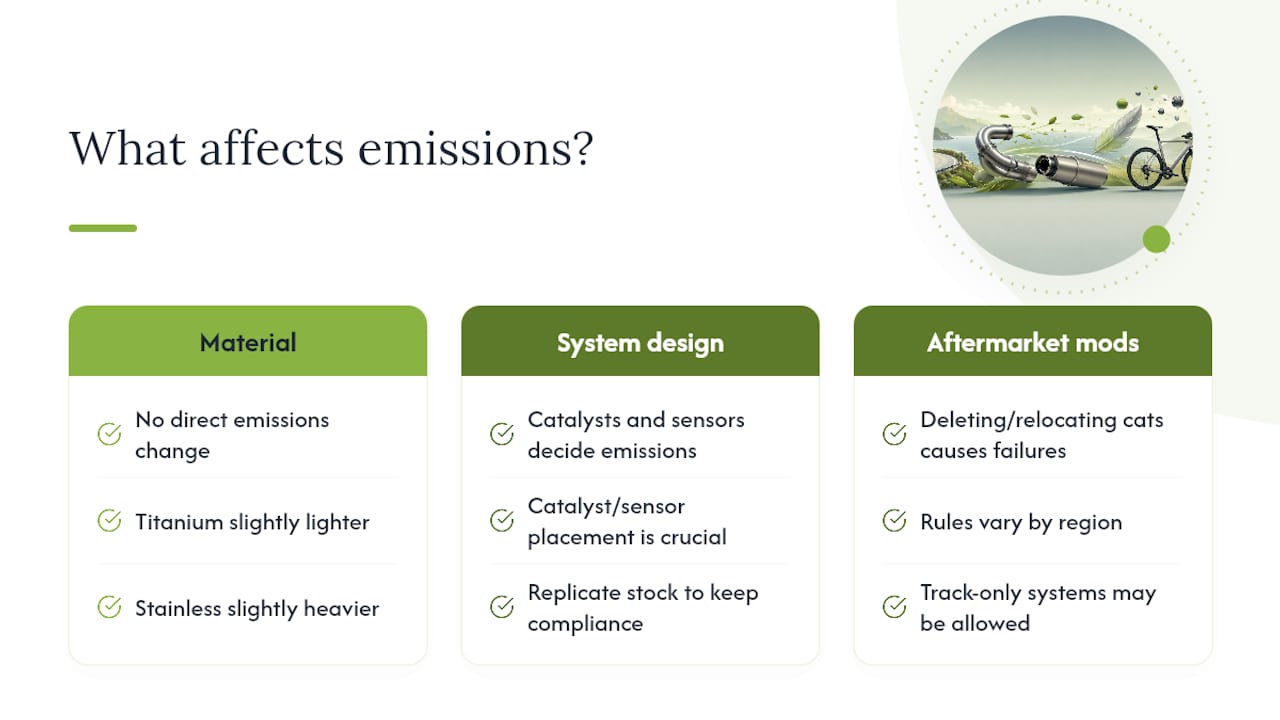
Exhaust material itself doesn’t change what comes out of the tailpipe. Emissions compliance depends on catalytic converters, oxygen sensors, and the vehicle’s overall exhaust system design, not whether the piping is titanium or stainless. Swapping materials without altering catalyst placement or sensor positioning generally keeps a vehicle within its original emissions profile, assuming the new system replicates the stock design.
Where it gets complicated is aftermarket systems that delete or relocate catalytic converters, which many titanium and high-performance stainless systems are built to do for track use. That’s a legal issue separate from material choice, and the rules vary significantly depending on where you live and whether the vehicle is street-registered or track-only. Some regions require emissions testing that a catalyst-deleted system will fail outright, regardless of whether it’s titanium or stainless.
Titanium’s lighter weight has a secondary, minor environmental angle: less mass generally means marginally better fuel efficiency, though the effect on a full vehicle’s overall consumption is small. Stainless systems, being heavier and often thicker-walled, carry a small efficiency penalty by comparison, but neither material meaningfully changes a vehicle’s emissions category on its own.
Before installing any aftermarket exhaust, especially one without a catalytic converter, check your local emissions and inspection requirements. What passes in one state or country can fail inspection in another.
When I’d Pick Titanium, and When I Wouldn’t
I’d spec titanium for a track-day motorcycle or a restoration chasing a specific factory weight target. I wouldn’t for a daily-driven car where stainless does 90% of the job for half the money. Before committing, verify your fabricator’s titanium welding experience directly and confirm the material grade in writing.
— Artem
Where to Source Parts and Fabrication Help
Whichever material you land on, sourcing the right components without guesswork is half the battle. This marketplace offers a vast selection of exotic and supercar parts, so tracking down an OEM stainless system or a titanium aftermarket setup for a rare chassis doesn’t mean cold-calling ten different shops.
An AI-driven search cuts through the noise when you’re describing a part by fit, brand, or spec rather than a precise part number, which matters a lot when you’re hunting for something as build-specific as an exhaust system. Before buying, message the seller directly to confirm the material grade, whether it’s Ti-6Al-4V titanium or 304 stainless, and ask about the fabrication history if it’s a used or custom system. Head to Supercars to search current exhaust listings and start a conversation with a seller who can confirm the specs your build actually needs.