Restorers: 4 Channels to Find Discontinued Supercar Parts, Including AI
Track down the original equipment part number first, then work through specialist networks: dealership classic departments, NOS suppliers, salvage aggregators, and marque clubs, in that order. Most “impossible” parts turn up within these four channels. Reproduction, rebuilding, and CNC fabrication cover what’s left. A marketplace search on a platform like Supercars can shortcut the process by pulling from a large pool of listings at once instead of checking a dozen sites separately.
TL;DR:
- Factory classic departments are the most reliable source for original parts, especially for European marques like BMW and Honda, who produce or remanufacture components on demand.
- Salvage aggregators like Car-part can search thousands of used OEM parts quickly, but buyers must verify fitment and condition with photos and measurements before purchase.
- Reproduction parts are suitable for cosmetic needs and are more readily available but may require fitment adjustments due to texture or design differences.
- Rebuilt or remanufactured parts are ideal for safety-critical systems and often come with warranties, reducing the risk of failure compared to used OEM components.
- Using an AI marketplace like Supercars.parts streamlines the search process for rare supercar parts by filtering listings through exact part numbers, VINs, and detailed photos for faster, more reliable sourcing.
Table of Contents
- Where to Look for Discontinued Supercar Parts
- How to Identify the Exact Part You Need
- NOS vs. Used OEM vs. Rebuilt vs. Reproduction: Which One to Buy
- When to Rebuild or Fabricate a Part From Scratch
- Which Systems Carry the Most Risk When Sourcing Used Parts
- How Supercars.parts Helps You Find Verified Rare Parts
- What Actually Matters When You’re Restoring a Rare Supercar
- Start Your Search on Supercars.parts
- Resources Worth Bookmarking
- Sources
Where to Look for Discontinued Supercar Parts
Every discontinued part hunt starts the same way: figure out which of five or six channels is most likely to have it, then work outward from there. Supercars complicate this because production runs were small to begin with, so even the “common” failure parts on a Ferrari 355 or a Lamborghini Diablo were never made in bulk.
Factory classic departments are worth checking before anything else, especially for European marques. BMW Group Classic still stocks and, in some cases, remanufactures parts for older models, including components for the M1 supercar. Not every part sits on a shelf. Some are built to order once you submit a request through the dealer network, which means a national parts search through your dealer can surface stock invisible to a public search. Honda took this further, announcing a program to reproduce parts and support restorations for the NSX rather than letting the platform go cold. Always ask the manufacturer’s classic or heritage division before assuming a part is gone for good.
NOS (New Old Stock) refers to genuine components that were manufactured decades ago but never installed. These sit in specialist retailers’ back rooms, dealer clearout lots, and estate sales from shops that closed. Auctions dedicated to automobilia often surface boxes of unused NOS stock nobody catalogued properly.
Salvage aggregators changed the game for finding used OEM parts. Platforms like Car-part search thousands of salvage yard inventories at once, filtering by VIN, condition grade, and distance, so you’re not calling individual yards one by one.
Beyond those three, a few more channels round out the search:
- Marque clubs and autojumbles, where members trade parts pulled from parts cars decades ago
- Specialist traders who focus exclusively on one marque or era
- Global marketplaces with saved-search alerts that notify you the moment a matching listing appears
- Restoration shops that hoard donor parts from cars they’ve already scrapped
How to Identify the Exact Part You Need
Guessing gets expensive fast with supercar components, since a part that looks identical can carry three or four different revisions across a production run. Precision at this stage saves you from a return shipment and a restocking argument later.
- Find the OE part number stamped on the physical part, in the owner’s manual, or via a microfiche lookup tied to your VIN.
- Run that number through an interchange database. The Hollander Interchange and similar tools reveal superseded numbers and cross-brand equivalents you’d never guess exist.
- Search that exact number, plus its superseded variants, across salvage aggregators, marketplaces, and dealer parts networks.
- Confirm fitment against your VIN, because mid-production revisions changed mounting points, connector types, and dimensions more often than most owners expect.
Pro Tip: Always request photos and exact measurements before paying, even for a part that “matches” your number. Supercar production runs often carry silent mid-year revisions that a part number alone won’t reveal.
NOS vs. Used OEM vs. Rebuilt vs. Reproduction: Which One to Buy
Four options exist once you’ve located a candidate part, and each carries a different tradeoff between authenticity, cost, and how long you’ll wait.
NOS parts are unused originals still in factory packaging, and they’re the gold standard for restorations aiming for historical accuracy. They’re also the scarcest option and often the most expensive, and rubber or plastic NOS components can degrade in storage even without ever touching a road.
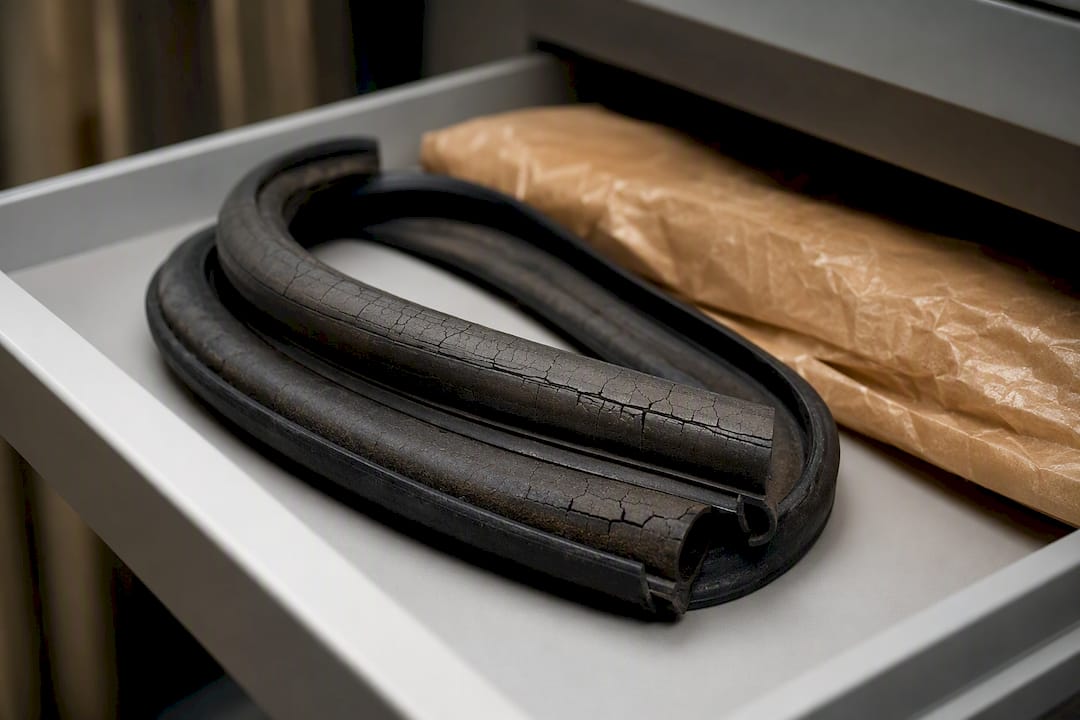
Used OEM parts pulled from donor cars keep originality while costing less than NOS, but condition varies wildly. A used wiring harness might work perfectly or fail within a month depending on how the donor car was stored.
Rebuilt or remanufactured parts restore function to a worn original core, usually with a warranty attached, and they’re the right call for anything mechanical where safety matters more than matching a factory stamp.
Reproduction parts are newly manufactured replacements built when no original supply exists anywhere. They’re a pragmatic answer for trim, plastics, and cosmetic pieces, but a mismatched texture or fitment gap on a body panel is common enough that buyers should expect at least one round of adjustment.
A rough framework for choosing:
- Show car headed for concours judging: NOS or correctly dated used OEM, full stop
- Daily driver or track car: rebuilt/reman for anything safety-critical, repro for trim
- Budget-constrained restoration: repro for cosmetics, saved cash toward mechanical originals
- Time-sensitive repair: whatever passes inspection now, upgrade later if originality matters
Community sourcing guides consistently point to the same methodical order: identify the OE number, cross-reference it, check NOS, search salvage yards and clubs, then consider rebuilding or fabrication last. Skipping steps almost always costs more time than it saves.
When to Rebuild or Fabricate a Part From Scratch
Some parts simply don’t exist anymore in any condition, at any price. That’s when rebuilding or fabrication takes over.
Alternators, starters, brake calipers, and instrument clusters are the most common rebuild candidates. A specialist strips the core, replaces worn internals, and returns a functioning unit built around your original housing, which matters for parts with a serial number tied to the car’s history.
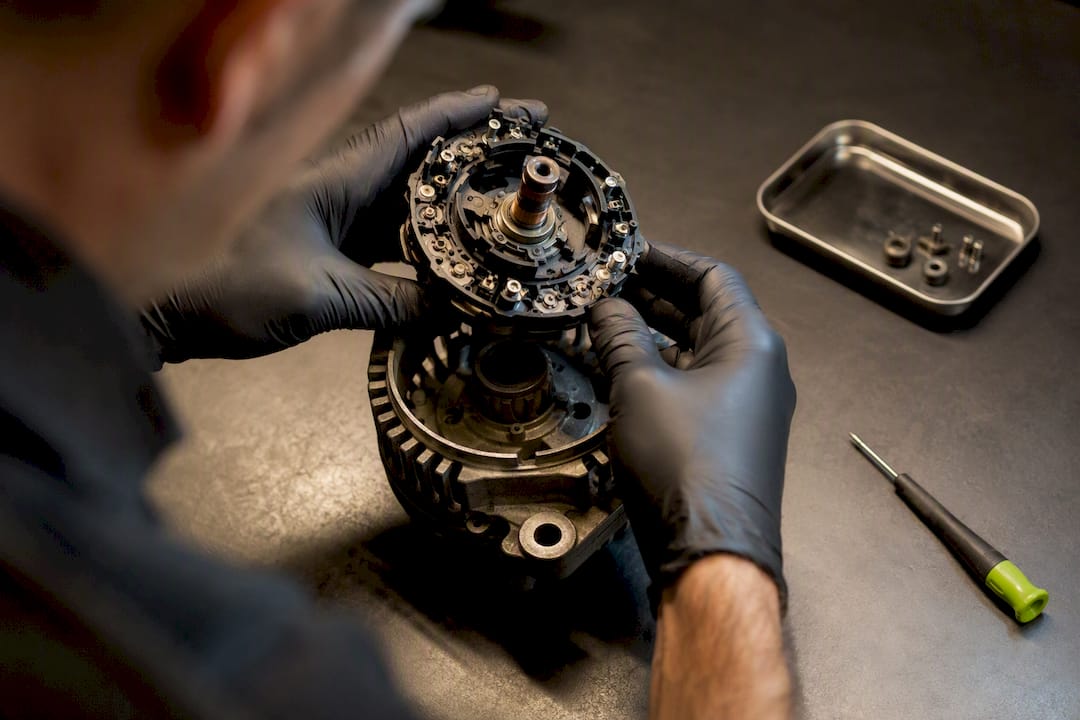
CNC machining and 3D printing fill the gap when no rebuildable core exists at all. Additive manufacturing and precision machining can recreate many non-structural parts once inventory is truly exhausted, though structural or safety-critical components need far more engineering validation before anyone should trust them on the road.
To get a usable quote from a fabricator, come prepared with:
- Precise measurements of the failed part, ideally with calipers, not a tape measure
- Clear photos from multiple angles, including any casting marks or stamped numbers
- A 3D scan or CAD file if one exists, which cuts both cost and lead time substantially
- The original material spec, since substituting plastic for a metal bracket changes how it performs under heat
Pro Tip: Ask any fabricator directly about warranty terms before committing. A rebuilt caliper or a 3D printed bracket without a warranty is a gamble you don’t need to take when reputable shops routinely offer one.
Which Systems Carry the Most Risk When Sourcing Used Parts
Not every discontinued part carries the same stakes, and treating a used brake caliper the same way you’d treat a trim clip is how mistakes happen.
High risk: ECUs, electronic control modules, brake components, steering parts, and fuel or emissions systems. These typically demand OEM or professionally rebuilt units, since a failure here isn’t cosmetic.
Medium risk: mechanical assemblies like transmissions, differentials, and suspension components. These can often be remanufactured safely by a specialist with the right core to work from.
Low risk: trim, badges, interior plastics, and cosmetic body pieces, where reproduction parts are generally acceptable and the failure mode is an aesthetic mismatch, not a safety event.
Before any used part goes on the car, run it through basic checks: flex-test rubber seals and hoses for cracking, bench-test any electrical module before installation, and photograph everything for your records. Rubber degrades even in ideal storage, which makes NOS rubber components a specific trap worth watching for.
How Supercars.parts Helps You Find Verified Rare Parts
Searching part by part across dozens of individual sellers eats hours you don’t have. The Supercars marketplace runs an AI-driven search across a catalog that spans hundreds of thousands of listings for exotic and supercar components, which narrows a vague description down to exact matches far faster than a manual search across scattered listings.
To get the fastest results, submit your OE part number, your VIN, and photos of the failed part or the space it needs to fill. The system uses those details to filter listings by exact fitment rather than relying on a rough model-year match.
Listing provenance and seller reliability matter as much as the part itself. Expect any serious marketplace to show seller history and part condition details up front, and treat a listing with none of that as a reason to ask more questions before paying.
What Actually Matters When You’re Restoring a Rare Supercar
Originality earns its cost on a show car headed for concours judging, where a correct NOS bracket beats a repro every time. On a car you actually drive, practicality should win more often than enthusiasts admit; a well-built rebuilt caliper won’t cost you points anywhere that counts.
Build relationships with specialists before you need them, and log every part number you replace. Rare-part hunts stretch across months sometimes. Plan your restoration timeline around that reality instead of fighting it.
— Artem
Start Your Search on Supercars.parts
Here’s the honest version of how this works: you run a search, describe the part or paste in your OE number, and the AI search on Supercars sorts through a catalog built specifically for exotic and supercar components rather than generic auto parts.
If nothing turns up immediately, save the search. New listings get added constantly, and an alert notifies you the moment a matching part appears instead of forcing you to check back manually every week. For the fastest match, submit your VIN, the OE part number, and clear photos of the part or the area it fits. Sellers on the platform list condition details and provenance information upfront, so you’re not guessing about what you’re buying before it ships. Shipping terms and return policies are listed per seller, worth a quick read before you commit to anything rare or expensive. Head to Supercars and run your first search today.
Resources Worth Bookmarking
- The Hollander Interchange for cross-referencing superseded and equivalent part numbers
- Car-Part.com for searching salvage yard inventories by VIN and location
- Manufacturer classic divisions, such as BMW Group Classic, for factory-supplied parts on older models
- Marque-specific clubs and specialist forums for community-held NOS caches and rebuild leads