Parting Out Supercars: Sellers Tap 365,000 Listings with AI Match
Yes, parting out a supercar can be profitable, but only if you prioritize the rare OEM components buyers actually chase and confirm clear title before touching a wrench. Start now: photograph the VIN, pull every part number you can find, and lock down paperwork. Once that’s done, a marketplace like Supercars.parts becomes your fastest path to actual buyers for exotic components.
TL;DR:
- A clear title, VIN photos, and documented part numbers are essential before beginning dismantling to ensure provenance and prevent future selling issues.
- High-value parts such as engines, transmissions, ECUs, and body panels are much more profitable and demand verified provenance for maximum resale value.
- Selling online through specialized marketplaces and local pickups for heavy components helps maximize profit while controlling shipping and handling costs.
- Proper disposal of automotive fluids and understanding safety regulations are critical, especially for airbags and hybrid or electric vehicle batteries, which require professional handling.
- Accurate documentation and honest condition notes significantly increase the speed and price of high-value supercar components on platforms like Supercars.parts.
Table of Contents
- How Do You Part Out a Supercar Step by Step?
- Which Supercar Parts Sell for the Most Money?
- Where Should You Sell Supercar Parts?
- What Legal and Safety Rules Apply to Parting Out?
- How Supercars.parts Helps You Sell Rare Components Faster
- Why the Conventional Part-Out Advice Misses the Point on Exotics
- List Your First Exotic Part Today
- Sources
How Do You Part Out a Supercar Step by Step?
Before you remove a single bolt, get the paperwork right. You need a clear title in hand, photos of the VIN plate and every visible part number, and a written inventory of what’s on the car. Skipping this step is the single most common reason sellers get stuck later. Buyers of exotic components want provenance, and you can’t manufacture it after the fact.
Once documentation is squared away, removal order matters more on a supercar than on a commodity car, because labor time is expensive and some components degrade or get damaged if you rush the sequence.
- Interior and electronics first. Infotainment units, carbon fiber trim, seats, and ECUs come out fast, don’t require heavy lifting, and often sell within days. Pulling these first also gets cash moving before the harder labor starts.
- Exterior panels and glass. Body panels, lights, and mirrors on a Ferrari or Lamborghini can be worth more than an entire donor car’s worth of generic parts, but they’re also the easiest to scratch or crack during removal.
- Ancillaries and wiring harnesses. Sensors, modules, and harnesses are fragile and easy to overlook, but specialist restorers pay well for complete, undamaged sets.
- Wheels, brakes, and suspension. These are heavy, need a lift or jack stands rated for the load, and benefit from being cleaned before listing.
- Engine and transmission last. These require an engine hoist, more floor space, and usually more time than any other stage.
Before disconnecting anything electrical, disconnect the battery and understand the airbag system on that specific model. Bag and label every fastener by section. It sounds tedious, but a bag of unlabeled bolts is exactly the kind of thing that turns a $40,000 dismantle into a frustrating scavenger hunt three weeks later.
Full dismantling on a complex vehicle typically runs 20 to 40 hours depending on your experience and the car’s complexity, and that estimate doesn’t include cleaning, photographing, and listing afterward. Anything involving an engine hoist, a lift, or a high-voltage hybrid battery pack is worth paying a professional for rather than improvising.
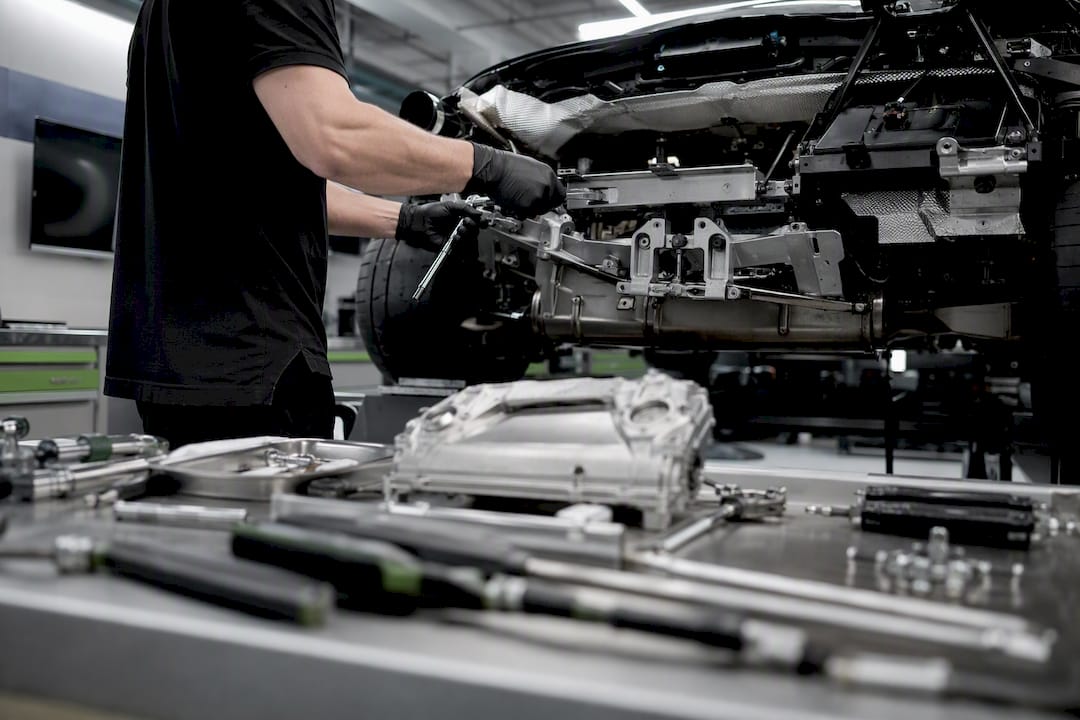
Pro Tip: Sell your quick-moving interior and electronics parts first. The cash from those sales often covers tool rentals and storage costs for the slower, heavier stages still ahead.
Which Supercar Parts Sell for the Most Money?
Not every part pulls its weight. On a supercar, a handful of components carry most of the resale value, and knowing which ones lets you plan labor and shipping around what actually pays.
- Engine and transmission assemblies. These are the crown jewels on any exotic. A running Lamborghini V10 or Ferrari V8 can outsell the rest of the car’s parts combined, but they need freight shipping and a serious buyer pool.
- ECUs and infotainment modules. Lightweight, easy to ship, and in constant demand from restorers who need matching software and hardware.
- Body panels and carbon fiber components. Panels from limited-production models carry premiums that generic sheet metal never will, provided they’re undamaged.
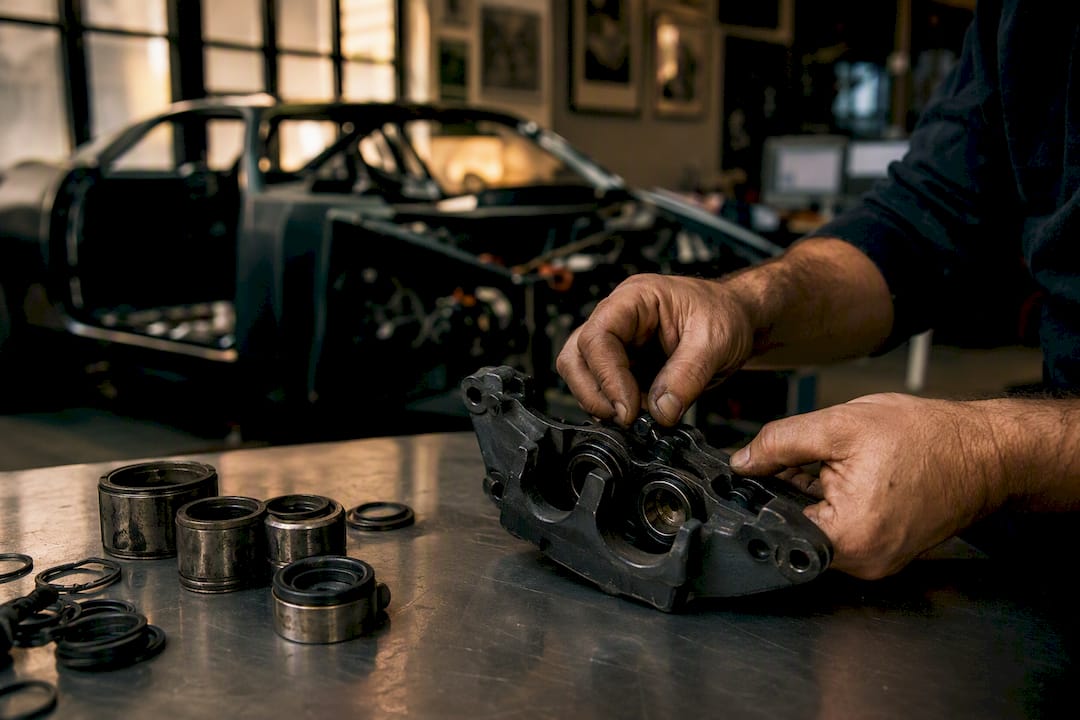
- Wheels and brake calipers. Branded calipers (Brembo, AP Racing) and forged wheels hold value well, especially in matched sets.
- Interior trim and seats. Alcantara and carbon-backed seats from a McLaren or Aston Martin sell quickly to owners doing restorations rather than repairs.
Guides on maximizing part-out returns consistently point to engines, transmissions, ECUs, and infotainment units as the components that command the highest resale value across most vehicle types, and that pattern holds even more strongly on exotics, where scarcity multiplies the premium.
Price ranges vary enormously by model and market, so treat any number as a starting point, not a promise. An OEM part number and clean provenance, meaning a documented, verifiable service history, can swing the same physical part’s price by a wide margin. A caliper with no documentation is a generic caliper. A caliper you can prove came off a low-mileage Aston Martin is a different product entirely.
Where Should You Sell Supercar Parts?
Where a part sells best depends heavily on its size, fragility, and how niche the buyer pool is. Small, high-value electronics travel well and reach a global audience. Heavy mechanical assemblies often make more sense as local pickup only.
- Specialist marketplaces for rare components. Platforms built around exotic and supercar parts connect you directly with restorers and brand-specific shops who already know what they’re looking at.
- Local pickup for engines, transmissions, and body panels. Freight on a V12 block eats into margin fast, and local buyers can inspect before paying.
- General marketplaces for common wear items. Brake pads, filters, and generic hardware rarely justify a specialist channel.
Your price should factor in the platform’s fee, packing materials, and insurance, not just what a similar part sold for last month. A part that nets $2,000 on paper but costs $300 in crating and insurance and loses 15% to marketplace fees is really a $1,400 sale. Price accordingly from the start rather than discovering the gap after the sale closes.
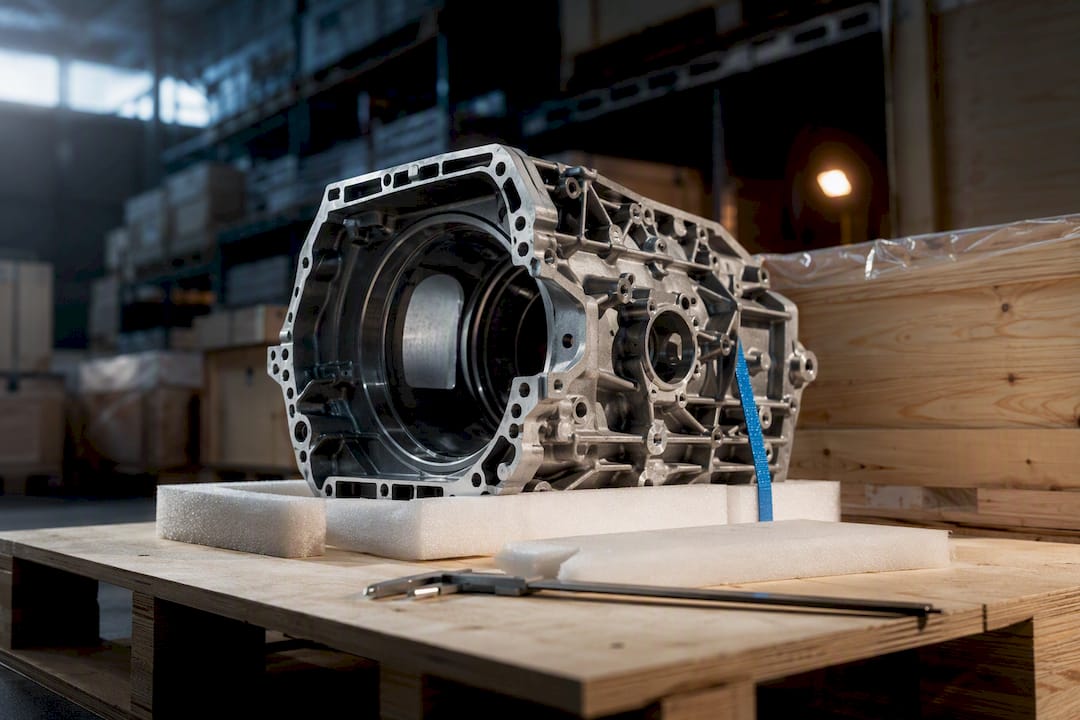
Fragile carbon fiber panels and delicate electronics need foam-lined crates and, ideally, a shipper experienced with automotive freight. A broader look at platform options for selling cars and parts is worth a skim if you’re weighing shipping and fee tradeoffs across multiple channels.
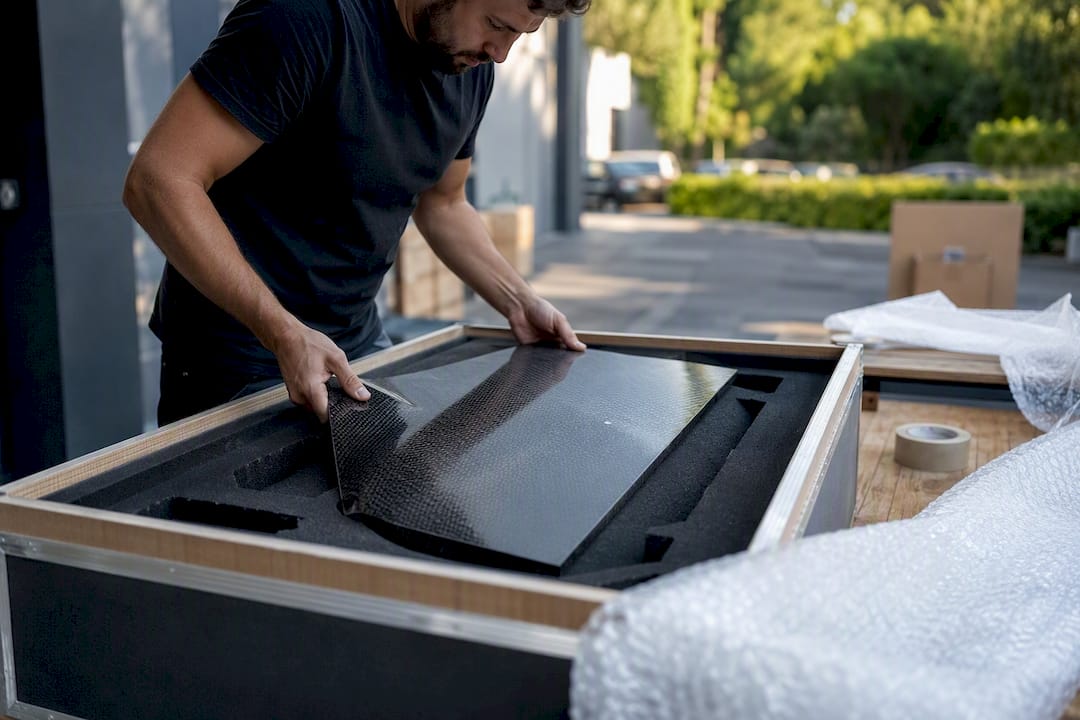
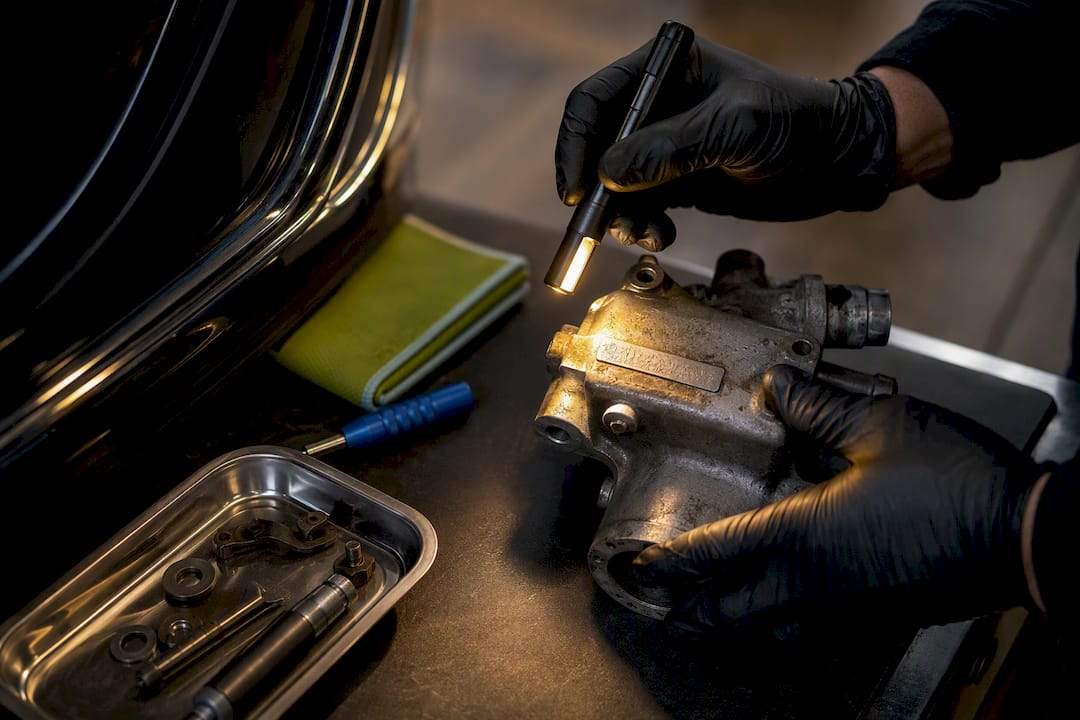
Pro Tip: Photograph every part number and stamp before you clean it. Buyers trust documentation more than a shiny surface, and complete, well-documented listings consistently sell faster and for more.
What Legal and Safety Rules Apply to Parting Out?
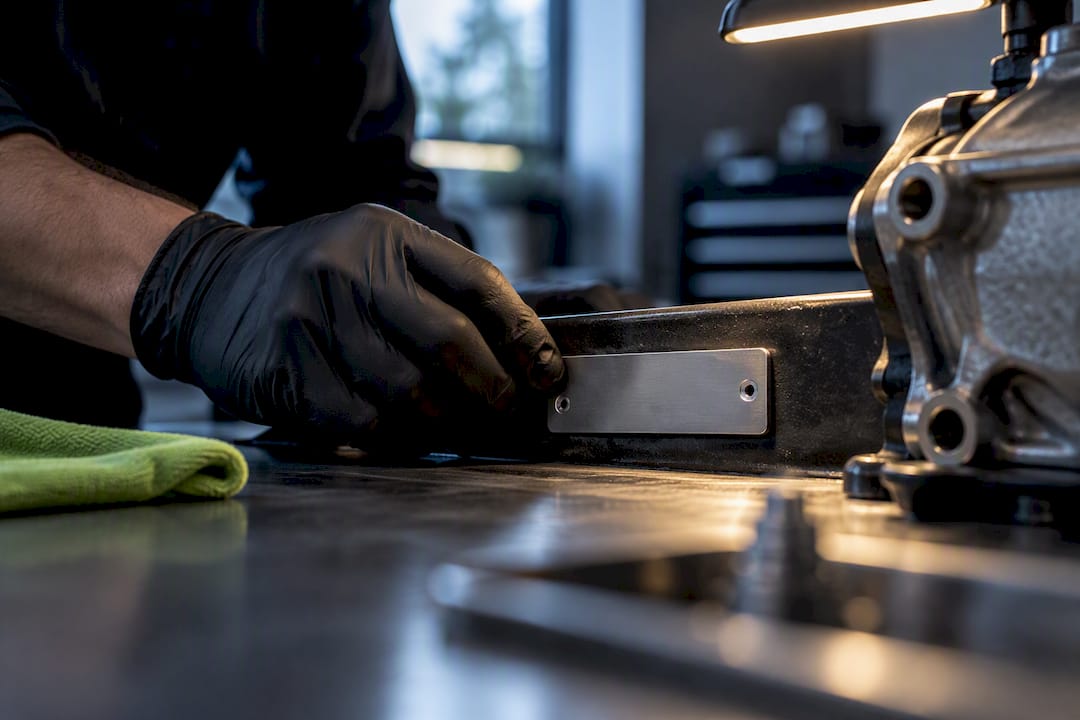
Ownership documentation isn’t optional paperwork; it’s what separates a legitimate part-out from something a buyer, or a regulator, will flag later. Keep the title, a bill of sale, and photos of matching VINs and part numbers for every high-value module you sell.
- Confirm clear title before disassembly begins, not after you’ve already sold parts.
- Retain serial numbers and transaction records, especially for airbags and catalytic converters, where documentation requirements have tightened.
- Follow EPA guidance on used oil handling for containment, storage, and recycling rather than dumping fluids.
- Improper disposal of automotive fluids carries real legal and environmental liability, so route used oil, coolant, and refrigerant through approved disposal channels.
- Never attempt airbag removal without understanding the deployment system, and never remove a hybrid or EV battery pack without certified training.
Battery module removal on an EV or hybrid supercar is not a driveway job. The voltage, the disposal regulations, and the specialized tools involved make it strictly a certified technician’s task, not a weekend project.
Stop and call a professional the moment a task involves a lift you don’t have, wiring you don’t recognize, or a battery pack humming at voltages that can kill.
How Supercars.parts Helps You Sell Rare Components Faster
Selling a Ferrari transmission or a one-off Aston Martin panel is nothing like selling a Honda alternator; the buyer pool is thin, and it’s scattered across the world. Supercars.parts exists for exactly that problem, with a catalog of over 365,000 listings built specifically around exotic and supercar components rather than mainstream salvage.
The platform’s AI-driven search matches your listing against buyers actively searching for that exact part number, which helps you price competitively instead of guessing. To use it well, upload clear VIN and part-number photos, note provenance and condition honestly, and list quick-moving electronics alongside heavier mechanical pieces so buyers see the full inventory at once.
Why the Conventional Part-Out Advice Misses the Point on Exotics
Most part-out guides treat every car the same: strip it, list it, sell whatever sells. That works fine for a commodity sedan. It falls apart on a supercar, where the entire economics hinge on a small number of components that only a specific, scattered buyer pool actually wants.
The mistake I see most often is sellers treating a Lamborghini like a bigger Honda: pulling parts in generic order and dumping them on general marketplaces where nobody searching knows what they’re looking at. That’s how a genuinely rare carbon panel sits unsold for months while a common one on a specialist channel moves in days.
Prioritize documentation over speed. An undocumented engine block is a mystery object; a documented one with matching VINs and service records is a five-figure asset. If you take one thing from this article, take that: provenance is the multiplier, not the removal speed.
— Artem
List Your First Exotic Part Today
If you’ve read this far, you already know the hard part isn’t removing the transmission, it’s finding someone who actually wants a Lamborghini transmission. That’s the gap Supercars.parts is built to close, connecting sellers of rare components directly with restorers, specialty shops, and collectors who search by exact part number instead of browsing generic listings.
Before you list anything, get three things ready: a clear title or bill of sale, sharp photos of the VIN plate and part numbers, and honest condition notes. From there, create your first listing on Supercars and let the platform’s search put your part in front of the buyers actually looking for it.
Sources
For fluid disposal, see the EPA’s used oil guidance. For step-by-step removal strategy, see U-Pull-It’s part-out guide and Chase’s overview on selling cars for parts.