4 VIN Steps to Verify Rolls‑Royce Parts Compatibility
Rolls-Royce parts compatibility comes down to three things: series, generation, and VIN, never the model name alone. A Wraith built in 2015 and one built in 2019 can carry different part numbers for the same-looking component. Before you buy anything, decode the VIN and pull the factory diagram to confirm the exact part number, because some modern Rolls-Royce components are BMW-sourced and only match by number, not by appearance.
TL;DR:
- Confirm the exact part number by decoding the VIN, as parts vary between series, generation, and factory options even within the same model year.
- Use OEM parts diagrams and exploded views to verify the correct assembly, paying close attention to supersession notes and regional differences that may affect fit.
- Verify compatibility through VIN-specific lookup tools that provide precise configuration details and avoid guessing based on model name alone.
- Always request multiple angles and close-up photos of current parts, connectors, and stamped numbers before purchasing to ensure an exact match.
- Rely on trusted sources like official OEM catalogs and VIN-based search platforms to streamline sourcing and reduce costly errors during restoration.
Table of Contents
- What to gather before you start a Rolls-Royce parts search
- How to verify compatibility using VIN, OEM catalogs, and parts diagrams
- OEM, aftermarket, and substitute parts: what “compatible” actually means
- Where to source genuine and hard-to-find Rolls-Royce parts
- Common compatibility mistakes and a pre-installation checklist
- How Supercars.parts speeds up VIN-based Rolls-Royce sourcing
- Best-practice checklist for restorers and mechanics
- Find your VIN-correct part faster with Supercars.parts
- Sources
What to gather before you start a Rolls-Royce parts search
Walking into a search cold, armed with nothing but “it’s a Phantom,” wastes hours and often ends with a part that almost fits. Almost never counts on a car built to this level of tolerance. Before you touch a catalog or message a seller, collect the following:
- Full VIN — the single most important string of characters you own for this task.
- Build year and model year — these can differ, and Rolls-Royce sometimes runs mid-year revisions.
- Series and generation (for example, Phantom VII vs. Phantom VIII, or pre-facelift vs. post-facelift Wraith).
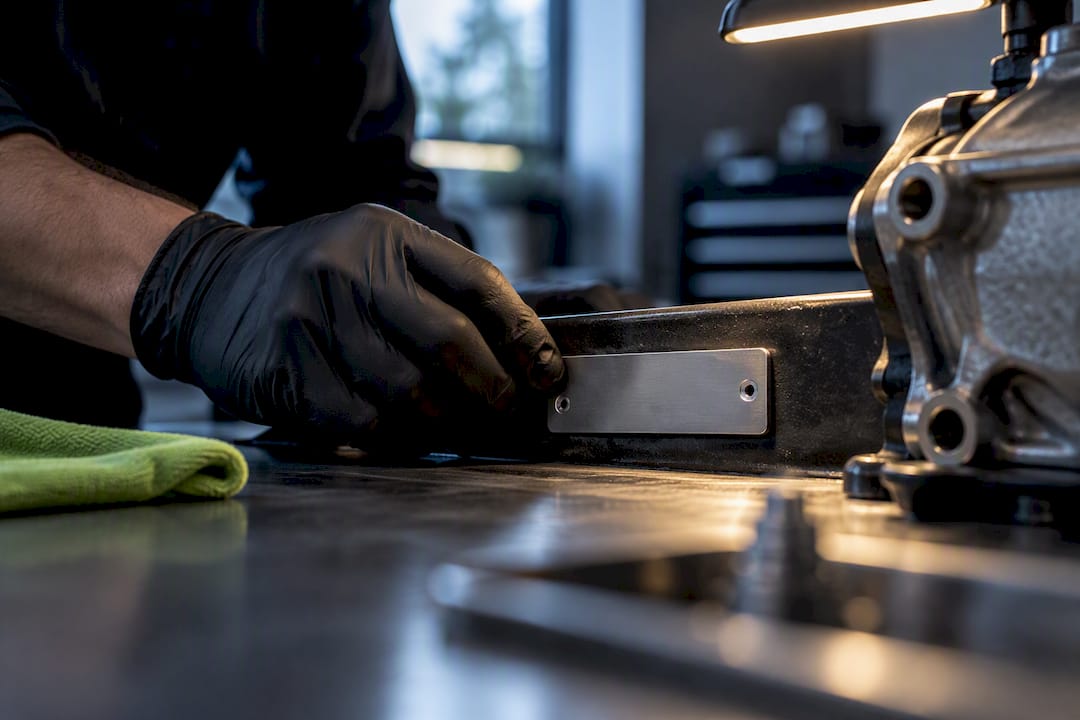
- Factory option codes, pulled from the build sheet or door-jamb plate where fitted.
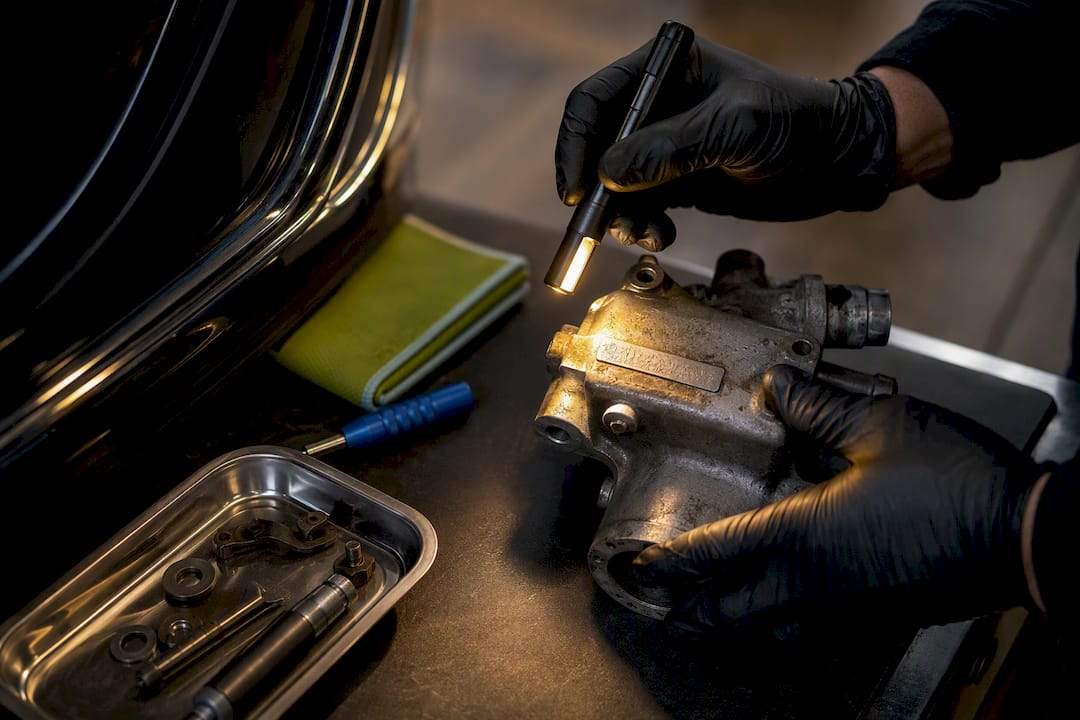
- Clear photos of the current part, including the connector, any stamped or embossed number, and mounting points.
Option codes matter more than most owners assume. A single trim-level option can change a wiring harness, a switch pack, or a bracket that looks identical on the surface but bolts up differently underneath.
When you photograph a part for fit-checking, shoot it from three angles minimum: straight-on, a three-quarter angle showing depth, and a tight close-up of any connector or stamped number. Sellers and parts specialists can often confirm a match from good photos alone, without you shipping the part back and forth.
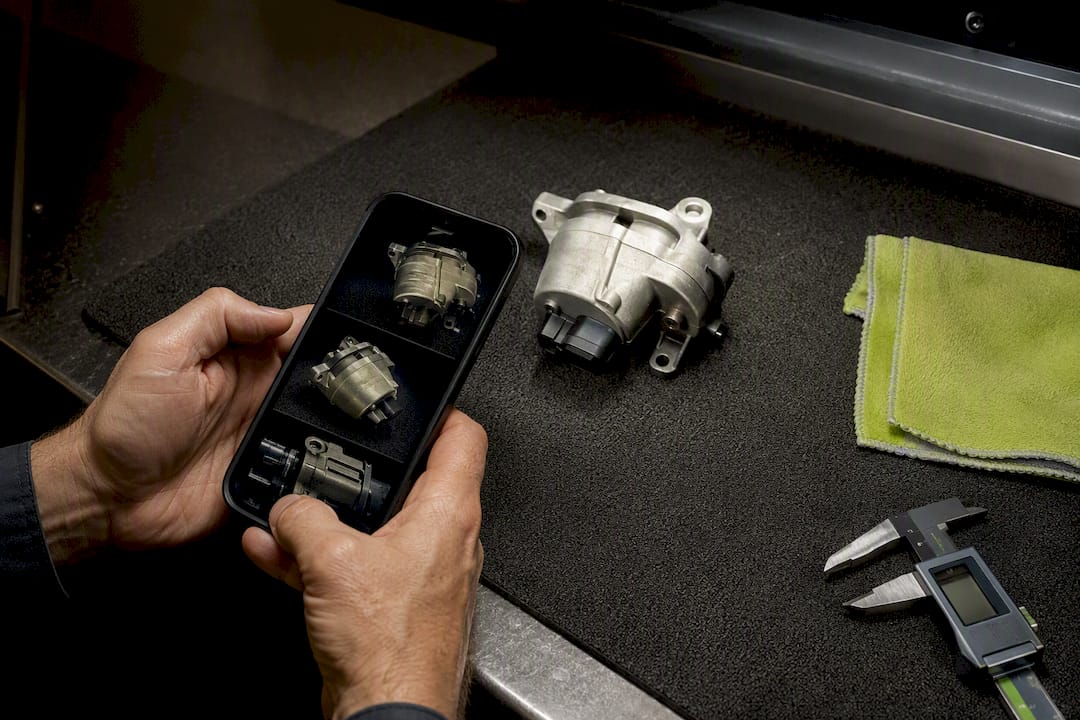
Pro Tip: Photograph the stamped part number under raking light with a phone flashlight held at an angle. Numbers worn smooth from age or grease often become readable once shadow fills the letter grooves.
How to verify compatibility using VIN, OEM catalogs, and parts diagrams
The workflow that actually prevents mistakes has four steps, and skipping any one of them is where most wrong-part orders originate.
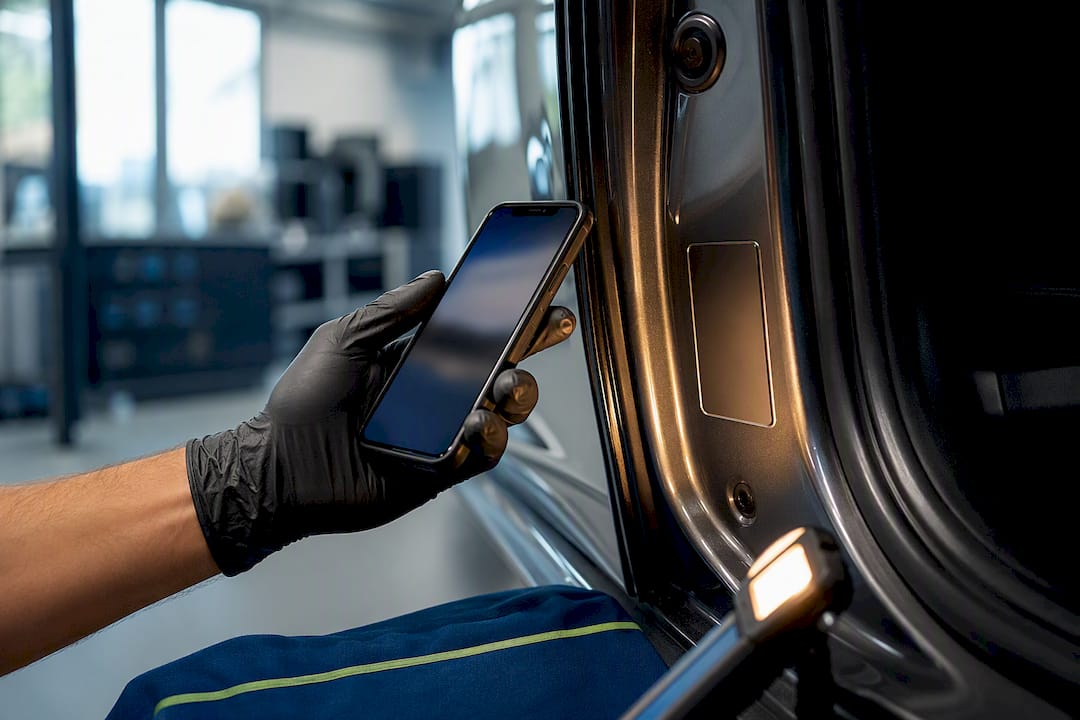
- Decode the VIN first. This confirms series, model year, and often the factory options baked into the build. A VIN-based lookup returns the exact configuration for that specific chassis, which is a meaningfully more reliable starting point than searching by model name and guessing at the year.
- Locate the series and generation inside an OEM-style catalog. The official-style Rolls-Royce OEM parts catalog organizes parts by series and generation and gives you factory exploded diagrams alongside original part numbers, which is exactly the kind of VIN-accurate reference you need before ordering anything.
- Open the exploded diagram for the assembly you’re replacing. These diagrams show every fastener, bracket, and sub-component in relation to each other, so you can confirm you’re looking at the correct side, the correct trim variant, and the correct revision.
- Read the part number carefully, along with the quantity required, left/right orientation where applicable, and any revision notes attached to that diagram entry.
Here’s the detail restorers frequently miss: catalogs built on ETK-style architecture often show region-specific differences and facelift changes that shift diagram mappings entirely. The same series can carry different diagrams depending on the market it was originally sold in and the exact generation window it falls into. A UK-market Ghost and a US-market Ghost from the same production year can reference different diagram sets for the same assembly.
Supersessions are how the factory tracks part evolution over time. When a component gets redesigned, discontinued, or replaced with an updated version, the catalog records the old number and points to the new one on the same diagram. This matters enormously for older cars, because ordering the number printed on a decades-old part could be shipped a superseded equivalent with a completely different number stamped on the box. Reading the diagram’s supersession notes before you order tells you whether that’s expected or a sign you’ve got the wrong reference entirely.
By the numbers: VIN-based lookup tools return the precise configuration and available spare parts for that individual chassis, which sidesteps the guesswork that comes with searching by model name alone. Apps built on ETK-compatible reference data can return part numbers, quantities, and analog or replacement suggestions directly from the VIN, and some of these tools update their underlying data monthly to keep pace with new supersessions and corrections.
When you’re evaluating a VIN-lookup app or catalog service, trust the fields that come straight from the diagram: part number, quantity, and orientation. Be more skeptical of fields like “estimated price” or “in stock” status, which often reflect a third-party seller’s inventory rather than factory data. The diagram reference itself is the ground truth. Everything layered on top of it is commentary.
OEM, aftermarket, and substitute parts: what “compatible” actually means
“Compatible” gets used loosely across the parts trade, and the differences matter more on a Rolls-Royce than on almost any other car you’ll work on.
- OEM (Original Equipment Manufacturer): the exact part specified by the factory diagram for your VIN and generation.
- OEM supersession: a factory-approved replacement that carries a new part number but is officially sanctioned as the correct current substitute.
- NOS (New Old Stock): genuine factory parts, never installed, often the only option for discontinued components on older Silver Shadows or early Phantoms.
- Aftermarket: third-party manufactured parts designed to fit the same application, ranging from excellent to poorly toleranced.
- Remanufactured: used cores rebuilt to a functional (sometimes factory) spec, common for electronics, pumps, and climate components.
On modern Rolls-Royce models built under BMW ownership, some components genuinely are BMW parts, not just BMW-adjacent. Climate control modules, certain sensors, some switchgear, and portions of the electrical architecture on cars like the Ghost, Wraith, and Cullinan can trace back to shared BMW platforms. The trap is assuming this by category. A part might be identical in one area (say, a window regulator motor) and only superficially similar in another (the trim surround around it, which is bespoke Rolls-Royce). Verify by part number, every time, never by “well, it’s a BMW-era Rolls.”
Fit and finish tolerances separate a genuine Rolls-Royce experience from a merely functional one. A wiring connector that clicks in on a BMW 7 Series might sit slightly loose or slightly tight on the Rolls-Royce harness surrounding it, because the tolerances specified for a car built to this standard are tighter than most aftermarket manufacturers design for.
Before trusting an aftermarket claim of compatibility, ask for a technical datasheet, request photos next to a known-good OEM part, and, where possible, get measured tolerances rather than a verbal assurance that “it fits the same generation.”
Where to source genuine and hard-to-find Rolls-Royce parts
Sourcing routes for Rolls-Royce parts split into four practical categories, each with its own trade-offs in price, lead time, and certainty.
- Authorized dealer network: highest certainty of correct fit, highest price, and often the longest lead time for discontinued parts.
- OEM parts-catalog portals: not a purchasing channel themselves, but the reference layer you use to confirm the exact number before buying anywhere else.
- Specialist independent suppliers: often organize inventory by model and year, stocking NOS, used OEM, and aftermarket parts side by side, but you carry more of the verification burden yourself.
- Marketplaces: broad inventory and competitive pricing, with quality depending entirely on how well the listing documents the part.
Whatever the source, a listing without documentation is a listing you should treat with suspicion. Require the part number, a reference to the exploded diagram it corresponds to, sharp photos from multiple angles, and an honest condition report before you commit to a purchase.
A part scarcity issue is rarely a sign the part doesn’t exist. It’s usually a sign the part lives somewhere else in a specialized global supply chain. Rolls-Royce has been expanding its sourcing footprint internationally, which means the component you need might be perfectly available, just not around the corner.
That global sourcing reality shapes lead time and price more than most buyers expect. A part that seems rare in your region might ship routinely from a supplier network overseas, and cross-border logistics, customs, and return policy all deserve a straight answer before you pay. If a component needs to be reproduced entirely rather than sourced, custom automotive part fabrication is worth exploring for trim pieces or brackets that no longer exist in any inventory, genuine or aftermarket.
The most efficient way to use a marketplace is to search directly by VIN or OEM part number rather than a generic description, then follow up by asking the seller for additional photos or a measurement against the diagram reference. A seller who can produce that on request is worth paying more. One who can’t is a red flag regardless of price.
Common compatibility mistakes and a pre-installation checklist
The same handful of mistakes account for most wrong-part returns on Rolls-Royce restorations. Assuming the model name settles compatibility is the biggest one. A “Wraith is a Wraith” mindset ignores facelift and generation differences that change part numbers even when the visible part looks unchanged. Ignoring connector variations is the second most common error, particularly on electrical components where a pin count or connector shape shifted between production runs. Ordering by visual match instead of stamped number rounds out the top three.
Here’s the verification routine worth running every time, no exceptions:
- Decode the VIN and confirm series, generation, and factory options.
- Pull the exact exploded diagram for the assembly in question.
- Record the listed part number, quantity, and orientation.
- Check for supersession notes tied to that number.
- Cross-reference the part number against the seller’s listing, not just the description.
- Request or take close-up photos comparing connector and stamped number against the diagram.
- Only after all six steps match, proceed to installation.
Treat a seller’s reluctance to provide a photo, a part number, or a diagram reference as a genuine red flag rather than a minor inconvenience. Legitimate sellers of Rolls-Royce parts expect these questions and answer them quickly.
Pro Tip: Keep a running log of every part number you verify for a given VIN, even ones you decide not to buy. Six months later, when a different component fails, that log saves you from re-decoding the same VIN from scratch.
How Supercars.parts speeds up VIN-based Rolls-Royce sourcing
Manually cross-referencing a VIN against catalog diagrams and then hunting listings across scattered suppliers eats an afternoon easily. This platform compresses that into one search, built specifically for the kind of rare, model-specific components this article covers.
- A large number of listings spanning OEM, aftermarket, and hard-to-find components across exotic and luxury marques, including Rolls-Royce.
- An AI-driven parts search that matches VIN and part-number queries against inventory faster than manual catalog browsing.
- A structure that surfaces NOS and OEM matches sellers might otherwise bury under generic model-name listings.
The gap between finding a part that exists and finding the specific listing for your chassis is where most restoration timelines stall. Faster matching closes that gap directly.
Ask any seller on the platform for the same documentation you’d demand anywhere else: part number, diagram reference, and clear photos before you commit.
Best-practice checklist for restorers and mechanics
The shops that avoid costly reorders share the same habit: they verify before they buy, not after the part arrives and doesn’t fit. That discipline sounds obvious until you’re staring at a “close enough” listing at 4:45 on a Friday.
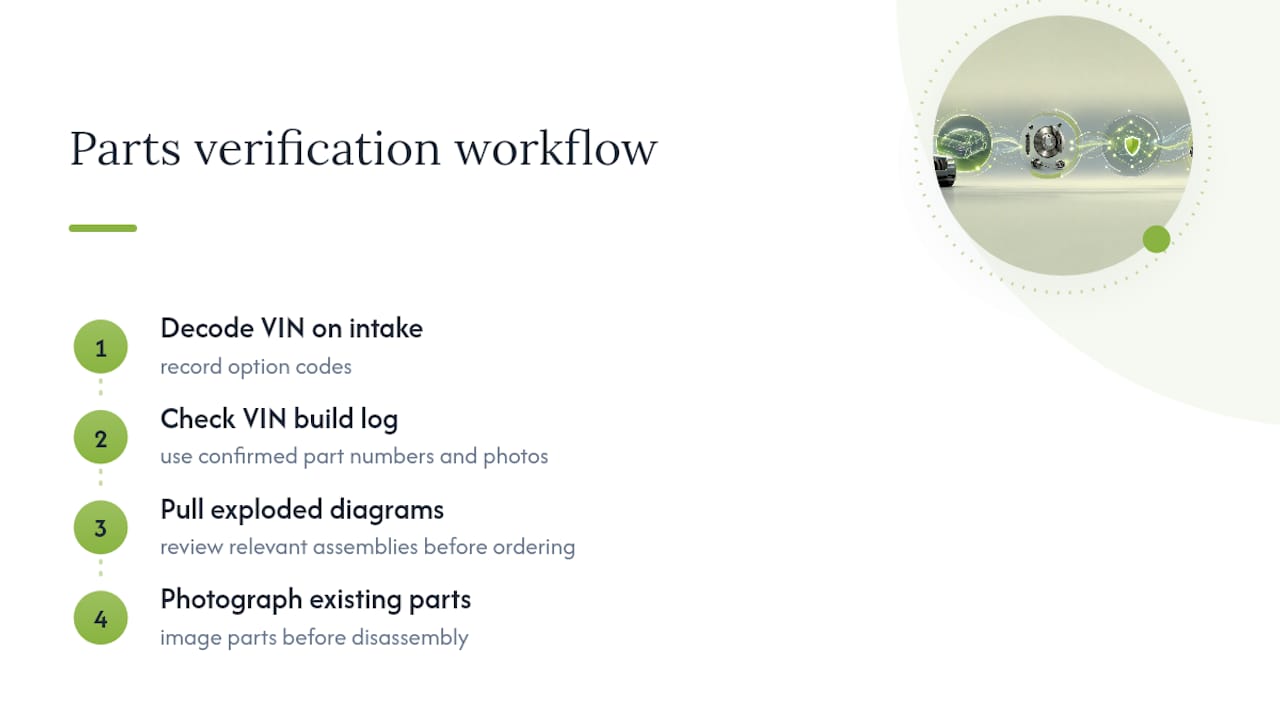
Maintaining a VIN-linked build log, with every confirmed part number and photo attached to that specific chassis, pays off the moment a second component fails. You’re not starting from zero. You’re pulling a reference you already trust.
For a shop taking on a new restoration job, the workflow that works: decode the VIN on intake, pull every relevant exploded diagram before ordering anything, and photograph the vehicle’s existing parts before disassembly begins. That sequence catches option-code surprises before they become expensive mistakes, and it turns a guessing game into a documented process. Rework costs more than the extra twenty minutes verification takes, every time.
— Artem
Find your VIN-correct part faster with Supercars.parts
Manual catalog cross-referencing works, but it’s slow, and slow gets expensive when a restoration is waiting on one bracket. The platform gives you a faster route to the same goal: a vast number of listings across exotic and luxury marques, searchable by VIN or part number through an AI-driven search built to surface the exact match instead of many near-misses.
Run your VIN through the search, then treat every promising listing the same way this guide recommends treating any seller: ask for the diagram reference, request close-up photos of the connector or stamped number, and confirm quantity and orientation before you commit. Start your Supercars with your VIN in hand, and let the platform narrow thousands of listings down to the ones that actually fit your chassis.