Find 365,000 Listings: Supercar Part Identification for Owners
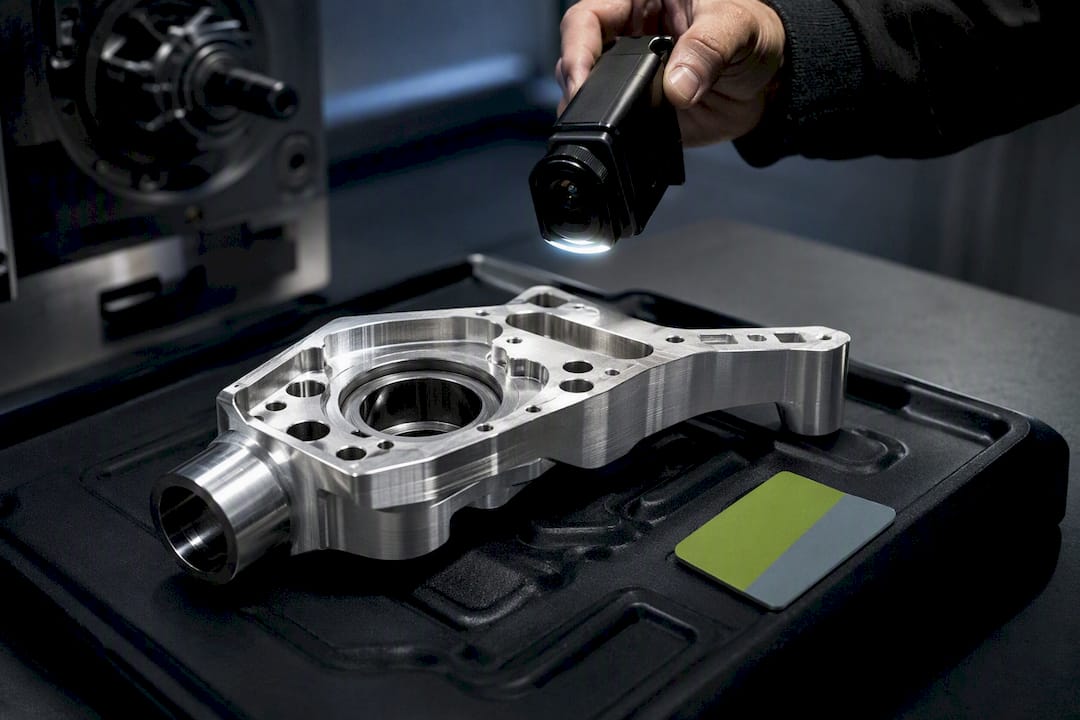
Yes, modern AI image tools can identify most supercar parts from a single clear photo, usually with a confidence score attached. Treat that score as a starting point, not a verdict: cross-check high-value or safety-critical parts against the VIN, part numbers, or casting marks before you buy or install anything. The reliable path runs in one direction only: photograph the part, run the AI identification, verify with hard data, then source it, ideally through a marketplace like Supercars built specifically for exotic inventory.
TL;DR:
- AI identification accuracy improves significantly when using marque-specific models and high-resolution, well-lit photos that clearly show the entire part and markings.
- Cross-check AI matches with physical evidence such as casting numbers, bolt patterns, and VIN data before purchasing, especially for safety-critical components.
- For reliable sourcing, verify part numbers and markings with OEM diagrams and order from dedicated marketplaces like Supercars, which offer extensive exotic car inventories.
- AI tools can produce false positives with corroded, repaired, or similar-looking parts, so manual verification remains essential for safety-critical systems.
- Sourcing rare components often takes days or weeks, requiring careful planning, verification, and comparison of seller ratings, return policies, and provenance documentation.
Table of Contents
- How does AI actually identify a supercar part?
- How do you photograph a part for the best AI match?
- How do you verify an AI-identified part before you buy?
- Where should you source a part once it’s identified?
- What’s the fastest workflow from photo to installed part?
- When does AI parts identification fail?
- What have real restorations taught about trusting AI identification?
- Find your verified part on Supercars.parts
- Sources
How does AI actually identify a supercar part?
Image-recognition models used for parts identification generally fall into two camps: classification models that label a whole image (“this is a Ferrari F136 intake manifold”) and object-detection models that isolate a component within a busier photo before labeling it. Both depend entirely on the training data behind them. A generalist automotive model trained mostly on Honda and Toyota parts will struggle with a Lamborghini Gallardo throttle body, because it has never seen enough examples to learn what makes that part distinct.
The models lean on visual signals a trained eye would also use:
- Overall shape and casting geometry
- Mounting point spacing and bolt patterns
- Surface texture, finish, and casting seams
- Stamped or embossed numbers
- Connector type and pin count on electrical parts
The output usually includes a confidence score, essentially the model’s own estimate of how sure it is. A pretrained classifier for Italian supercar parts illustrates why marque-specific training matters: a model built specifically around Ferrari, Lamborghini, and Maserati components returns tighter, more reliable labels than a generic parts model asked to guess at the same photo. When a score comes back low or the tool returns several plausible matches, that is your signal to slow down and verify manually rather than trust the top result.
How do you photograph a part for the best AI match?
Bad photos produce bad matches, no matter how good the model is. Follow this sequence and you will get usable results almost every time:
- Shoot a full profile view showing the entire part with nothing cropped off.
- Take tight close-ups of any stamped numbers, casting marks, or printed labels.
- Photograph the mounting points and any brackets or connectors attached to the part.
- Place a coin, ruler, or your hand next to the part for scale reference.
- Shoot in diffuse daylight or soft LED light. Avoid direct flash and harsh shadows.
- Capture the part both installed (if possible) and removed, from at least three angles.
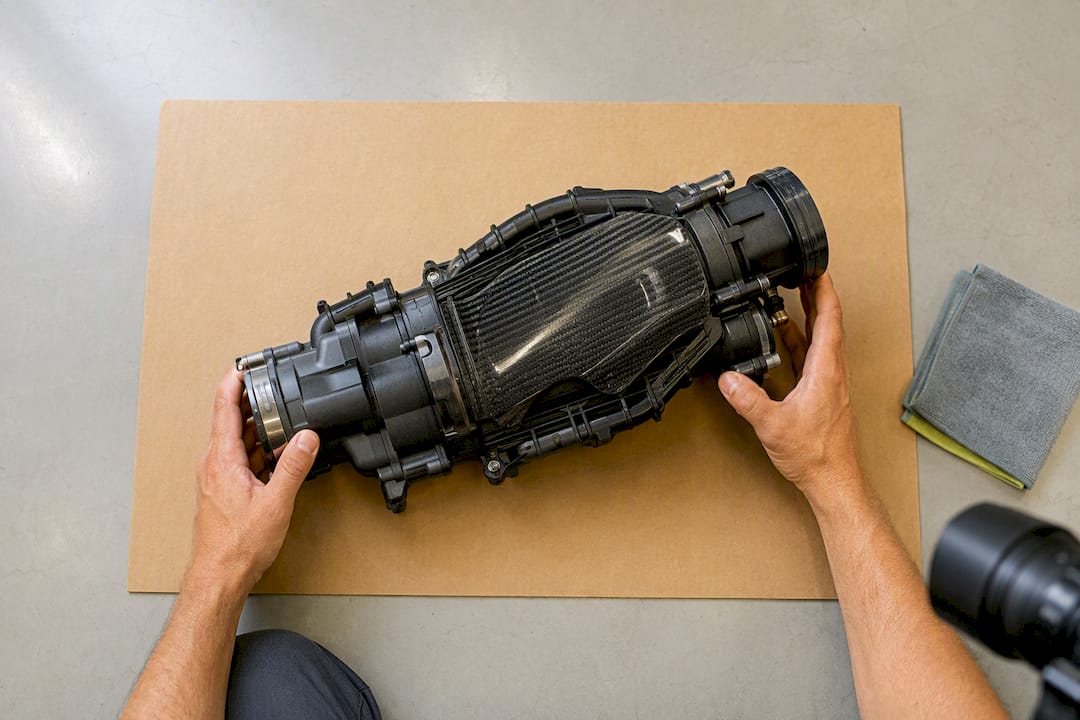
Upload the highest resolution your device allows, JPEG or PNG both work fine, and avoid cluttered backgrounds that can confuse object-detection models trying to isolate the part from the rest of the engine bay. This mirrors the approach recommended for identifying classic car parts: whole-part shots, marking close-ups, and a scale reference consistently outperform a single rushed photo.
Pro Tip: Shoot the part on a plain towel or cardboard sheet. The uniform background does more for match accuracy than a better camera.
How do you verify an AI-identified part before you buy?
An AI label gets you close. Verification gets you correct. Once you have a candidate identification, run it against the physical evidence on the car or the part itself.
- Pull the VIN and decode it for model year, trim, and factory build codes; this narrows which variant of a part actually fits.
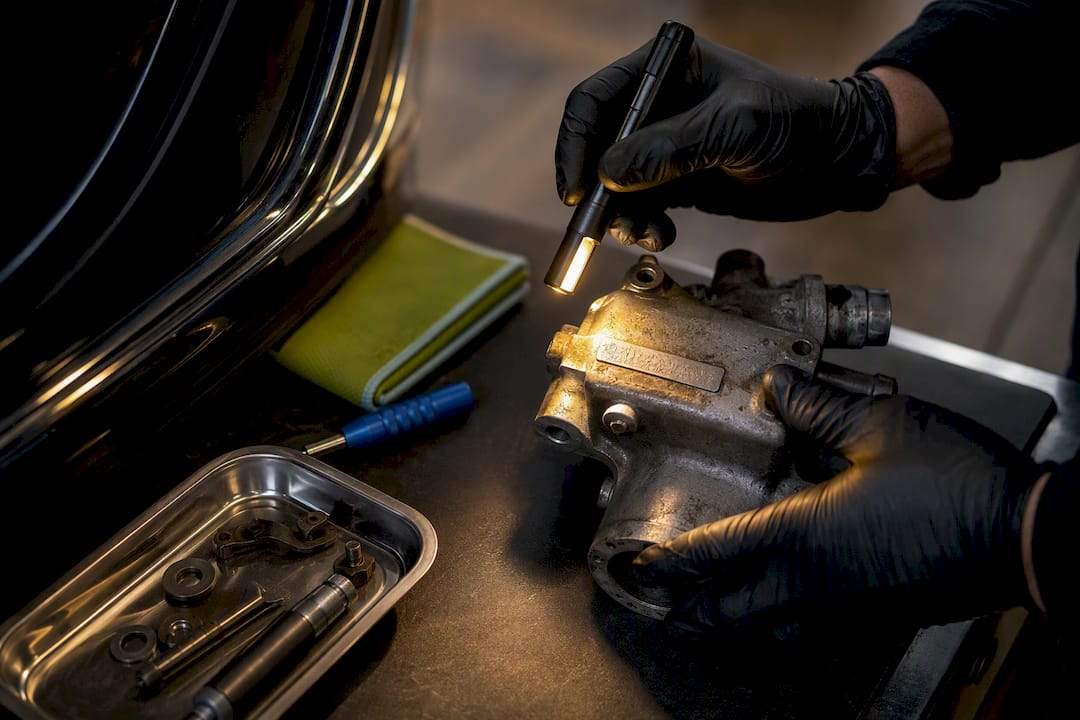
- Locate casting numbers, usually found on flat surfaces of engine blocks, cam covers, or housings, and cross-reference them against known part number databases.
- Compare bolt patterns, connector pin counts, and gasket-face dimensions against OEM diagrams or reference photos, not just the overall silhouette.
- Run the part number or VIN through a supplier’s fitment tool for a final confirmation before you commit to a purchase.
Engine and assembly codes matter most when a full VIN decode is unavailable or the car has been modified. Casting numbers on the block or cam cover often carry more granular build detail than the VIN itself in those cases.
Pro Tip: Photograph the casting number with the part still mounted, then again after removal. Corrosion or grease sometimes hides a digit that only shows up once the surface is cleaned.
Where should you source a part once it’s identified?
Once you know exactly what you’re holding, the sourcing decision splits into a few clear lanes. Safety-critical systems (brakes, suspension, fuel delivery) call for OEM or new-old-stock parts whenever they exist. Cosmetic trim and low-stress components can often use quality reproductions without compromising the car.
- Search by the verified part number first, then confirm against the photo, never the reverse.
- Treat suspiciously low prices, missing casting marks, or stock photos instead of real listing images as red flags for counterfeit or mismatched parts.
- Ask sellers for close-up photos of stampings and casting numbers before paying a deposit on anything rare.
- Cross-check reproduction parts against known OEM tolerances, especially for anything load-bearing.
Supercars built its search around this exact problem: over 365,000 listings covering Ferrari, Lamborghini, McLaren, Aston Martin, Rolls-Royce, and other exotic marques, searchable by photo or by the part number you just verified. That combination of AI search and inventory depth cuts out the hours normally lost scrolling forums for a single obscure casting.
What’s the fastest workflow from photo to installed part?
- Photograph the part following the angle, marking, and scale guidance above.
- Run the image through an AI identification tool and note the confidence score.
- If confidence is high and only one match returns, move to verification.
- Confirm the ID against VIN data, casting numbers, or OEM diagrams.
- Search a specialist marketplace using the verified part number and photo.
- Confirm the seller’s return policy and warranty terms before finalizing the order.
If the tool returns multiple plausible matches or a low score, don’t guess. Pull more close-up shots of markings and rerun the search, or take the part to a marque specialist. Rare supercar components can take anywhere from a few days to several weeks to source depending on rarity, so build that timeline into any restoration schedule rather than assuming next-day availability.
When does AI parts identification fail?
AI identification breaks down in predictable ways. Parts that have been repaired, repainted, or corroded lose the surface texture and casting detail the model relies on, and similar-looking components shared across model years or even different marques can trigger confident, wrong matches. A database of common identification mistakes points to skipped VIN checks and ignored trim-level differences as the most frequent causes of a wrong order, not bad photos.
Treat AI output as a strong lead, never the final word, on anything safety-critical. Brakes, steering, and fuel systems need physical verification every time, no exceptions.
- Corroded or repaired surfaces obscure the details models depend on.
- Cross-model lookalikes cause false positive matches at a surprising rate.
- Concours and provenance restorations need documented stampings and sourcing paperwork, not just a confidence score, to hold up under judging or resale scrutiny.
What have real restorations taught about trusting AI identification?
A blurry photo of a corroded intake manifold once came back from an AI tool as three possible Lamborghini variants, all plausible, none confirmed. The casting number, once cleaned and photographed properly, matched only one. That single VIN cross-check saved a wrong order and a week of shipping delays.
Documentation compounds in value over time. Buyers on resale, especially for concours cars, pay a premium when a seller can show clean part photos, casting numbers, and a verified sourcing trail rather than a vague “period correct” claim.
— Artem
Find your verified part on Supercars.parts
Once you’ve got a confidence score and a verified part number in hand, the next step is finding an actual seller who has that exact component. Supercars.parts runs a marketplace of 365,000+ listings built entirely around exotic marques, so instead of combing five forums and three regional dealers, you search once. Upload the same photo you used for identification, or paste the part number you confirmed against casting marks, and the AI-driven search surfaces matching OEM, NOS, and reproduction listings side by side.
Before you commit to a purchase, check the seller’s rating, return window, and buyer protection terms the same way you’d check a casting number: carefully, and before money changes hands. Regional marketplaces and enthusiast sites like CarPulse are worth cross-referencing for general market pricing, but for sourcing the actual part you just identified, Supercars by photo or part number and see what’s actually in stock right now.