Supercar Owners: Budget $6,000–$115,000 for Maintenance Over 1 Year and 5 Years
Budget several thousand dollars to tens of thousands annually for routine supercar maintenance, excluding fuel and insurance, with many well-kept cars falling into a moderate spending range. Over five years, expect a substantial total upkeep cost, increasing if the car requires major service or clutch work within that timeframe. Where your car falls depends heavily on the brand, its age, mileage, and whether you drive it hard or park it most of the year.
TL;DR:
- Routine annual maintenance costs typically range from $850 to $1,500, with major services every 4 to 6 years costing $3,500 to $6,000.
- Costs increase significantly for track-driven cars, limited editions, or models with proprietary parts, often exceeding $15,000 annually.
- A five-year maintenance budget for most supercars falls between $25,000 and $75,000, depending on the model, age, and driving habits.
- Insurance premiums for supercars are often the second-largest ongoing expense, influenced by horsepower, mileage, storage, and regional factors.
- Unexpected repairs, especially electronics and age-related components, can cause costs to balloon, so owners should maintain a dedicated reserve fund.
Table of Contents
- How Much Does Supercar Maintenance Cost Per Year?
- What Actually Drives Supercar Maintenance Costs Up or Down?
- What Are the Real Line-Item Costs for Supercar Service?
- How Much Should You Budget for Different Supercar Models?
- How Do You Build Your Own Supercar Ownership Budget?
- Should You Use a Dealer or an Independent Specialist?
- Can a Parts Marketplace Actually Lower Your Maintenance Costs?
- What Do Supercars Cost to Insure?
- How Much Fuel and Lubricant Should You Budget For?
- How Do You Plan for Unexpected Supercar Repairs?
- How Does Depreciation Affect Total Ownership Cost?
- What Warranty and Extended Service Options Are Available?
- The One Rule That Actually Protects Supercar Owners
- Where to Find Hard-to-Source Supercar Parts
- Sources
How Much Does Supercar Maintenance Cost Per Year?
“Maintenance” in this context means routine service, wear items like tires and brakes, and scheduled major services. It does not include fuel, insurance, financing, or depreciation unless a section says otherwise. Keeping those categories separate matters, because lumping insurance into a “maintenance” number is how owners get blindsided by a budget that looked fine on paper.
Three rough bands cover most supercars on the road today:
- Low ($1,000–$5,000/year): Newer cars still under factory warranty, low annual mileage, no major service due yet.
- Typical ($5,000–$15,000/year): The range most owners actually experience, per the Supercars, covering routine service plus occasional wear-item replacement.
- High ($15,000+/year): Cars due for a major service, track-driven examples, or models with proprietary parts and limited independent-shop support.
A 3 year total for a typically driven car often runs $18,000 to $40,000; a 5 year total commonly lands between $25,000 and $75,000 — knowing how to keep your ceramic coating in top condition can help protect your investment over those years by reducing additional paint and body repair costs through proper maintenance How to keep your ceramic coating in top condition. The math is rarely linear. A car with a major service due in year two can double that year’s spending compared to year one or year three, so don’t average the annual figure and assume it repeats evenly.
What Actually Drives Supercar Maintenance Costs Up or Down?
Four variables explain most of the spread between a $6,000 year and a $30,000 year.
Brand and engineering complexity. Naturally aspirated V10s and V12s tend to need less frequent intervention than heavily turbocharged, electronically dense platforms. Carbon fiber body panels, center-lock wheels, and active aerodynamics all add specialized labor and parts costs that a simpler design avoids.
Age versus mileage. Rubber, seals, and hoses degrade on a calendar, not an odometer. A low-mileage 8-year-old car can need as much age-related work as a heavily driven 3-year-old one, since air suspension components, seals, and sensors commonly start failing around the five-year mark regardless of miles driven.
Use profile. Commuter use is gentle on tires and brakes. Spirited road driving accelerates wear moderately. Track days accelerate it dramatically, sometimes cutting tire life from years to single-digit track sessions.
- Parts availability: dealer-exclusive components cost more and take longer to source than parts with an aftermarket or salvage alternative.
- Regional labor rates: a specialist shop in a major metro can charge double the rate of a rural independent with the same skill level.
Pro Tip: Ask any seller for the last three years of service invoices before you assume a car fits the “typical” cost band. A gap in the paper trail is often more predictive of near-term expense than the odometer reading.
What Are the Real Line-Item Costs for Supercar Service?
Breaking maintenance into line items turns a vague annual figure into something you can actually budget against.
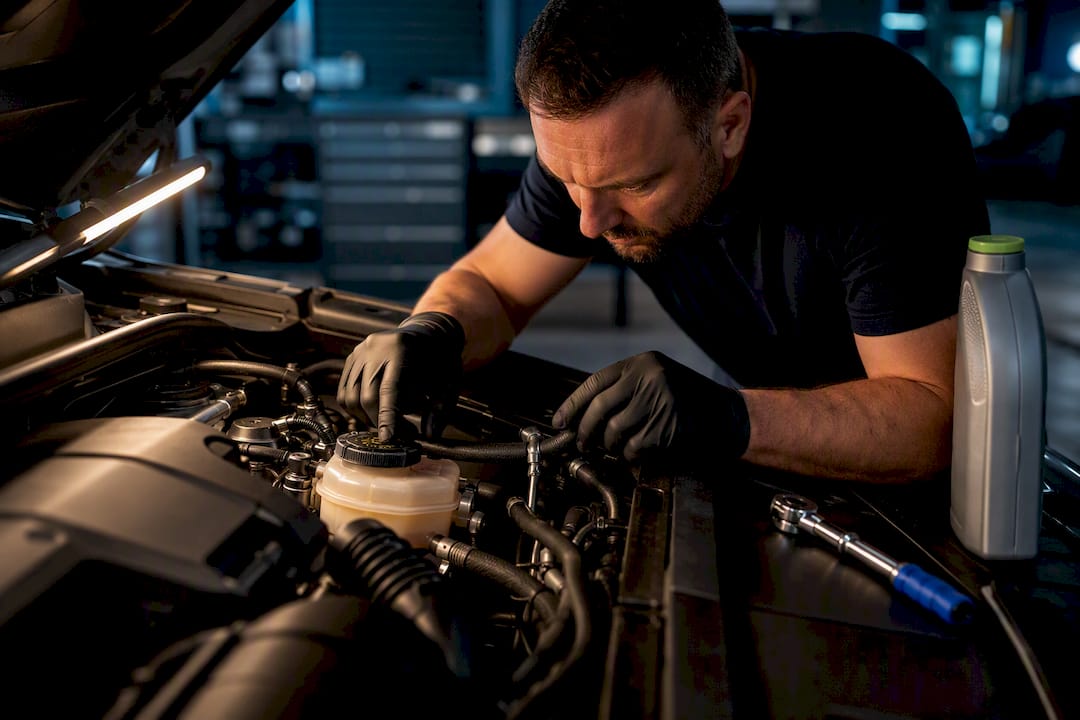
- Routine service: Most supercars call for annual or 6,000 to 10,000 mile service intervals, typically running $850 to $1,500 per visit for oil, filters, and inspection.
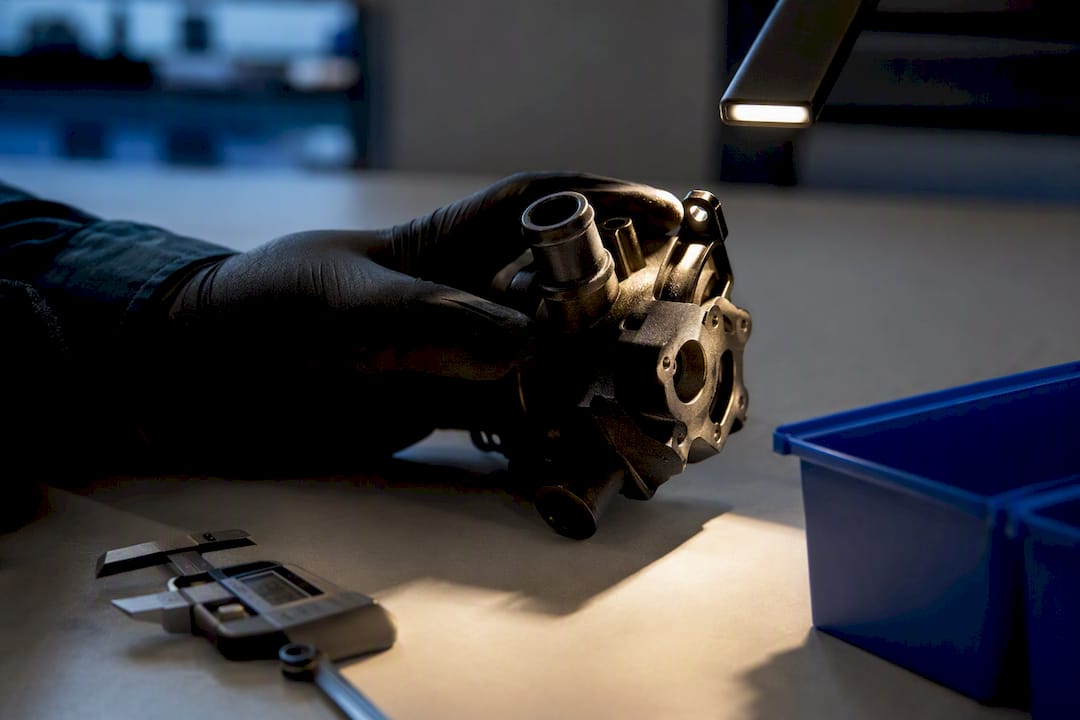
- Major service: Multi-year intervals (often 4 to 6 years or a set mileage) that include belts, spark plugs, fluid flushes, and deeper inspection. These commonly cost $3,500 to $6,000, per CarBuzz’s breakdown of supercar upkeep.
- Tires: A mounted, balanced set of performance tires runs $2,200 to $5,500 depending on model and compound. Street driving can stretch a set across two or three seasons; track use can burn through one in a single weekend.
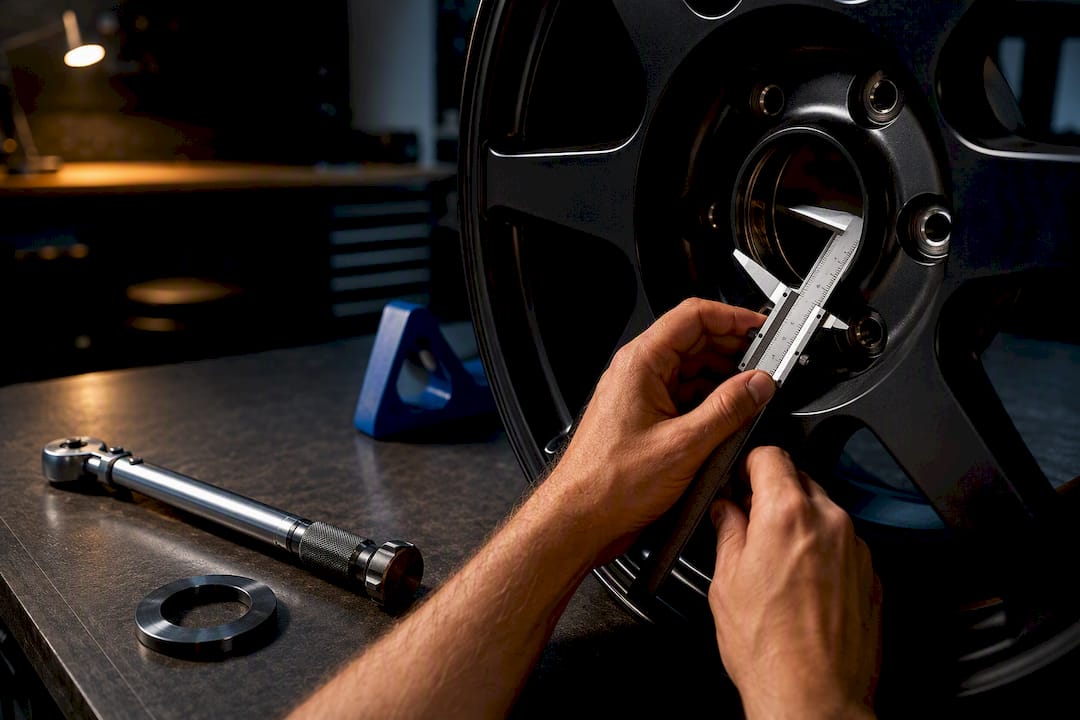
- Brakes: Standard pad and rotor sets run $2,000 to $4,000; carbon-ceramic rotor replacement climbs into the thousands to tens of thousands per axle, which is why it deserves its own line in a long-term reserve.
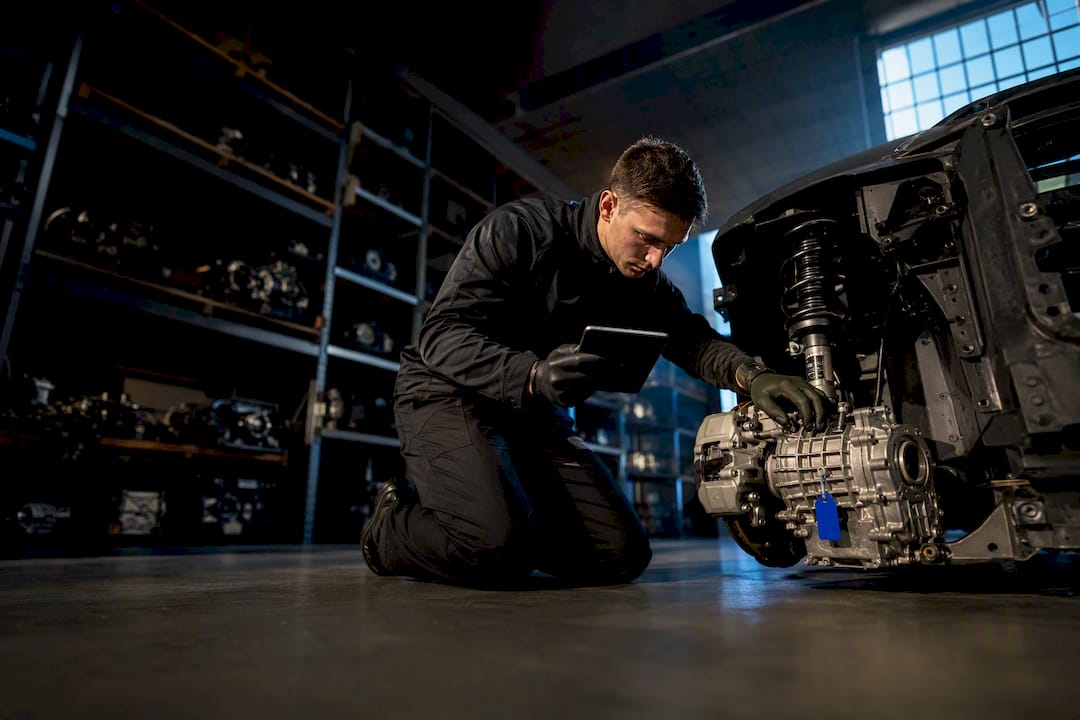
- Clutch and gearbox service: Dual-clutch and single-clutch units both need periodic fluid service, and clutch replacement on a manually driven exotic can run into four figures for parts alone before labor.
- Overhead: Enclosed transport, climate-controlled storage, and dealer-specific diagnostic software subscriptions add a few hundred to a couple thousand dollars a year depending on how the car is kept.
A Lamborghini Huracán is a useful reference point here: five-year maintenance around $21,600, with yearly service at $850 to $1,500 and major services landing between $3,500 and $6,000, according to CarBuzz’s supercar cost analysis. That single model shows how quickly a “typical” year turns into a “high” one the moment a major service or a tire set lands in the same twelve months.
How Much Should You Budget for Different Supercar Models?
Sample budgets only work if you treat them as a starting point, not a promise. Every figure below assumes a car in normal used condition with a documented service history and typical (not track-heavy) driving.
- Naturally aspirated Italian V8 coupes (mid-2010s generation): Simpler drivetrain, strong independent-shop support. Sample budget: $6,000/year, $32,000 over 5 years.
- Turbocharged German-engineered exotics: More electronics to diagnose, but excellent parts availability keeps costs contained. Sample budget: $7,500/year, $38,000 over 5 years.
- Naturally aspirated V10 Italian supercars (Huracán-class): Robust platform, but proprietary components push major-service costs up. Sample budget: $8,500/year, $43,000 over 5 years, consistent with the Huracán five-year figures cited by CarBuzz.
- Turbocharged V8 flagship exotics: High-strung engines and carbon-ceramic brakes as standard equipment drive up both routine and wear-item costs. Sample budget: $12,000/year, $65,000 over 5 years.
- Track-focused, limited-production models: Aerodynamic components, specialized suspension, and thin independent-shop coverage. Sample budget: $18,000/year, $95,000 over 5 years.
- Ultra-luxury grand tourers with V12 engines: Complexity of a flagship plus proprietary interior and electronic systems. Sample budget: $20,000/year, $105,000 over 5 years.
- Hybrid hypercar platforms: Battery and power-electronics service requires factory-trained technicians almost exclusively. Sample budget: $22,000+/year, $115,000+ over 5 years.
- Older-generation exotics past their major-service milestone: Age-related wear (hoses, seals, suspension) stacks on top of routine costs. Sample budget: $14,000/year, $80,000 over 5 years, skewed heavily by whichever year the major service lands in.
Condition and history swing every one of these figures by thousands. A car with full documentation and no deferred maintenance can sit near the bottom of its category; one with gaps in the record should be budgeted toward the top, regardless of what the model “should” cost.
How Do You Build Your Own Supercar Ownership Budget?
To create a tailored maintenance budget:
- Obtain quotes and schedule details for any immediate routine or major services due within the next year.
- Estimate costs for upcoming wear items like tires, brakes, and age-related parts likely needed in the next several years.
- Adjust for the car’s age and condition by increasing your first-year estimate proportionally and add a contingency reserve for unexpected repairs.
- Acquire detailed pre-purchase inspection documentation including tests and service history spanning multiple years.
It is crucial to maintain the repair reserve fund consistently, as neglecting it often leads to financial strain when major repairs arise unexpectedly.
Should You Use a Dealer or an Independent Specialist?
Authorized dealers charge a real premium for labor and parts, and that premium buys you factory-trained technicians, warranty compliance, and access to recalls and technical bulletins. Dealer service is the right call for anything under active warranty, any recall work, or diagnostics on brand-specific electronic systems.
Vetted independent specialists can perform many major services for meaningfully less than dealer rates, though the savings depend heavily on the shop and the region. The catch: you need to confirm the shop has real experience with your specific platform, since some procedures, like center-lock wheel torque specs or battery calibration, may still require dealer-level tools.
- OEM parts protect resale value and compatibility but cost more.
- Aftermarket parts save money but need careful compatibility checks.
- Salvage components can work for cosmetic or non-safety items, rarely for critical systems.
Can a Parts Marketplace Actually Lower Your Maintenance Costs?
Downtime is its own hidden cost. A car sitting in a shop waiting on a rare part isn’t just inconvenient, it’s lost usable ownership time, and sometimes storage fees on top of it. A marketplace built specifically around exotic and supercar parts, like Supercars, with more than 365,000 listings and AI-powered part search, shortens that search from weeks of cold-calling specialty shops to minutes of filtering by fitment.
- Rare or discontinued components become findable across a wider seller pool instead of one regional dealer network.
- Cross-border sourcing opens up price comparison you wouldn’t get locally.
- Salvage alternatives for non-critical parts can meaningfully undercut new OEM pricing.
Some proprietary electronics and safety-critical components remain dealer-only regardless of where you search, so always verify fitment before buying.
What Do Supercars Cost to Insure?
Insurance sits outside the maintenance figures above, but it’s often the second-biggest line in total ownership cost. Premiums for supercars run considerably higher than for ordinary luxury vehicles, largely because replacement parts, body panels, and specialized labor all cost more when an insurer has to pay out a claim.
Several factors move the premium beyond simple vehicle value. Horsepower and top speed matter to underwriters because they correlate with claim severity, not just claim frequency. Driver age and claims history carry the usual weight, but exotic insurers also weigh annual mileage heavily, since a car driven 3,000 miles a year presents a different risk profile than one driven 12,000. Storage matters too: a locked garage versus street parking can shift a quote noticeably.
Where you live changes things structurally. Some regions require specialty exotic-car insurers rather than mainstream carriers, and coverage terms like agreed value versus actual cash value affect both the premium and what you’d actually collect after a total loss. UK-focused analysis of supercar running costs found that once insurance and depreciation are combined with dealer-level servicing, total annual running costs for a regularly driven supercar can exceed £20,000. That figure is a reminder that maintenance alone rarely tells the whole ownership-cost story, and any budget that ignores insurance is incomplete by definition.
How Much Fuel and Lubricant Should You Budget For?
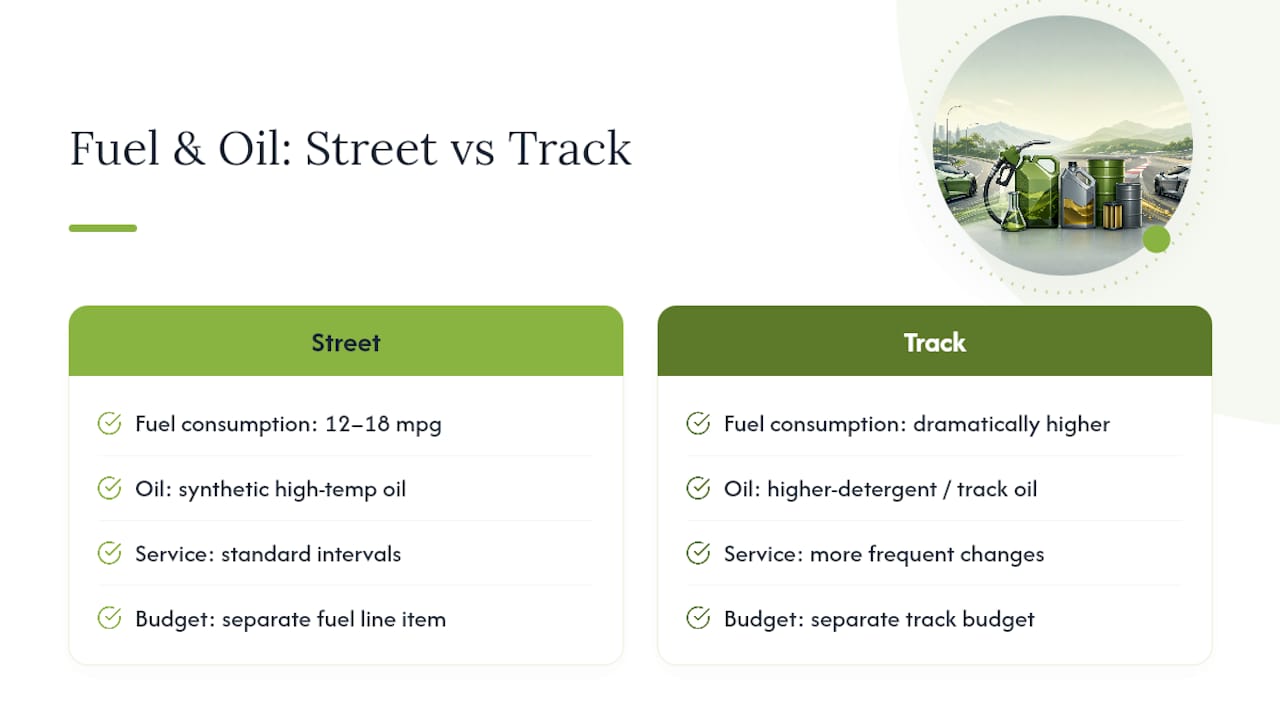
Supercars are thirsty by design, and fuel costs deserve their own line separate from maintenance. Most exotics require premium or high-octane fuel exclusively, and combined fuel economy in the 12 to 18 miles per gallon range is common for naturally aspirated V8s and V10s. Annual fuel spending varies enormously with mileage, but an owner driving 3,000 to 5,000 miles a year should expect a noticeably higher per-mile fuel cost than a daily-driven sedan, even before accounting for the premium-fuel requirement.
Lubricants add a second, less obvious cost. High-performance engines often specify synthetic oils formulated for extreme temperature tolerance, and these cost more per quart than conventional oil. Some platforms also call for specialized transmission fluid for dual-clutch gearboxes, which isn’t interchangeable with standard automatic transmission fluid and typically costs more per service.
Track use multiplies both categories. A car running track days burns fuel at a dramatically higher rate than street driving, and many owners switch to a higher-detergent or track-specific oil formulation that needs changing more frequently than the standard service interval suggests. Factor track days into your fuel and lubricant budget as a separate line item rather than folding them into your standard annual estimate, since a single track weekend can consume a meaningful fraction of a year’s fuel budget.
How Do You Plan for Unexpected Supercar Repairs?
Every experienced owner learns the same lesson eventually: supercar costs are lumpy, not smooth. You’ll have quiet years of routine service followed by a single repair that costs more than the previous two years combined. That’s not bad luck, it’s the normal pattern for complex machines with age-sensitive components.
The most reliable defense is a dedicated repair reserve kept separate from your regular maintenance budget, funded specifically for the unplanned failure rather than the scheduled service. A reasonable target is 15 to 20 percent of your annual maintenance estimate, set aside every year whether or not you spend it, so multi-year gaps between big repairs don’t tempt you to redirect the fund elsewhere.
Certain categories of failure show up disproportionately as “unexpected” costs: electronics and sensor faults, air suspension leaks, and hose or seal failures that tend to cluster around the five-year mark regardless of mileage. Building awareness of which systems on your specific model are known trouble spots, through owner forums, specialist shops, or manufacturer technical and recall records like those maintained by NHTSA, turns a surprise repair into a foreseeable one you already budgeted for.
How Does Depreciation Affect Total Ownership Cost?
Depreciation rarely appears in a maintenance conversation, but it usually dwarfs every service invoice combined. A new supercar can lose a significant share of its purchase price in the first few years, and that loss happens whether the car sits in a garage or gets driven daily. For total cost of ownership, depreciation and maintenance work against each other in one useful way: a car that has already taken its steepest depreciation hit, typically a car several years old, gives you more predictable year-over-year value while your maintenance costs become more knowable too, since more of its service history exists on paper.
Buying past the steepest depreciation curve is one of the more effective ways to control total ownership cost, because you’re paying maintenance on a car whose value loss has already mostly happened rather than compounding both costs at once. The trade-off is that older cars are more likely to need age-related work, so the depreciation savings can get partially offset by higher maintenance spending in the same years. Treating depreciation and maintenance as one combined number, rather than two separate conversations, gives a far more honest picture of what a specific car will actually cost you to own for the next five years.
What Warranty and Extended Service Options Are Available?
Factory warranties on new supercars typically run three to four years, sometimes with a separate, shorter window for powertrain-specific coverage. During that period, most major mechanical failures are covered, which is a significant part of why the “low” annual maintenance band applies mainly to newer, warranty-covered cars.
Once the factory warranty expires, extended service plans and third-party mechanical breakdown coverage become the main tools for controlling risk. These plans vary widely in what they cover, and exclusions for wear items like tires, brakes, and routine service are standard, so an extended warranty supplements a maintenance budget rather than replacing it. Some manufacturers offer certified pre-owned programs with their own extended coverage windows, which can be worth factoring into a purchase decision if you’re comparing a slightly older car against a newer one.
Reading the fine print matters more here than with an ordinary car. Track use, aftermarket modifications, and even certain service intervals performed outside the dealer network can void extended coverage on some plans. Before relying on any warranty or service plan as a cost-control strategy, confirm exactly what triggers a claim denial, since that fine print often determines whether the plan actually reduces your five-year total or just delays when a bill arrives.
The One Rule That Actually Protects Supercar Owners
If there’s a single rule worth following, it’s this: buy on service history, not just on price or mileage. A car with a complete, verifiable record of maintenance is worth paying a premium for, because it converts unknown future risk into a knowable budget line. Pair that with a genuine repair reserve, funded every year regardless of whether you spend it, and most of the financial stress of ownership disappears. The emotional payoff of owning something this rare is real, but it holds up a lot better when the spreadsheet isn’t a surprise.
— Artem
Where to Find Hard-to-Source Supercar Parts
Sourcing the right part is often the difference between a $900 repair and a $4,000 one, because delay and mismatched compatibility both cost money. The platform gives owners access to an extensive number of listings across exotic and supercar brands, with advanced search technology that narrows down exact-fit components faster than calling around to regional specialists one by one.
Whether you’re chasing a discontinued suspension component, comparing OEM against aftermarket pricing, or trying to source a part across borders because your local network came up empty, the Supercars marketplace is built for exactly that search. It won’t help with the handful of proprietary electronics that remain dealer-exclusive, but for the majority of wear items, trim, and mechanical components covered in the cost breakdown above, it’s a faster starting point than a cold-call list. Check current listings for your model before your next scheduled service, so a parts delay never turns into extra downtime.